

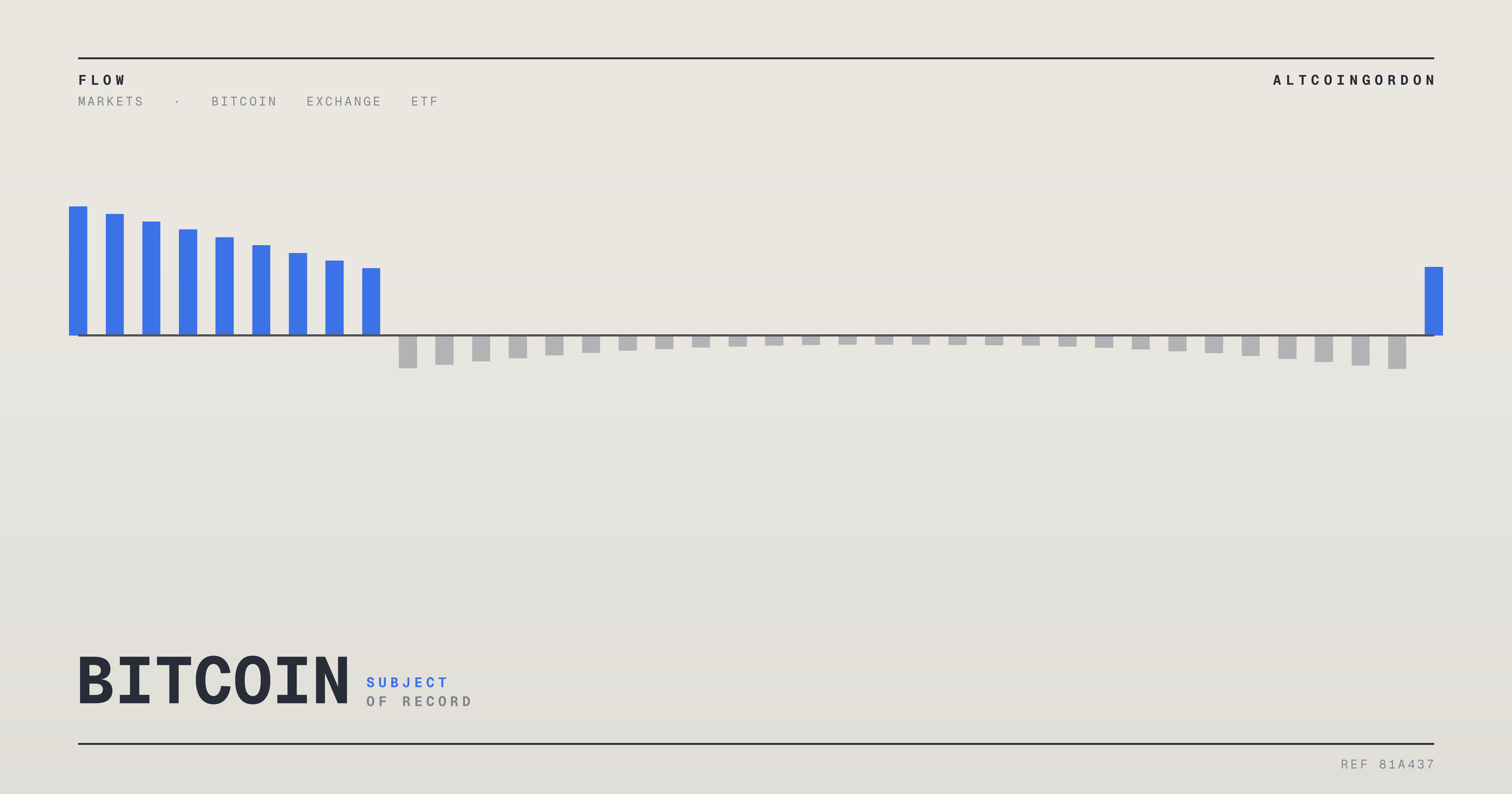
Bitcoin's price cycles have historically been shaped by retail investors moving in and out of the market. According to CryptoSlate, the current downturn looks different. The outlet describes an emerging pattern in which institutional participants, rather than individual traders, are driving the liquidity conditions now weighing on bitcoin.
The report characterizes this as bitcoin's first true institutional bear market. That framing reflects how much the investor base has changed since spot bitcoin exchange-traded funds launched and large asset managers began holding the asset directly. Institutions now represent a meaningfully larger share of bitcoin ownership and trading activity than in earlier cycles.
Liquidity drains describe periods when buying and selling activity thins out, making it harder for large orders to move through markets without shifting prices. When institutional holders pull back or reduce exposure, the effect on order books and available liquidity can be more pronounced than retail-driven selling, given the size of institutional positions.
This matters because institutional capital was widely viewed as a stabilizing force for bitcoin markets. Proponents of ETF adoption and corporate treasury allocations argued that professional money would reduce volatility over time. CryptoSlate's reporting suggests that when institutions do retreat, the impact on market structure can be significant, since their positions tend to be larger and more concentrated than retail holdings.
The shift also raises questions about how bitcoin behaves during downturns going forward. Retail-driven bear markets have typically featured sharp, fast capitulation events followed by extended basing periods. An institutionally driven bear market may unfold differently, tracking allocation decisions at asset managers, corporate treasuries, and other large holders rather than sentiment among individual traders.
CryptoSlate's report does not detail specific price levels or timeframes tied to this dynamic. It instead focuses on the structural shift in who is driving liquidity conditions. That distinction is significant for market participants trying to understand the mechanics behind current price action, separate from the headline price moves themselves.
Market Impact
If institutional positioning is indeed driving current liquidity conditions, market watchers may need to track ETF flows, custody data, and corporate treasury disclosures more closely than retail sentiment indicators. A liquidity drain tied to large institutional holders could produce different volatility patterns than past retail-driven downturns, potentially with fewer but larger price swings tied to allocation decisions.
The broader implication touches on bitcoin's maturation as an asset class. Deeper institutional participation was expected to bring more stable, orderly markets over time. This reporting suggests that transition may still involve turbulence, particularly during periods when large holders reduce exposure simultaneously.
As bitcoin's investor base continues shifting toward institutional participants, understanding how that group behaves during downturns will matter as much as tracking price itself.
Frequently Asked Questions
What does an institutional bear market mean for bitcoin?
It refers to a downturn primarily driven by large institutional holders reducing exposure or pulling liquidity, rather than retail investors selling.
Why does institutional involvement change how bear markets play out?
Institutional positions tend to be larger and more concentrated, so their withdrawal can have an outsized effect on liquidity and order books compared with dispersed retail selling.
Does this report include specific price targets or timelines?
No. CryptoSlate's reporting focuses on the structural shift in who is driving liquidity conditions, not on specific price levels or forecasts.
Has bitcoin experienced institutionally driven downturns before?
Prior bitcoin bear markets were largely attributed to retail investor behavior. CryptoSlate describes the current phase as the first shaped predominantly by institutional activity.