

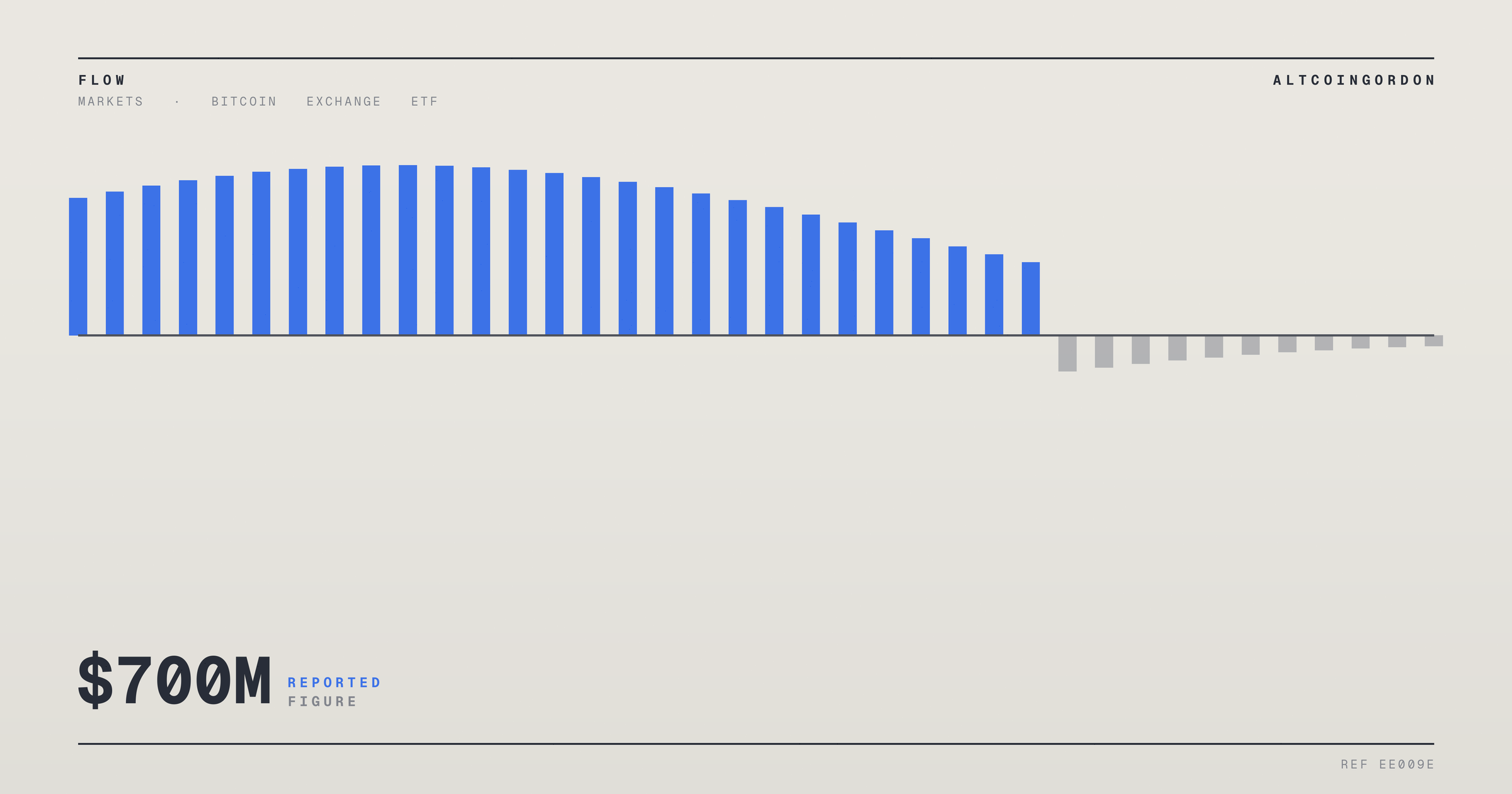
U.S. spot Bitcoin exchange-traded funds absorbed their biggest daily inflow since January, Yahoo Finance reported on September 4, 2026. The move marks a notable shift in demand after a period of comparatively subdued fund activity earlier in the year.
CryptoPotato, reporting separately the same day, put the inflow figure at more than $700 million. That level of buying represents one of the stronger single-day totals recorded by the spot ETF category since its early 2024 launch.
Spot Bitcoin ETFs have become a primary channel through which institutional and retail investors gain exposure to the asset without holding it directly. Daily flow data into these products is closely watched as a proxy for broader sentiment among regulated capital allocators. A jump of this size suggests renewed appetite from investors who use ETFs rather than direct custody or exchange accounts.
CryptoPotato also pointed to a historical pattern worth noting. Previous instances of large inflow spikes have, at times, preceded short-term local tops in Bitcoin's price. The outlet framed this as a pattern observation rather than a certainty, and did not claim the pattern will repeat.
Market watchers often treat sudden inflow surges with a degree of caution for this reason. Heavy buying can reflect genuine conviction, but it can also mark a point where enthusiasm has run ahead of underlying demand. Neither outlet specified the exact ETFs driving the inflow or the precise trading date the $700 million figure covers, leaving some detail for later confirmation.
The timing of the inflow is notable given the broader backdrop for crypto markets heading into the fourth quarter. Institutional flows into spot Bitcoin ETFs have been a key barometer of demand throughout 2025 and into 2026, following the products' approval by U.S. regulators. Periods of strong inflows have generally coincided with more constructive sentiment across digital asset markets, while outflow periods have often lined up with broader risk-off conditions.
Analysts tracking ETF flow data typically distinguish between short bursts of buying and sustained multi-week trends. A single large inflow day does not by itself confirm a durable shift in investor positioning. Additional flow reports in coming sessions would help clarify whether the September 4 surge reflects a one-off event or the start of a longer accumulation phase.
Both reports frame the inflow as significant relative to the pace seen for much of the year. Neither source provided price levels or forecasts tied to the historical pattern referenced by CryptoPotato, and this article does not assert any expected price outcome.
Market Impact
A sharp rise in spot Bitcoin ETF inflows can influence short-term market liquidity by drawing fresh capital into regulated investment vehicles. This may affect trading volumes on both the ETF side and underlying spot markets, as issuers adjust their Bitcoin holdings to match investor demand.
Given the historical pattern cited by CryptoPotato linking large inflow spikes to local price tops, some traders may treat the current surge with caution rather than as an unambiguous bullish signal. Sustained monitoring of subsequent flow data will likely shape near-term sentiment more than this single reading.
The scale of this inflow underscores how central spot Bitcoin ETFs have become to gauging investor demand. Whether the surge signals a lasting trend or a short-term peak will depend on flow patterns in the days ahead.
Frequently Asked Questions
How large was the reported Bitcoin ETF inflow?
CryptoPotato reported the inflow exceeded $700 million, while Yahoo Finance described it as the largest since January without citing a specific dollar figure.
Why do large ETF inflows sometimes precede price tops?
CryptoPotato noted a historical pattern in which large inflow spikes have coincided with short-term local price peaks, though this reflects a past pattern rather than a guaranteed outcome.
What are spot Bitcoin ETFs?
Spot Bitcoin ETFs are regulated investment funds that hold actual Bitcoin, letting investors gain exposure through brokerage accounts instead of managing direct custody.
Does a single day of strong inflows confirm a market trend?
Not necessarily. Analysts generally look for inflows sustained over multiple sessions before treating a single day's activity as evidence of a broader shift in investor positioning.