

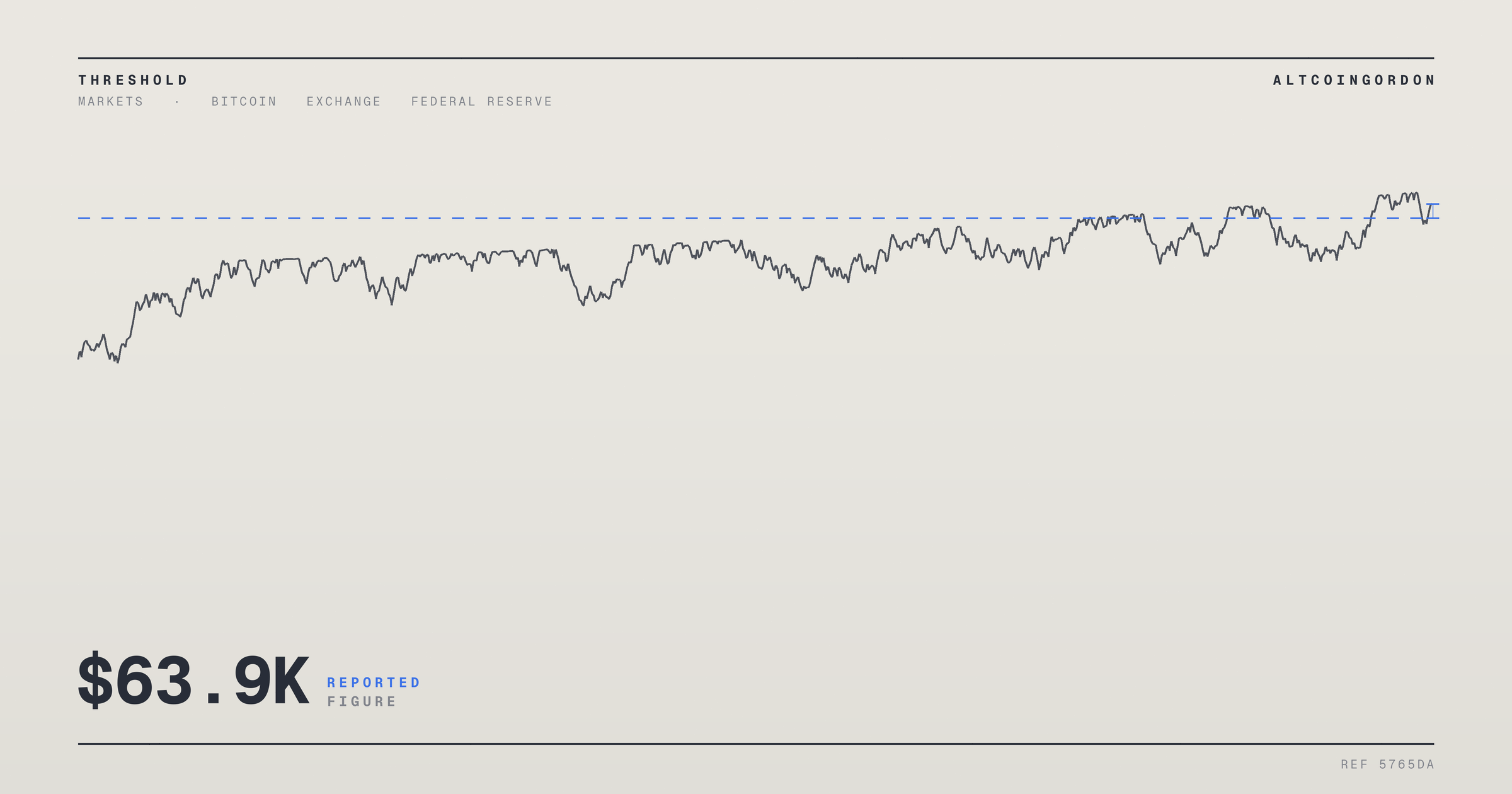
Bitcoin dropped roughly 2% in the run-up to the release of fresh U.S. inflation data, pulling the token down toward the $63,000 mark. Traders and analysts have zeroed in on $63.9K as a critical support level, a threshold that, if broken, could open the door to steeper losses.
The Consumer Price Index, or CPI, is one of the most closely watched economic indicators in traditional finance. It measures how quickly prices for everyday goods and services are rising across the economy. Crypto markets have grown increasingly sensitive to CPI releases in recent years, as the data feeds directly into expectations for Federal Reserve interest rate policy.
When inflation comes in hotter than expected, markets often price in a longer period of elevated interest rates. Higher rates tend to reduce appetite for riskier assets, including cryptocurrencies. A cooler-than-expected reading, by contrast, can fuel hopes of rate cuts, which historically has supported gains in Bitcoin and other digital assets.
The current pullback comes as commentators are split on how to interpret the move. Some frame the dip toward $63,000 as a potential buying opportunity, arguing that short-term volatility around macroeconomic data releases is normal and does not necessarily signal a broader trend reversal. Others describe the price action as a warning sign, pointing to the proximity of key support levels and the possibility that a break lower could trigger further selling.
Bitcoin's price has shown a pattern of sharp swings around major data releases throughout this market cycle. Traders often reduce exposure or hedge positions ahead of scheduled reports to limit risk from unexpected outcomes. This behavior can itself add to volatility in the hours before and after a release, independent of the data's actual content.
The $63.9K level referenced by market watchers appears to function as a technical marker, a price point where buying and selling pressure have previously balanced out. Levels like this are frequently used by traders to set stop-loss orders or entry points, meaning a decisive move through the level in either direction can accelerate price action as automated orders are triggered.
Broader market context also matters here. Bitcoin's price has been influenced this year by factors including institutional flows into spot exchange-traded funds, shifts in regulatory posture toward digital assets, and the general risk appetite of global investors. CPI data does not act in isolation but rather interacts with these existing forces, sometimes amplifying moves that were already underway.
For now, market participants are watching closely to see whether Bitcoin holds above the $63.9K level once the inflation figures are published. The reaction in the hours following the release is likely to offer clearer signals about near-term direction than the pre-report positioning seen so far.
Market Impact
A break below $63.9K could accelerate selling as automated stop-loss orders and reduced risk appetite compound the move, particularly if CPI data comes in above expectations. Conversely, a benign inflation print could ease rate-hike concerns and support a rebound toward recent trading ranges.
Beyond Bitcoin, altcoins and broader crypto market sentiment typically track the token's reaction to macroeconomic data closely. Continued CPI-driven volatility could also affect flows into spot Bitcoin ETFs, which have become an important channel linking traditional finance sentiment to crypto price action.
The coming CPI print looks set to be the next major catalyst for Bitcoin's direction, with $63.9K serving as the level traders are watching most closely.
Frequently Asked Questions
Why does the CPI report affect Bitcoin's price?
CPI data influences expectations for Federal Reserve interest rate decisions, which affect investor appetite for risk assets like Bitcoin.
What happens if Bitcoin falls below $63.9K?
Analysts suggest a break below this support level could trigger further selling, though the exact outcome depends on broader market conditions.
Is the current dip considered a buying opportunity?
Market commentators are divided, with some viewing it as a short-term buying opportunity and others warning it could signal further downside.
How have crypto markets historically reacted to CPI releases?
Crypto markets have shown a pattern of increased volatility around CPI releases, often moving sharply based on whether inflation data beats or misses expectations.