

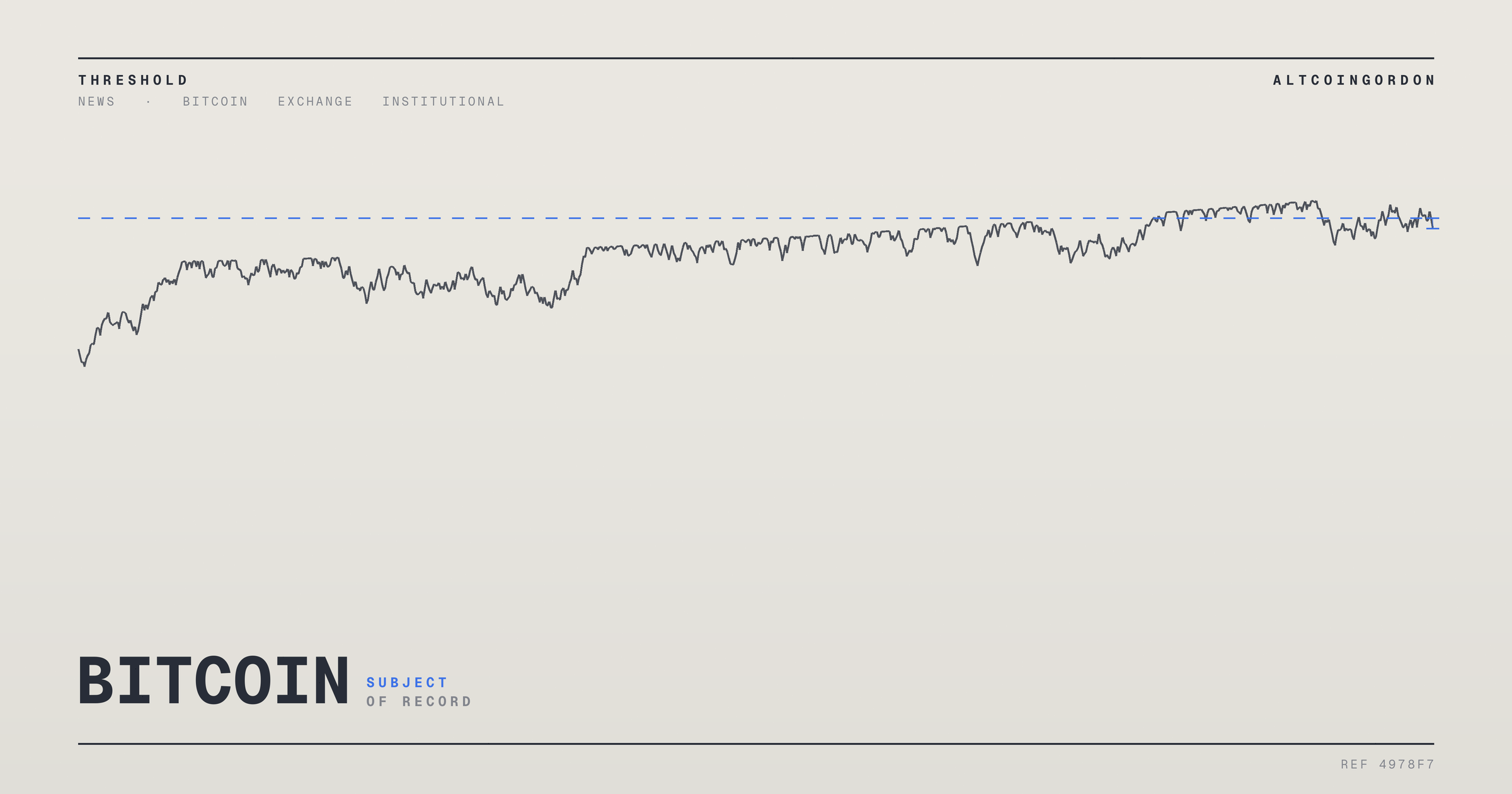
Bitcoin's price dropped to a one-week low, according to a report from Cointelegraph published on August 11. The decline comes as retail investors have been buying gold at prices last seen in June, suggesting a rotation toward traditional safe-haven assets among smaller market participants.
The report frames the two moves as connected, pointing to a shift in sentiment among retail traders rather than a broader repricing driven by institutional flows. Bitcoin has often been described by proponents as a digital alternative to gold, so simultaneous weakness in one and renewed demand for the other draws attention from analysts who track how the two assets interact.
Gold has functioned as a traditional store of value for centuries, and retail buyers historically turn to it during periods of uncertainty about growth, inflation, or currency stability. Cointelegraph's report indicates that current gold purchases are happening near price levels not observed since June, implying renewed appetite for the metal after a period of relative quiet.
Bitcoin, by contrast, has built a reputation over the past decade as a higher-volatility asset that can move sharply in either direction over short time frames. A one-week low does not necessarily signal a change in longer-term trend, but it does reflect near-term selling pressure or reduced buying interest relative to the prior seven days.
Market watchers often compare bitcoin and gold flows to gauge whether investors are favoring risk assets or defensive positioning. When retail demand for gold rises at the same time bitcoin weakens, some interpret it as a sign that smaller investors are becoming more cautious. Others caution that retail behavior in one asset does not automatically explain price action in another, since institutional and derivative-market flows also shape bitcoin's short-term moves.
The report does not specify the magnitude of bitcoin's decline in percentage terms, nor does it detail the exact gold price level reached. It also does not identify whether the retail gold buying was concentrated in physical bullion, exchange-traded products, or other instruments. Readers should treat the reported connection between the two trends as an observation rather than a confirmed causal relationship.
Broader context matters here as well. Gold and bitcoin both trade within a macro environment shaped by interest rate expectations, currency movements, and general risk appetite. A one-week window is a relatively short period for drawing firm conclusions about a durable shift between the two assets.
Market Impact
If retail investors are indeed rotating from bitcoin toward gold, it could signal a short-term preference for lower-volatility, traditionally defensive holdings. This pattern is worth monitoring for signs of broader risk-off sentiment spreading into other crypto assets.
At the same time, a one-week price low in bitcoin is not unusual given the asset's typical volatility, and it may not indicate a lasting trend change. Traders and analysts will likely watch whether gold's renewed strength persists and whether bitcoin stabilizes or continues to underperform relative to traditional safe havens in the coming days.
The reported pullback in bitcoin alongside stronger retail gold buying offers a snapshot of shifting short-term sentiment, though further data will be needed to determine whether the pattern extends beyond a single week.
Frequently Asked Questions
Why did bitcoin drop to a one-week low?
Cointelegraph reported the decline coincided with retail investors buying gold at its highest prices since June, though the exact cause of bitcoin's drop was not detailed.
Does retail gold buying always correlate with bitcoin price drops?
Not necessarily. While some analysts view gold and bitcoin as competing safe-haven or store-of-value assets, short-term price moves in each can be driven by separate factors.
What time frame does 'one-week low' refer to?
It refers to bitcoin trading below all of its prices recorded over the preceding seven days, as reported by Cointelegraph on August 11.
Is this shift expected to be long-term?
The available reporting covers only a short window, so it remains unclear whether this represents a lasting shift in retail preference or a temporary fluctuation.