

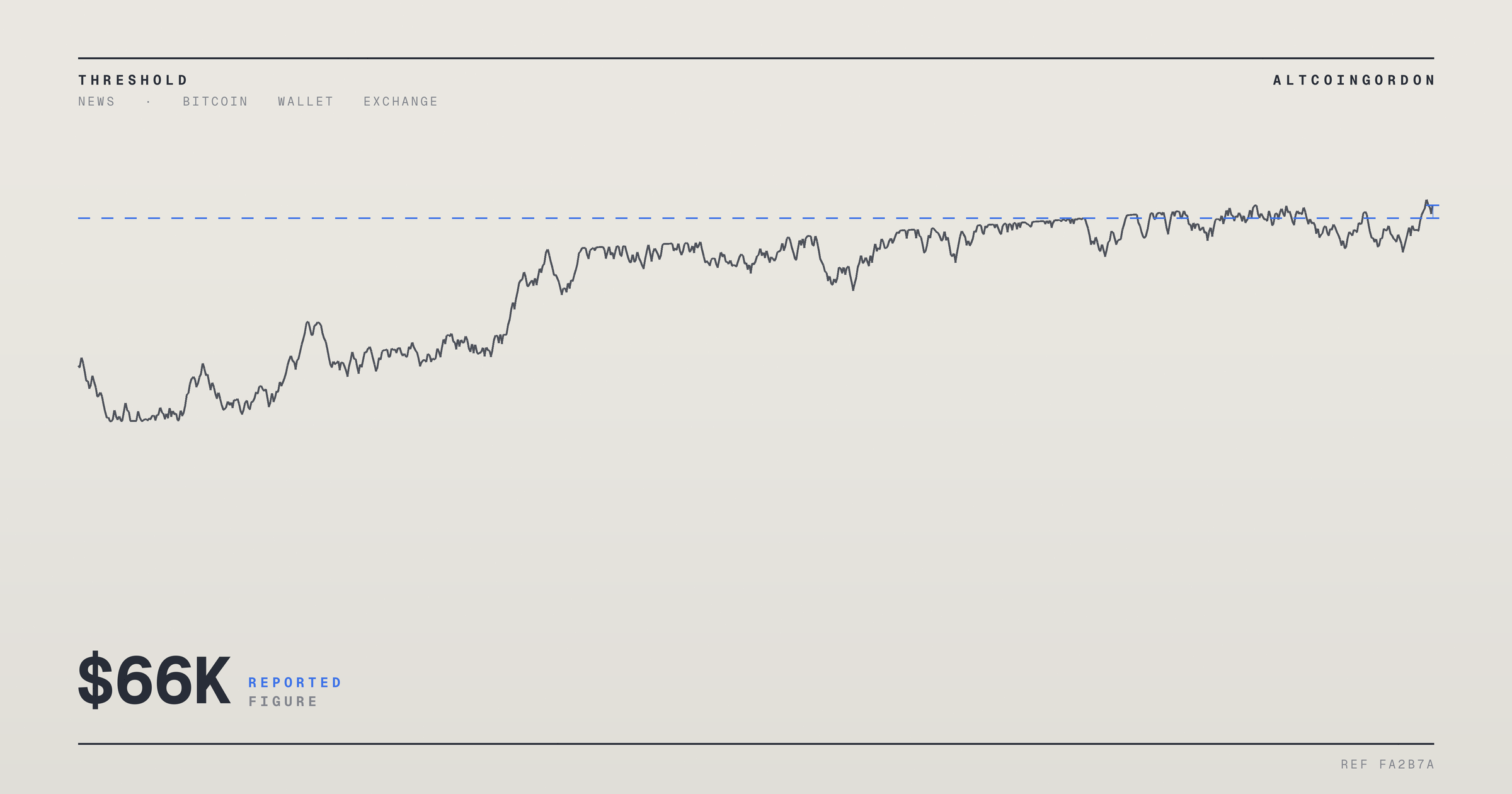
Bitcoin has remained range-bound below the $66,000 mark in recent trading, a level that has proven difficult to clear despite signs that long-term holders, often referred to as HODLers, are continuing to accumulate the asset. According to on-chain analysis referenced in the report, wallets historically associated with holding Bitcoin for extended periods have been adding to their balances even as the broader market struggles to generate upward momentum.
The dynamic described points to a market in which conviction among existing participants remains intact, but the inflow of new capital has not kept pace. Accumulation by long-term holders is typically viewed as a bullish signal over extended time horizons, since it reduces the amount of Bitcoin readily available for sale on exchanges. However, without a corresponding wave of new buyers entering the market, that reduced supply has not translated into the kind of price appreciation that would normally accompany a supply squeeze.
Analysts tracking these flows generally distinguish between two cohorts: long-term holders who tend to accumulate during periods of price consolidation or weakness, and newer market entrants whose buying activity is more closely tied to short-term sentiment, liquidity conditions, and macroeconomic catalysts. The current setup, as described, reflects the former group being active while the latter remains largely on the sidelines.
This pattern is not unprecedented in Bitcoin's trading history. Previous cycles have shown extended periods where accumulation by seasoned holders occurred well before any meaningful price breakout, sometimes by months or longer. The absence of fresh demand can be attributed to a variety of factors, including broader risk appetite in financial markets, regulatory uncertainty, or simply a wait-and-see approach among potential new investors who are looking for clearer signals before committing capital.
It is worth noting that this assessment is drawn from a reported source. As with all on-chain interpretations, the underlying data reflects wallet-level activity and inferred holder behavior rather than direct confirmation of investor intent, so some caution in interpretation is warranted.
Market participants will likely continue to monitor exchange flow data, wallet cohort analysis, and broader liquidity indicators to determine whether the current accumulation trend eventually translates into renewed buying pressure sufficient to push Bitcoin decisively above the $66,000 threshold.
Market Impact
If the pattern of long-term holder accumulation continues without a corresponding rise in new demand, Bitcoin could remain confined to a consolidation range in the near term, with the $66,000 level acting as a persistent point of resistance. Reduced circulating supply from accumulation can set the stage for sharper price moves once demand does pick up, but the timing and magnitude of any such move remain uncertain based on the information available.
For traders and investors, the divergence between holder behavior and new capital inflows underscores the importance of monitoring both on-chain accumulation metrics and broader market sentiment indicators, such as exchange volumes and macroeconomic developments, before drawing conclusions about near-term price direction.
While long-term holders appear to be quietly building positions, Bitcoin's inability to break decisively above $66,000 highlights the ongoing gap between accumulation and active new demand, a dynamic that market watchers will continue to track closely in the weeks ahead.
Frequently Asked Questions
What does it mean when long-term holders 'accumulate' Bitcoin?
It generally refers to wallets that have held Bitcoin for an extended period increasing their balances, which is typically interpreted as a sign of confidence in the asset's long-term value, though it does not guarantee near-term price movement.
Why hasn't accumulation pushed Bitcoin's price higher?
According to the report, weak demand from new market entrants is offsetting the reduced sell pressure from long-term holders, keeping the price capped below the $66,000 level.
How reliable is this analysis?
The information is based on a single reported source with limited independent corroboration at this time, so readers should treat the findings as preliminary and monitor additional data before drawing firm conclusions.
What could change the current price dynamic?
An increase in new capital inflows, whether from retail or institutional participants, combined with continued reduction in available supply from holder accumulation, could potentially shift the market out of its current consolidation pattern, though no specific timeline can be confirmed from the available data.