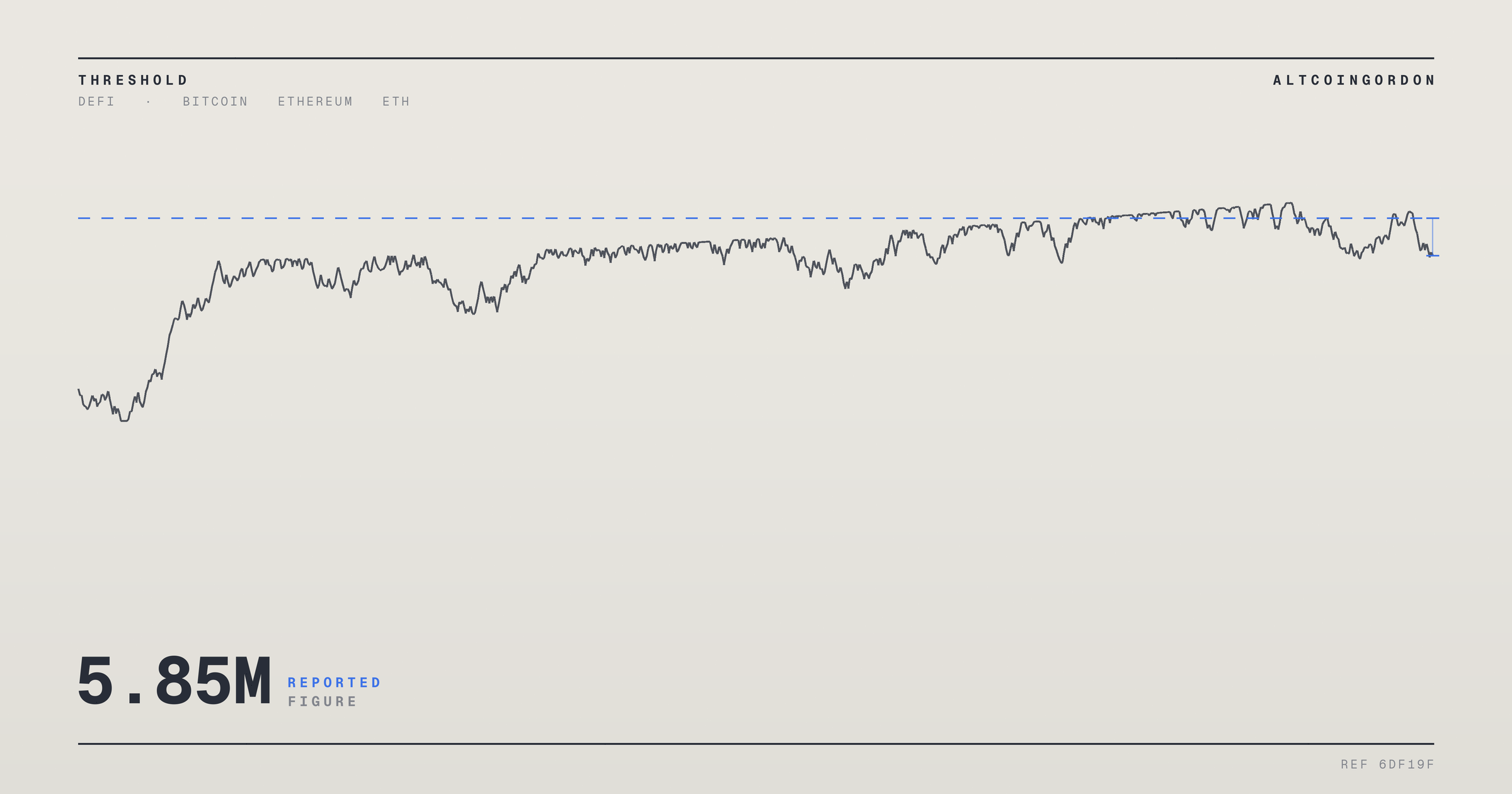
Original illustration, drawn for this story by AltcoinGordon.
BitMine's Ethereum holdings have reached approximately 5.85 million ETH, according to figures reported this week. The latest addition to its treasury brings the firm within striking distance of a self-stated accumulation target. Reports place the company at roughly 97% of that goal following its most recent buy.
The firm has positioned itself as one of the more aggressive corporate accumulators of Ethereum over recent months. Its strategy mirrors a pattern first popularized by companies that built large bitcoin treasuries. Rather than holding cash or traditional reserves, BitMine has opted to convert capital into ETH at scale.
Corporate treasury strategies built around a single cryptocurrency carry both upside exposure and concentrated risk. Holding a large single-asset position ties a company's balance sheet directly to that asset's price swings. Ethereum has experienced significant volatility over its history, and large holders are exposed to that movement directly.
The scale of BitMine's stated holdings, if confirmed at 5.85 million ETH, would represent one of the largest known corporate Ethereum positions disclosed to date. Such concentrated exposure places the company among a small group of entities treating Ethereum as a primary treasury reserve asset rather than a trading instrument. This approach differs from typical exchange or fund holdings, which are often more actively managed or diversified.
The timing of the disclosure comes amid continued institutional interest in Ethereum as a treasury asset class. Over the past year, several public companies have adopted digital-asset treasury models, drawing comparisons to earlier corporate bitcoin adoption. Ethereum's role in decentralized finance, staking yield, and its position as the base layer for numerous applications have made it an attractive target for firms seeking exposure beyond bitcoin.
Reaching 97% of a stated accumulation target suggests BitMine's buying program is nearing a defined milestone rather than an open-ended purchasing effort. Companies that set explicit targets for asset accumulation often do so to signal strategic intent to shareholders and markets. Approaching that threshold may prompt questions about what comes next, whether the firm pauses accumulation, revises its target upward, or shifts toward other treasury management activities such as staking.
Details on how BitMine financed the purchases, including whether through equity raises, debt, or existing cash reserves, were not specified in the reports reviewed. The exact composition of the target figure and how it was originally set have also not been fully detailed. As with other corporate crypto treasury disclosures, the numbers reported reflect holdings at a specific point in time and are subject to change with subsequent purchases or sales.
Market Impact
Large corporate Ethereum accumulation can influence circulating supply dynamics, particularly if holdings are staked or otherwise removed from active trading. A position of this size may also draw increased scrutiny from investors evaluating balance-sheet risk tied to a single volatile asset.
The development adds to a broader narrative of institutional capital flowing into Ethereum treasuries, following a model popularized in the bitcoin space. Continued accumulation by firms like BitMine could reinforce Ethereum's positioning as a corporate reserve asset, though the long-term market effect will depend on whether similar strategies are adopted more widely.
BitMine's approach to its Ethereum target signals continued corporate appetite for large-scale crypto treasury exposure. Whether the firm reaches or revises its stated goal will likely be closely watched by market participants tracking institutional Ethereum adoption.
Frequently Asked Questions
How much Ethereum does BitMine currently hold?
Reports indicate BitMine's holdings have reached approximately 5.85 million ETH following its latest purchase.
What target is BitMine approaching?
The company is reported to be at roughly 97% of a previously stated Ethereum accumulation target, though the original target figure's exact origin was not detailed in available reports.
Why do companies build large Ethereum treasury positions?
Some firms treat Ethereum as a reserve asset for potential appreciation, staking yield, and exposure to the broader decentralized finance ecosystem, similar to earlier corporate bitcoin treasury strategies.
What risks come with holding a concentrated Ethereum position?
Concentrated crypto holdings expose a company's balance sheet directly to that asset's price volatility, which can affect financial stability and shareholder value.
Follow this desk in Google
We use analytics cookies to understand which coverage readers find useful.
Nothing is stored until you choose.
Privacy policy