

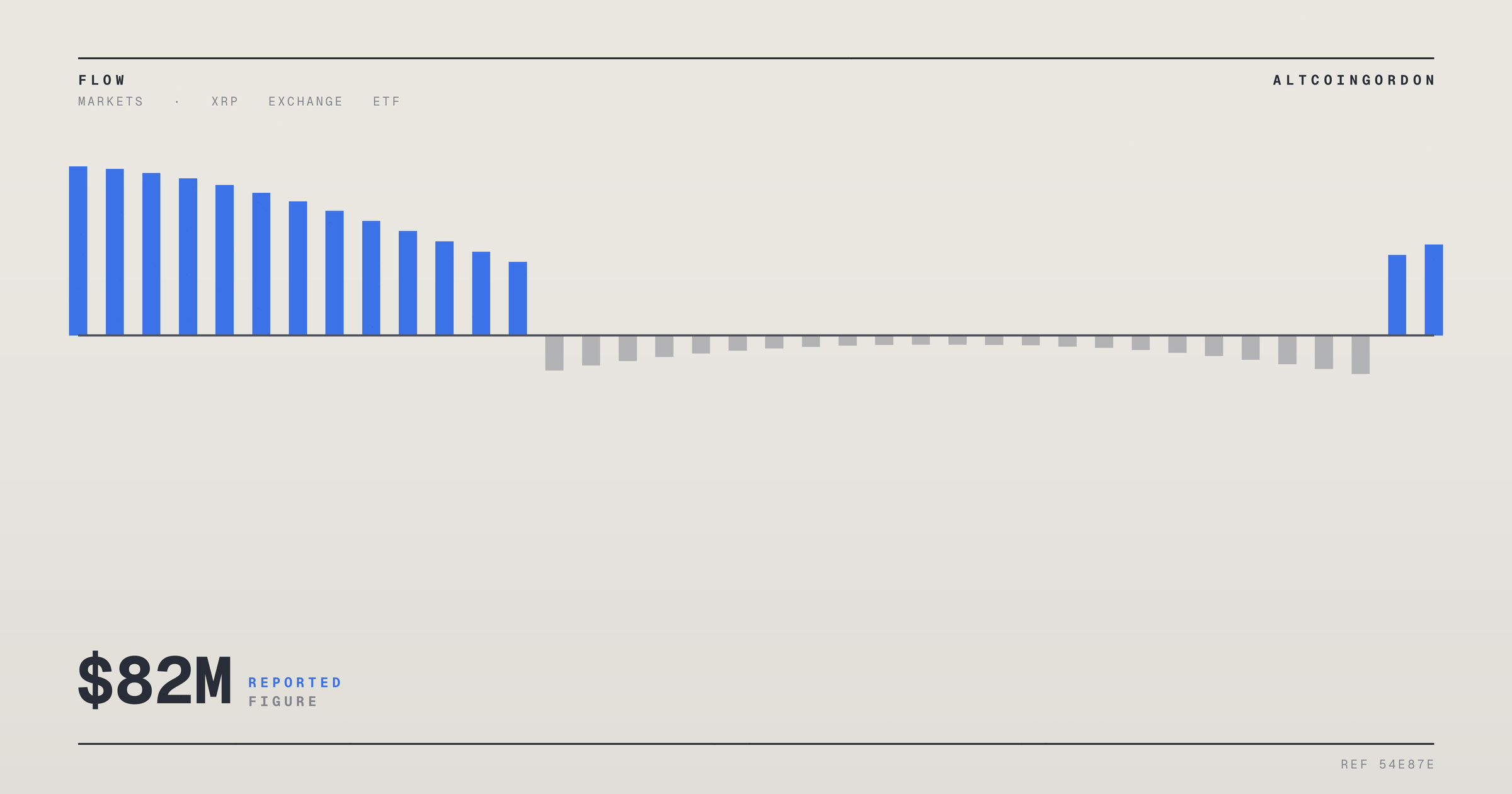
Canary's XRP exchange-traded fund took in approximately $82 million from investors, based on reporting from CryptoSlate and crypto.news. On the surface, that figure points to healthy demand for a product tied to one of the largest tokens by market capitalization.
But the inflow tells only part of the story. A drop in XRP's price during the same period erased an amount roughly twice the size of the money investors put in, according to the reports. That means the fund's total assets declined even as new capital arrived.
The divergence highlights a structural feature of crypto ETFs that differs from traditional equity funds. Share activity and inflows measure investor demand, but they do not determine a fund's net asset value on their own. Price movement in the underlying asset can outweigh new contributions, especially during periods of heightened volatility.
XRP has seen sharp price swings this year, and shifts in the token's valuation directly affect any fund holding it. When the price falls faster than new money arrives, the fund's overall asset base can shrink even while investor interest, measured by inflows, appears strong.
This pattern is not unique to Canary's product. Other crypto-linked ETFs have faced similar dynamics when the tokens they track experience price declines. The distinction between inflows and net asset value matters for investors trying to gauge whether a fund is actually growing or simply attracting fresh capital that offsets losses elsewhere.
Canary has positioned its XRP ETF as a vehicle for investors seeking regulated exposure to the token without holding it directly. The $82 million figure suggests continued appetite for that structure, even as broader market conditions weighed on returns.
Neither CryptoSlate nor crypto.news reported the specific dollar figure lost to the price decline, only that it was roughly double the inflow amount. That leaves some ambiguity about the fund's precise net change in assets over the period covered by the reports.
Market Impact
The gap between inflows and asset value could shape how investors and analysts interpret headline figures for crypto ETFs going forward. A fund can post strong share activity while still losing value overall, a distinction that matters for anyone tracking fund performance rather than just fundraising totals.
For XRP specifically, the episode underscores how sensitive token-backed investment products remain to price swings in the underlying asset. Continued volatility in XRP's price could keep producing similar mismatches between investor demand and fund value, a pattern likely to draw attention from those monitoring the broader altcoin ETF market.
The episode illustrates a recurring tension in crypto ETFs, where strong investor inflows do not guarantee rising fund value when the underlying token's price falls. Investors watching Canary's XRP product, and similar funds, may need to track both metrics separately to understand actual performance.
Frequently Asked Questions
How much money flowed into Canary's XRP ETF?
Reports from CryptoSlate and crypto.news put investor inflows at approximately $82 million.
Why did the fund's assets fall despite the inflows?
A decline in XRP's price during the same period erased value roughly double the size of the inflows, reducing the fund's overall assets even as new money arrived.
Does this mean investors lost money in the fund?
The reports describe asset value declining due to price movement, but they do not specify individual investor returns or losses tied to specific purchase dates.
Is this pattern common for crypto ETFs?
Crypto-linked ETFs can see net asset value diverge from inflow totals when the underlying token experiences significant price swings, a dynamic not unique to Canary's product.