

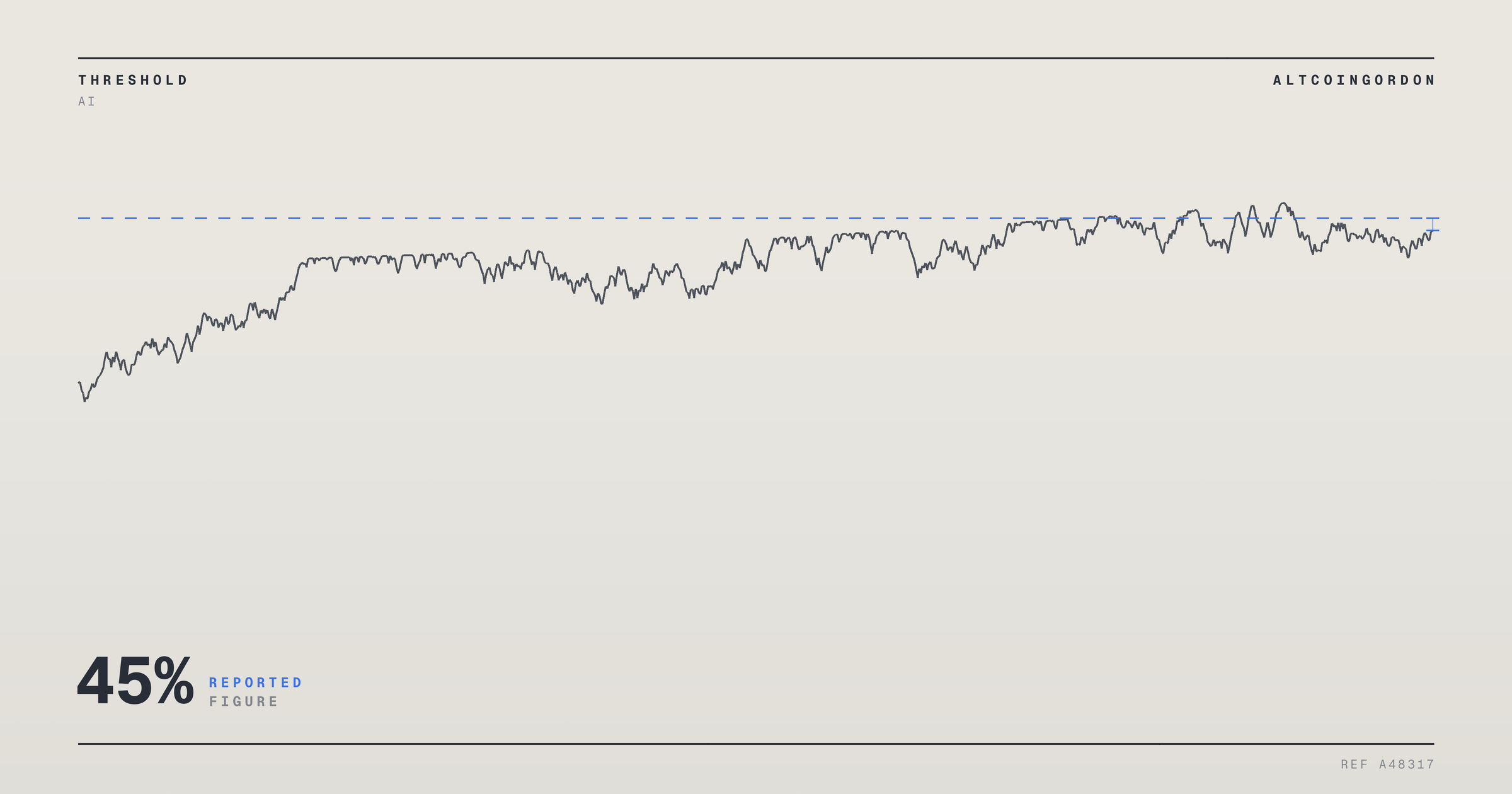
Taiwan Semiconductor Manufacturing Company posted a 45% increase in revenue, Yahoo Finance reported. The figure drew immediate attention from investors tracking the broader semiconductor supply chain.
Shares of companies that make chipmaking equipment rose following the report. These firms supply the machinery and materials that foundries like Taiwan Semiconductor use to produce advanced chips. Their stock performance often tracks closely with demand signals from major chipmakers.
Taiwan Semiconductor is the world's largest contract chip manufacturer. It produces processors for major technology companies, including firms that design chips for smartphones, computers, and artificial intelligence applications. Its revenue trends are widely watched as an indicator of demand across the broader technology sector.
A sharp revenue increase at a company of this scale typically signals strong order volumes from its customers. Analysts often interpret such growth as evidence of sustained or rising demand for the end products that rely on advanced semiconductors. That includes AI accelerators, high-performance computing chips, and next-generation consumer devices.
Equipment makers benefit directly when foundries expand capacity or upgrade production lines to meet demand. Higher revenue at a leading foundry can translate into increased capital spending on new tools and materials. Investors appear to have read the Taiwan Semiconductor figure as a positive signal for that spending cycle.
The semiconductor sector has drawn significant investor interest amid rapid growth in artificial intelligence infrastructure. Companies building AI data centers require large volumes of advanced chips, which in turn drives demand for the equipment used to manufacture them. Movements in this part of the supply chain can offer early signals about broader technology spending trends.
Yahoo Finance did not provide additional detail beyond the revenue figure and the resulting stock movement among equipment makers in its report. As with any single earnings data point, market participants will likely look for further confirmation from other companies in the sector before drawing broader conclusions about industry-wide trends.
Market Impact
A revenue surge of this magnitude at a leading foundry can influence sentiment across the entire chip supply chain. Equipment makers, materials suppliers, and chip designers often see correlated stock movements when a bellwether company reports strong results, since their fortunes are closely tied to foundry capacity expansion and capital spending.
Investors will likely watch upcoming earnings from other major chipmakers and equipment suppliers to see whether the trend extends beyond Taiwan Semiconductor. Continued strength in this sector could reinforce broader optimism about technology spending, particularly around artificial intelligence infrastructure, though a single quarterly result does not guarantee a sustained pattern.
The reported revenue jump at Taiwan Semiconductor offers a fresh data point on demand for advanced chips, and its ripple effect on equipment stocks underscores how closely tied these companies remain to foundry performance.
Frequently Asked Questions
What did Taiwan Semiconductor report?
According to Yahoo Finance, Taiwan Semiconductor Manufacturing Company reported a 45% increase in revenue.
Why did chip equipment stocks rise?
Equipment makers supply the tools foundries use to produce chips, so strong revenue at a major customer like Taiwan Semiconductor can signal higher capital spending, boosting investor confidence in those suppliers.
Why does Taiwan Semiconductor's revenue matter to the broader market?
As the world's largest contract chipmaker, its results are widely viewed as an indicator of demand trends across smartphones, computing, and artificial intelligence hardware.
Does this revenue jump confirm a broader industry trend?
Not on its own. The figure comes from a single reported result, and analysts typically look for confirmation from other companies before drawing conclusions about industry-wide demand.