

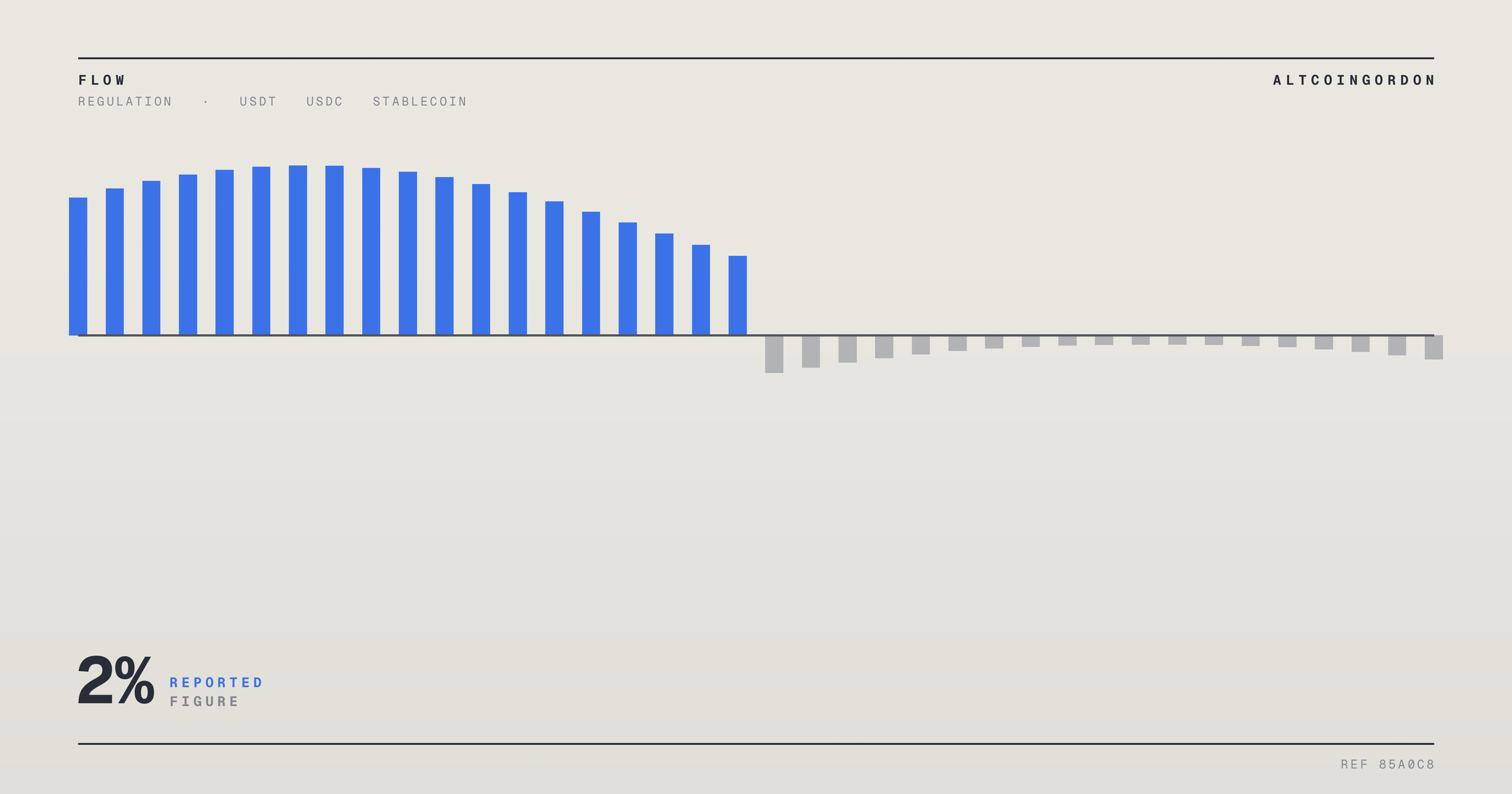
EURe's presence in crypto card spending has shrunk to roughly 2% of total transaction volume, CryptoBriefing reported. The outlet identified USDC as the clear leader among stablecoins used for everyday card payments. The figures point to a widening gap between dollar-pegged tokens and their euro counterparts in the growing crypto payments sector.
Crypto cards let users spend stablecoin or crypto balances directly at merchants, similar to a standard debit card. Providers typically convert the underlying token into fiat at the point of sale. The mix of stablecoins available on these cards has become a proxy for which tokens users actually rely on for spending, rather than trading or holding.
USDC, issued by Circle, has built deep liquidity and broad exchange listings over several years. That infrastructure appears to translate into practical advantages for payment use cases, where settlement speed and acceptance matter more than yield or ideological preference for a particular issuer.
EURe is a euro-pegged stablecoin issued by Monerium and has been positioned as a compliant option for European users navigating the EU's Markets in Crypto-Assets regulation, known as MiCA. Despite that regulatory alignment, CryptoBriefing's reported figures suggest EURe has struggled to translate compliance advantages into spending share.
The dollar's dominance in stablecoin markets is not new. USDC and USDT together represent the overwhelming majority of stablecoin supply globally, even in regions where the euro is the primary currency. Analysts have long noted that dollar stablecoins benefit from network effects: more exchange pairs, more liquidity venues, and more merchant familiarity than euro alternatives.
The card-spending data adds a consumer-facing dimension to that pattern. It suggests that even users transacting in euro-denominated economies may prefer holding and spending dollar stablecoins, converting to local currency only at the point of sale. That behavior could reflect broader confidence in dollar-pegged assets, deeper secondary markets, or simply card issuers defaulting to USDC as their base rail.
MiCA's phased rollout has required euro stablecoin issuers to meet reserve, disclosure, and licensing requirements not yet mandatory for dollar tokens operating outside the EU. Some industry participants have argued this regulatory asymmetry could eventually favor euro stablecoins by building trust. The current spending figures, if they hold, indicate that shift has not yet materialized in everyday card use.
Market Impact
A low EURe share in card spending signals limited near-term traction for euro-denominated payment rails, even as MiCA compliance was expected to be a selling point. USDC's apparent lead reinforces the dollar stablecoin sector's structural advantage in liquidity and merchant acceptance, which could make it harder for euro alternatives to gain share without targeted incentives or issuer partnerships.
For stablecoin issuers and card providers, the data highlights a gap between regulatory positioning and actual user behavior. If dollar stablecoins continue to dominate spending even in euro-centric markets, it may prompt euro stablecoin issuers to pursue deeper integrations with local banks, merchants, or card networks to close the usage gap.
The reported drop in EURe's card-spending share illustrates how entrenched dollar stablecoins remain in crypto payments, even as euro-denominated tokens pursue regulatory compliance under MiCA. Whether that balance shifts will likely depend on merchant adoption and liquidity growth rather than regulation alone.
Frequently Asked Questions
What is EURe?
EURe is a euro-pegged stablecoin issued by Monerium, designed to track the value of the euro and comply with EU regulatory frameworks including MiCA.
Why does USDC lead crypto card spending?
USDC benefits from deep liquidity, wide exchange support, and broad merchant familiarity, factors that CryptoBriefing's reported data suggest give it an edge over euro-denominated alternatives like EURe.
Does this mean euro stablecoins are failing?
The reported 2% share reflects card spending specifically, not overall stablecoin adoption or euro stablecoin usage across other financial activities such as trading or remittances.
How might MiCA regulation affect this trend going forward?
MiCA compliance could eventually boost trust in euro stablecoins, but the current card-spending figures indicate that advantage has not yet translated into higher usage relative to dollar-pegged tokens.