

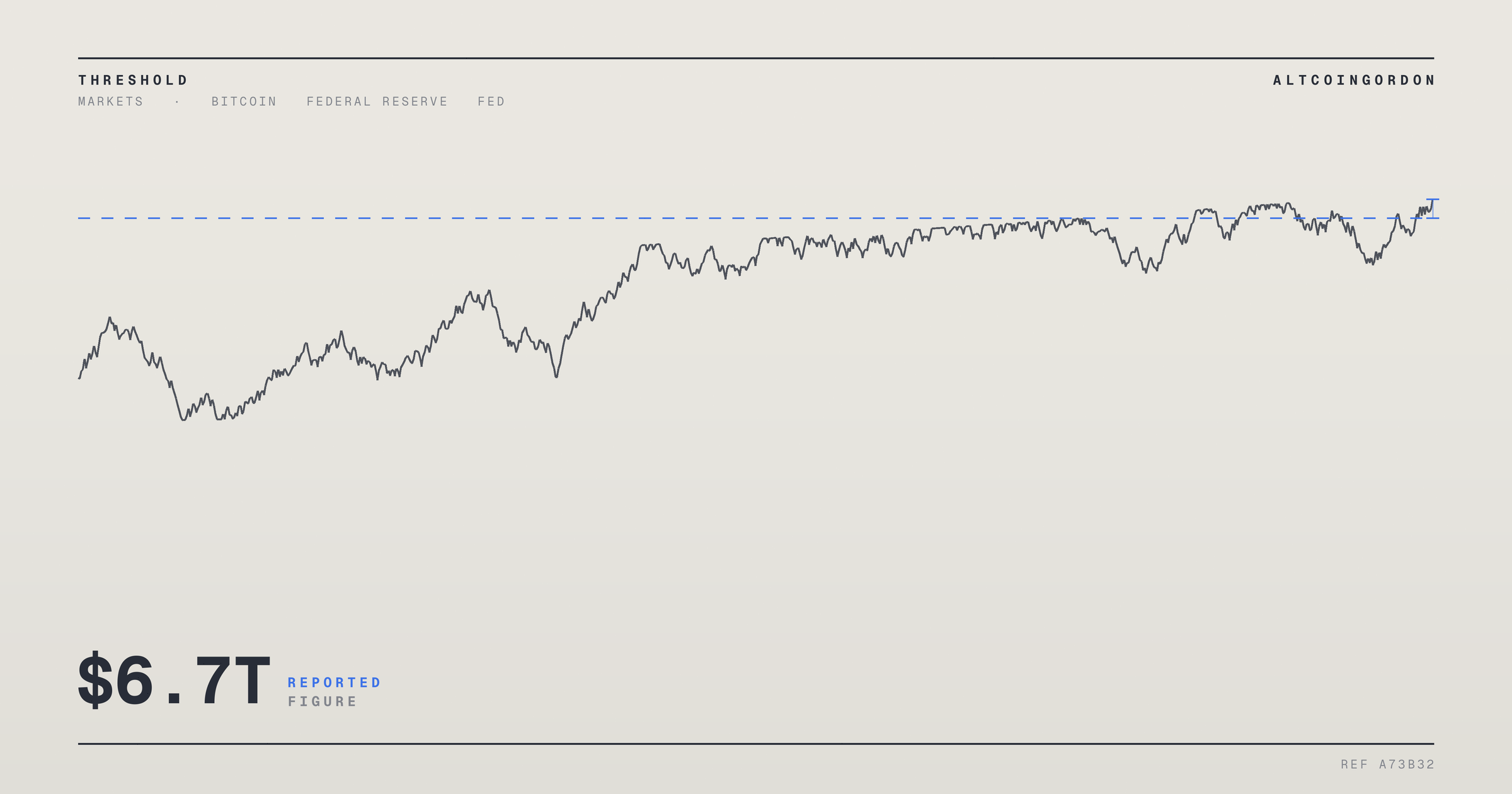
The US Federal Reserve's balance sheet was reported at $6.7 trillion as of August 5, based on the latest available data. This figure represents the central bank's total holdings of assets, including Treasury securities and mortgage-backed securities accumulated through years of monetary policy operations, most notably the extraordinary asset purchases undertaken during the pandemic era.
The Fed's balance sheet has been a central focus for market participants since the central bank began actively shrinking its holdings through quantitative tightening (QT) in 2022, reversing years of expansion. At its peak, the balance sheet had grown to levels significantly higher than today's reading, reflecting the scale of intervention deployed to stabilize markets and support the economy during periods of financial stress.
Since then, the Fed has allowed a portion of its bond holdings to mature without full reinvestment, gradually draining liquidity from the financial system. The pace of this runoff has been adjusted over time as policymakers balance the goals of tightening financial conditions against concerns about disrupting money markets or triggering unwanted volatility in short-term funding rates.
A balance sheet reading of $6.7 trillion signals that the normalization process remains ongoing, though the exact trajectory — whether the pace of reduction is accelerating, slowing, or holding steady — depends on weekly data releases and the Fed's own policy guidance. Analysts and traders typically parse these figures alongside other indicators, such as bank reserve levels and repo market activity, to gauge how much slack remains in the financial system.
The balance sheet figure matters beyond traditional finance circles. Crypto markets, particularly Bitcoin and major altcoins, have shown periods of sensitivity to shifts in Fed liquidity conditions, as looser monetary policy and balance sheet expansion have historically coincided with risk-on sentiment across asset classes. Conversely, sustained balance sheet contraction is often associated with tighter financial conditions that can weigh on speculative assets.
It is worth noting that cross-referencing with official Federal Reserve statistical releases (such as the H.4.1 report) would typically be used to confirm the precise $6.7 trillion figure before drawing firm conclusions about directional trends.
Market Impact
Should the $6.7 trillion figure be confirmed through official Fed data channels, it would provide another data point for traders tracking the broader liquidity backdrop heading into future policy decisions. Markets that are sensitive to changes in system-wide liquidity, including equities and cryptocurrencies, often react to shifts in the pace of balance sheet runoff, particularly when combined with signals about future interest rate policy.
For crypto markets specifically, sustained Fed balance sheet contraction has at times been associated with reduced risk appetite, while any pause or reversal in quantitative tightening has historically been viewed as a potentially supportive backdrop for digital assets. However, the balance sheet figure alone does not determine market direction, and traders typically weigh it alongside inflation data, employment figures, and explicit Fed communications.
As the Federal Reserve continues its balance sheet normalization process, weekly updates such as the reported $6.7 trillion figure will remain a data point for market participants assessing the broader liquidity environment, though confirmation through official channels is advisable before drawing firm conclusions.
Frequently Asked Questions
What does the Fed's balance sheet size represent?
It reflects the total value of assets held by the Federal Reserve, primarily Treasury securities and mortgage-backed securities, accumulated through asset purchase programs and other monetary policy operations.
Why does the balance sheet size matter for markets?
Changes in the Fed's balance sheet influence the amount of liquidity in the financial system, which can affect borrowing costs, bank reserves, and investor risk appetite across asset classes, including cryptocurrencies.
Is the $6.7 trillion figure confirmed by multiple sources?
As of this report, the figure has been corroborated by a single reporting source. Readers seeking full certainty should cross-check with the Federal Reserve's official weekly H.4.1 statistical release.
What is quantitative tightening (QT)?
QT refers to the Federal Reserve's process of reducing its balance sheet by allowing bonds to mature without reinvesting the proceeds, which gradually withdraws liquidity from the financial system.
How might this affect the crypto market?
Crypto assets have at times shown sensitivity to shifts in Fed liquidity conditions, with tighter balance sheet policy historically associated with more cautious risk sentiment, though no specific price impact can be confirmed from this data alone.