

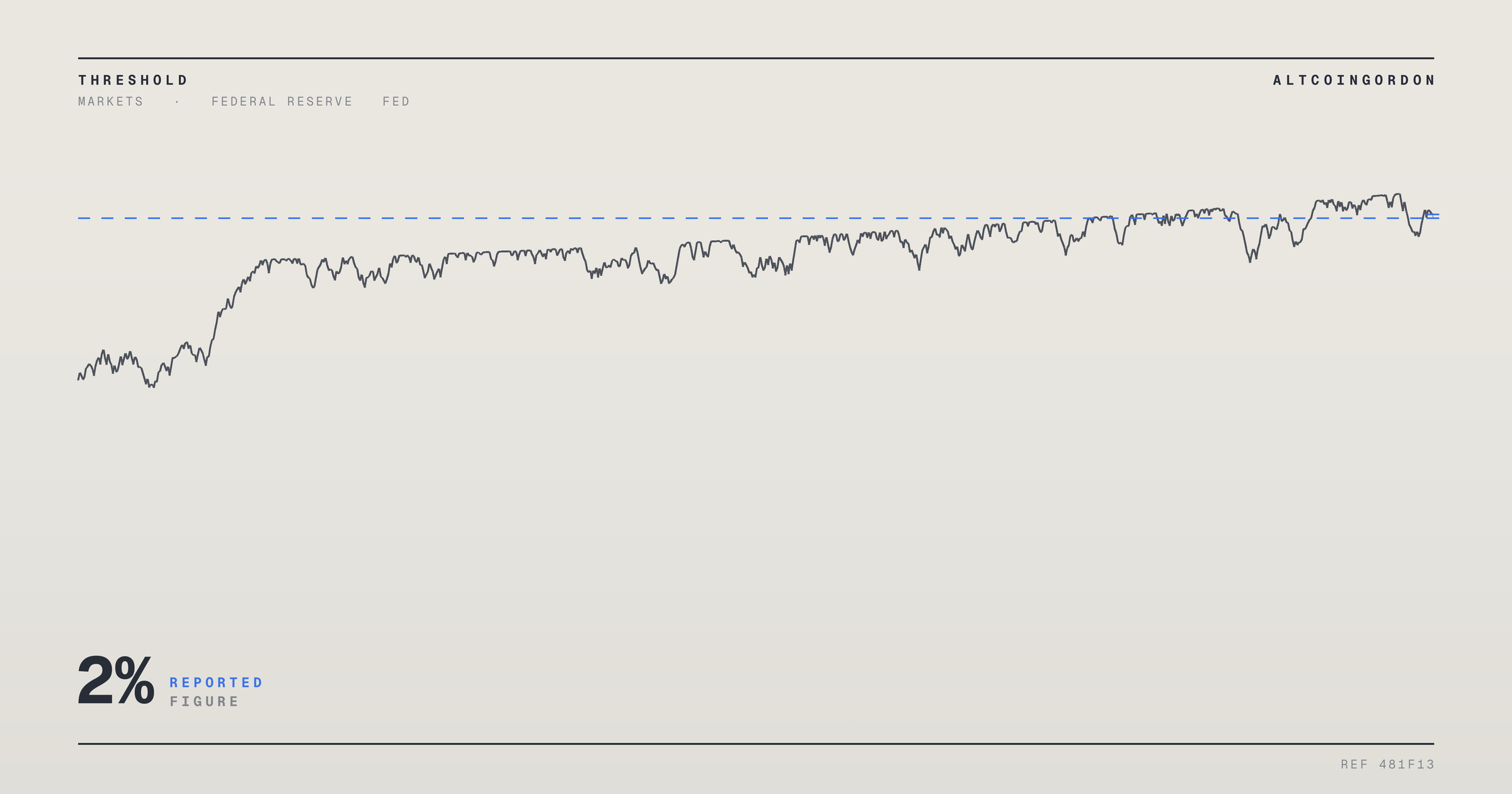
Federal Reserve Chair Warsh has stated that the central bank remains committed to a 2% inflation target, CryptoBriefing reported. The comments come at a time when US government debt continues to climb to historic levels.
The pledge signals continuity in the Fed's long-standing approach to price stability. A 2% inflation target has served as the benchmark for US monetary policy since it was formally adopted in 2012. Fed officials have generally treated deviations from that goal as temporary rather than a shift in strategy.
The backdrop to Warsh's statement is a national debt burden that has drawn increasing scrutiny from economists and lawmakers. Rising debt levels can complicate a central bank's ability to fight inflation. Higher borrowing costs raise the government's own interest payments, creating pressure that can spill into monetary policy debates.
Maintaining a fixed inflation target while debt grows is not a new tension for central banks. Historically, some governments have leaned on inflation to erode the real value of outstanding debt. Analysts watch for any sign that a central bank might tolerate higher inflation to ease fiscal strain.
Warsh's remarks appear intended to reassure markets that no such shift is underway. By restating the 2% goal, the Fed signals it does not plan to let debt dynamics dictate its inflation stance. That message matters for bond markets, currency valuations, and long-term interest rate expectations.
The report did not detail specific policy tools or a timeline tied to the pledge. It also did not specify how the Fed plans to balance debt-related fiscal pressures with its inflation mandate. Further details from the Fed or other officials could clarify the approach in coming weeks.
The statement arrives amid broader debate over central bank independence. Critics of high government debt levels sometimes argue that fiscal pressures could eventually influence monetary policy decisions. Warsh's comments push back against that narrative, at least in rhetoric.
Market Impact
A reaffirmed 2% inflation target, if sustained through actual policy, tends to support confidence in traditional fixed-income and currency markets. Investors often price in central bank credibility when assessing bond yields and inflation expectations.
For crypto markets, statements about inflation targets and government debt levels can influence sentiment around assets viewed as inflation hedges, including bitcoin. Traders who see debt growth as a risk to currency stability sometimes look to crypto as an alternative store of value, though the report gives no indication of a direct crypto-market reaction to Warsh's comments.
The pledge underscores the Fed's stated intent to keep inflation policy separate from fiscal pressures tied to rising US debt. Markets will likely watch upcoming Fed communications for confirmation that policy actions match the rhetoric.
Frequently Asked Questions
What did Fed Chair Warsh say about inflation?
According to CryptoBriefing, Warsh reaffirmed the Federal Reserve's commitment to keeping inflation at its long-standing 2% target.
Why does rising US debt matter for this pledge?
Growing national debt can pressure central banks, since higher borrowing costs and interest payments sometimes create incentives to tolerate higher inflation to ease fiscal strain.
Could this affect the crypto market?
Statements on inflation and debt can shape sentiment toward assets seen as inflation hedges, including bitcoin, though no direct market reaction was reported.
Has the Fed's 2% target changed recently?
The report does not indicate any change to the target; Warsh's comments reaffirm the existing 2% goal the Fed adopted in 2012.