

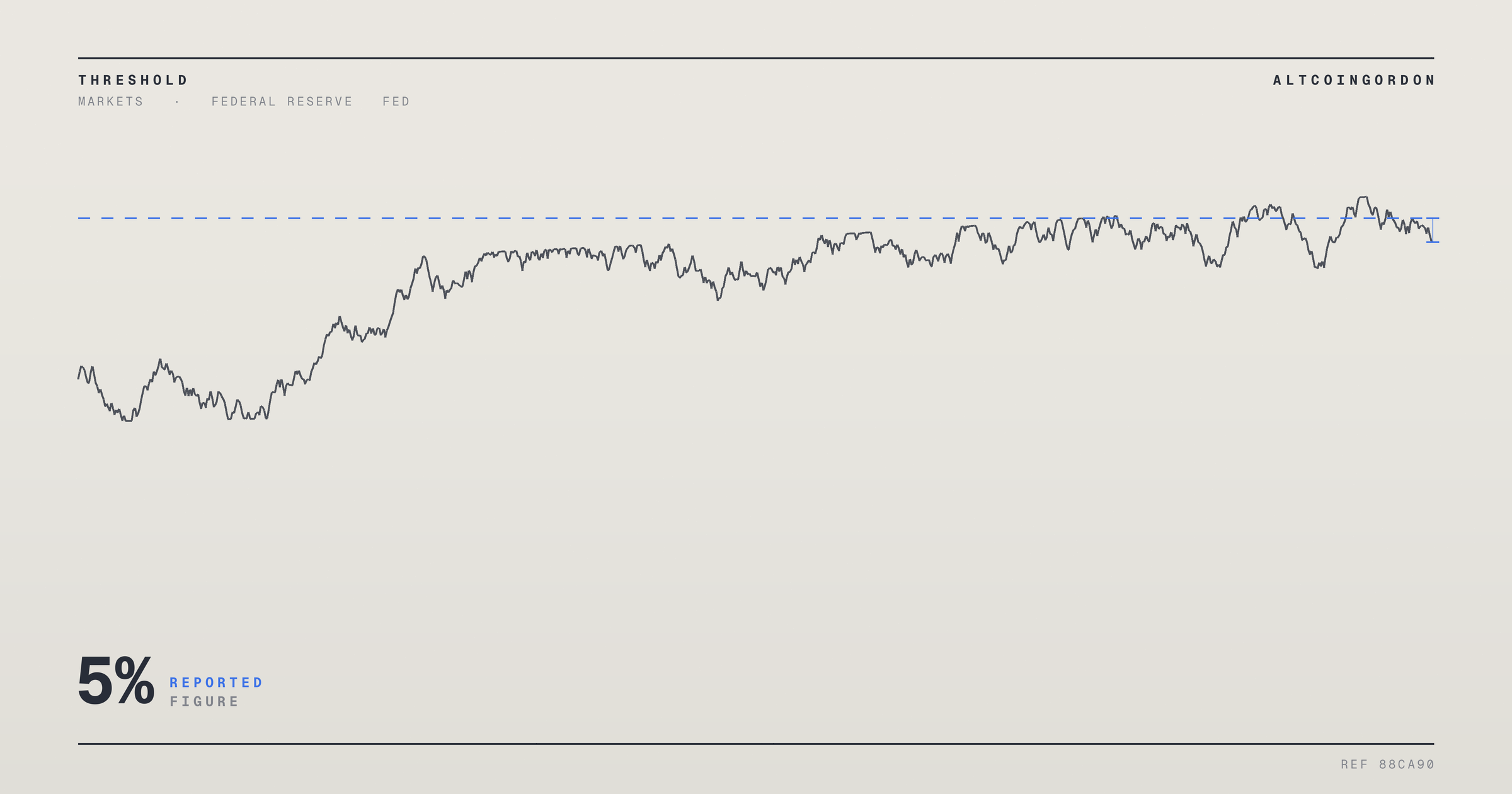
The Producer Price Index for July came in at 4.7% year-over-year, according to a report from CryptoBriefing. That figure sits below the 5% consensus estimate that economists on Wall Street had penciled in ahead of the release.
PPI measures the average change in prices that producers receive for their goods and services. It is often viewed as an early signal for consumer-level inflation, since cost pressures at the wholesale level tend to filter through to retail prices over time. A lower-than-expected reading suggests that price pressures earlier in the supply chain may be easing faster than many had anticipated.
Investors and policymakers watch PPI closely alongside the Consumer Price Index because both feed into the broader inflation picture that guides the Federal Reserve's interest rate decisions. A cooler PPI print can support arguments that inflation is moderating, which in turn can shape expectations for how aggressively the central bank needs to act on rates.
Markets have spent much of the past two years reacting to every inflation data point as a proxy for the Fed's next move. Higher-than-expected readings have historically pressured risk assets, including equities and cryptocurrencies, on fears of tighter monetary policy. Lower-than-expected readings, like this one, tend to have the opposite effect, at least in the short term.
The gap between the reported 4.7% figure and the 5% forecast is notable but not dramatic. Economists caution that a single data point rarely shifts policy on its own. The Fed typically weighs a range of indicators, including employment data, consumer spending, and the Consumer Price Index, before adjusting its rate stance.
CryptoBriefing's report did not detail the specific components driving the miss, such as which sectors saw the sharpest deceleration in producer prices. Without that breakdown, it remains unclear whether the softer number reflects broad-based easing or is concentrated in a few volatile categories like energy or food.
Market Impact
Cooler inflation data of this kind has historically been read by traders as supportive for risk assets, since it can reduce pressure on the Fed to maintain a restrictive rate stance. Crypto markets, which often move in tandem with broader risk sentiment, may see short-term buying interest tied to expectations of a less hawkish Fed.
However, the reaction to a single PPI print is typically muted compared to moves following the Consumer Price Index or Fed rate decisions themselves. Traders will likely look for confirmation from upcoming CPI data and Fed commentary before drawing firm conclusions about the pace of future policy easing.
The July PPI figure adds a modestly encouraging data point to the ongoing inflation narrative. Its lasting impact on markets, including crypto, will depend on whether upcoming reports confirm the trend.
Frequently Asked Questions
What is the Producer Price Index (PPI)?
PPI tracks the average change in prices that producers receive for goods and services before they reach consumers. It is used as an early indicator of future consumer inflation trends.
Why did July's PPI reading matter to markets?
The 4.7% figure came in below the 5% forecast from Wall Street economists, suggesting inflation pressures at the producer level may be cooling faster than expected. This can influence expectations for Federal Reserve interest rate policy.
How does PPI relate to crypto markets?
Cryptocurrencies often trade in line with broader risk sentiment, which is heavily influenced by inflation data and Fed policy expectations. Softer inflation readings can sometimes support risk-asset buying, including in crypto.
Does one PPI report change Fed policy?
Not typically. The Federal Reserve reviews multiple data sources, including employment figures and the Consumer Price Index, before making rate decisions, so a single report rarely shifts policy on its own.