

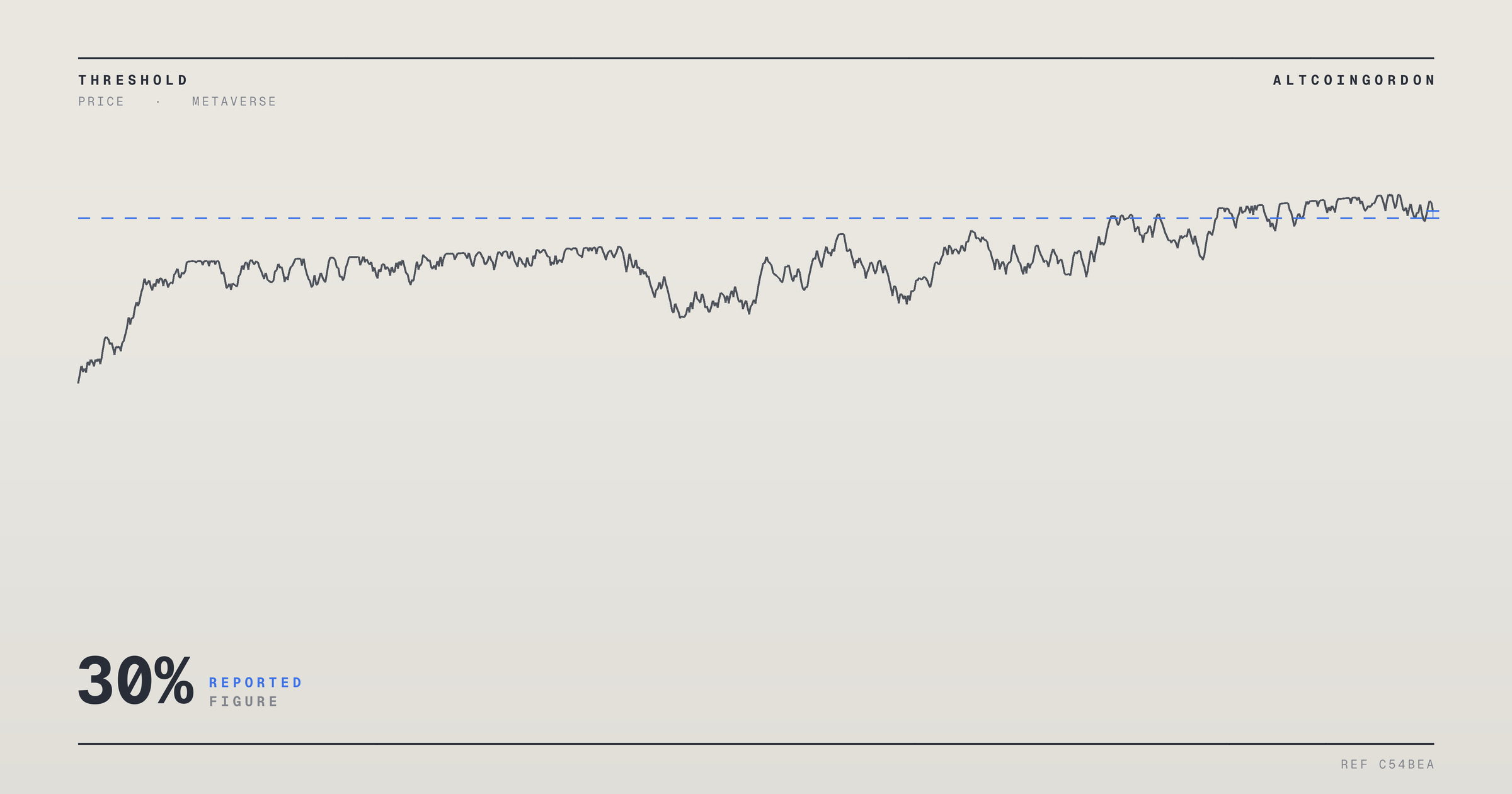
Meta Platforms is being described as an undervalued mega-cap technology stock in a new report from Yahoo Finance. The report says Wall Street's average price target implies roughly 30% upside for the company's shares.
One analyst cited in the coverage is notably more bullish than the broader consensus. That analyst reportedly expects Meta's stock to roughly double, a projection well above the average Wall Street estimate.
Meta has spent the past several years transforming from a social media company into a broader technology conglomerate. Its businesses now span advertising, messaging, virtual reality hardware, and artificial intelligence infrastructure. Investors have increasingly weighed how much of that diversification is reflected in the company's current valuation.
The framing of Meta as "deeply discounted" suggests analysts see a gap between the company's underlying fundamentals and its market price. Such gaps often emerge when a company's core advertising business performs well but its newer, capital-intensive bets, such as AI infrastructure or the metaverse, draw skepticism from parts of the market.
Wall Street price targets are forward-looking estimates, not guarantees. They reflect analysts' models of future earnings, growth, and market sentiment, and they can shift quickly as new data, earnings reports, or macroeconomic conditions emerge. A 30% average upside estimate signals confidence among analysts covering the stock, but it does not represent a fixed outcome.
The existence of one analyst forecasting a doubling of the stock highlights how much divergence can exist within Wall Street coverage of a single company. Such outlier projections often rest on more aggressive assumptions about revenue growth, margin expansion, or the payoff from heavy capital spending on artificial intelligence.
Meta's spending on AI infrastructure has been a central theme in recent coverage of the company. Investors have debated whether that spending will translate into durable revenue growth or whether it represents a drag on near-term profitability. Analyst price targets often reflect differing views on that exact question.
Market Impact
If Wall Street's broader 30% upside view gains traction, it could support continued institutional interest in Meta as a core large-cap technology holding. Analyst price targets, particularly from widely followed research desks, can influence short-term trading activity and investor sentiment around mega-cap tech names.
The more aggressive single-analyst forecast of a potential doubling introduces additional attention to the stock, though such outlier calls typically carry more uncertainty than consensus estimates. Market participants often treat average analyst targets as a baseline while viewing standalone bullish calls with more caution, given the wider range of assumptions behind them.
The report underscores a divide in how Wall Street values Meta, with most analysts pointing to solid but measured upside and at least one seeing far greater potential. As with any forward-looking estimate, actual performance will depend on Meta's earnings, its AI spending payoff, and broader market conditions.
Frequently Asked Questions
What does it mean that Wall Street expects 30% gains for Meta?
It reflects the average price target set by analysts covering Meta's stock, according to the Yahoo Finance report, implying that consensus expectations point to about 30% upside from current levels.
Which analyst expects Meta's stock to double?
The Yahoo Finance report references one analyst with a notably higher price target than the Wall Street average, projecting that Meta's stock could roughly double, though the analyst's name and firm were not detailed in the available reporting.
Why is Meta considered undervalued by some analysts?
The characterization stems from a perceived gap between Meta's current stock price and analysts' estimates of its future earnings and growth, particularly tied to its advertising business and AI investments.
Are analyst price targets guaranteed forecasts?
No. Price targets are estimates based on analysts' models and assumptions, and they can change as new financial results, guidance, or market conditions emerge.