

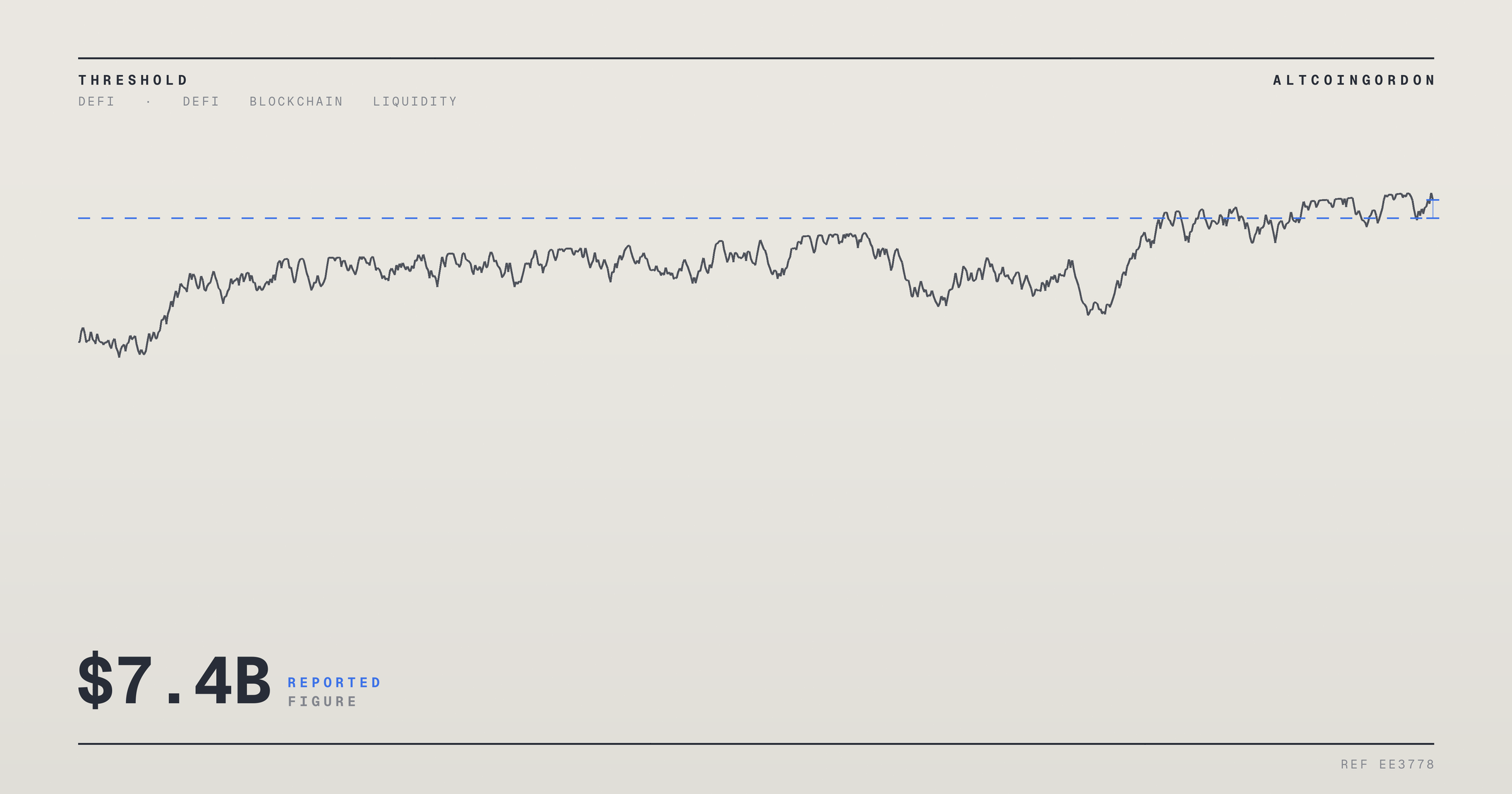
According to a report published by BeInCrypto, deposits associated with real-world asset (RWA) protocols on decentralized finance platforms have climbed to roughly $7.4 billion. The increase comes at a time when many segments of the broader DeFi market have experienced declining total value locked, reduced trading volumes, and diminished user activity, making the divergence notable if the figures hold up under further scrutiny.
Real-world asset tokenization refers to the practice of representing traditional financial instruments — such as government bonds, private credit, treasury bills, and other yield-bearing assets — as blockchain-based tokens. This approach has been positioned by many industry participants as a bridge between conventional finance and decentralized markets, offering investors exposure to familiar asset classes with the added benefits of blockchain settlement, composability, and, in some cases, greater transparency around collateral.
The reported growth in RWA deposits arrives against a backdrop in which macroeconomic conditions, including elevated interest rates in traditional markets, have made yield-bearing tokenized products more attractive relative to purely crypto-native yield strategies. When returns on decentralized lending and liquidity provision compress during downturns, tokenized treasuries and similar instruments can offer comparatively stable, predictable returns, which may explain sustained or growing interest even as speculative DeFi activity cools.
It is important to note that this figure comes from a single reported source, and the underlying methodology — including which protocols, chains, and asset categories are counted toward the $7.4 billion total — has not been independently detailed across multiple outlets at this time. Readers should treat the specific figure as preliminary pending additional corroboration from other data providers or on-chain analytics platforms that track RWA sector metrics.
The broader RWA narrative has been a recurring theme in crypto markets over the past several years, with institutional players, asset managers, and crypto-native protocols all exploring tokenization as a growth avenue. Proponents argue that bringing trillions of dollars in traditional assets on-chain represents one of the more durable long-term use cases for blockchain infrastructure, distinct from more speculative trading-driven segments of the market.
At the same time, the RWA sector faces its own set of considerations, including regulatory uncertainty around securities classification, custody arrangements for underlying assets, and the operational complexity of ensuring on-chain tokens remain properly backed by off-chain collateral. These factors continue to shape how quickly institutional capital moves into this segment of decentralized finance.
Market Impact
If confirmed by additional data sources, a rise in RWA deposits during a broader DeFi downturn could suggest that investors are rotating capital toward perceived lower-risk, yield-generating tokenized products rather than exiting decentralized finance entirely. This would be consistent with a broader industry trend of protocols and institutions positioning RWA products as a more resilient category within crypto markets.
However, given the limited corroboration behind this specific figure, market participants should be cautious about drawing firm conclusions about sector-wide capital flows until the data is verified across independent trackers. A confirmed increase could nonetheless reinforce continued institutional and protocol-level investment in tokenization infrastructure, while a revision of the figure would highlight the importance of scrutinizing self-reported DeFi metrics.
The reported climb in real-world asset deposits offers an early signal that tokenized traditional assets may be proving resilient amid a broader DeFi slowdown, though confirmation from additional sources will be needed to validate the scale and drivers of this trend.
Frequently Asked Questions
What are real-world asset (RWA) deposits in DeFi?
RWA deposits refer to capital placed into decentralized finance protocols that hold or represent tokenized versions of traditional financial instruments, such as government bonds, treasury bills, or private credit products.
Why might RWA deposits grow while overall DeFi activity declines?
During downturns, tokenized products tied to traditional yield-bearing assets can offer more stable and predictable returns compared to purely speculative crypto-native strategies, which may attract capital even as broader DeFi trading and lending activity contracts.
How reliable is the $7.4 billion figure?
The figure comes from a single reported source with limited independent corroboration at this time, so it should be considered preliminary until confirmed by additional data providers or analytics platforms.
What risks remain in the RWA sector?
Key risks include regulatory uncertainty around how tokenized assets are classified, the operational challenge of ensuring on-chain tokens are properly backed by off-chain collateral, and evolving custody arrangements for underlying assets.