

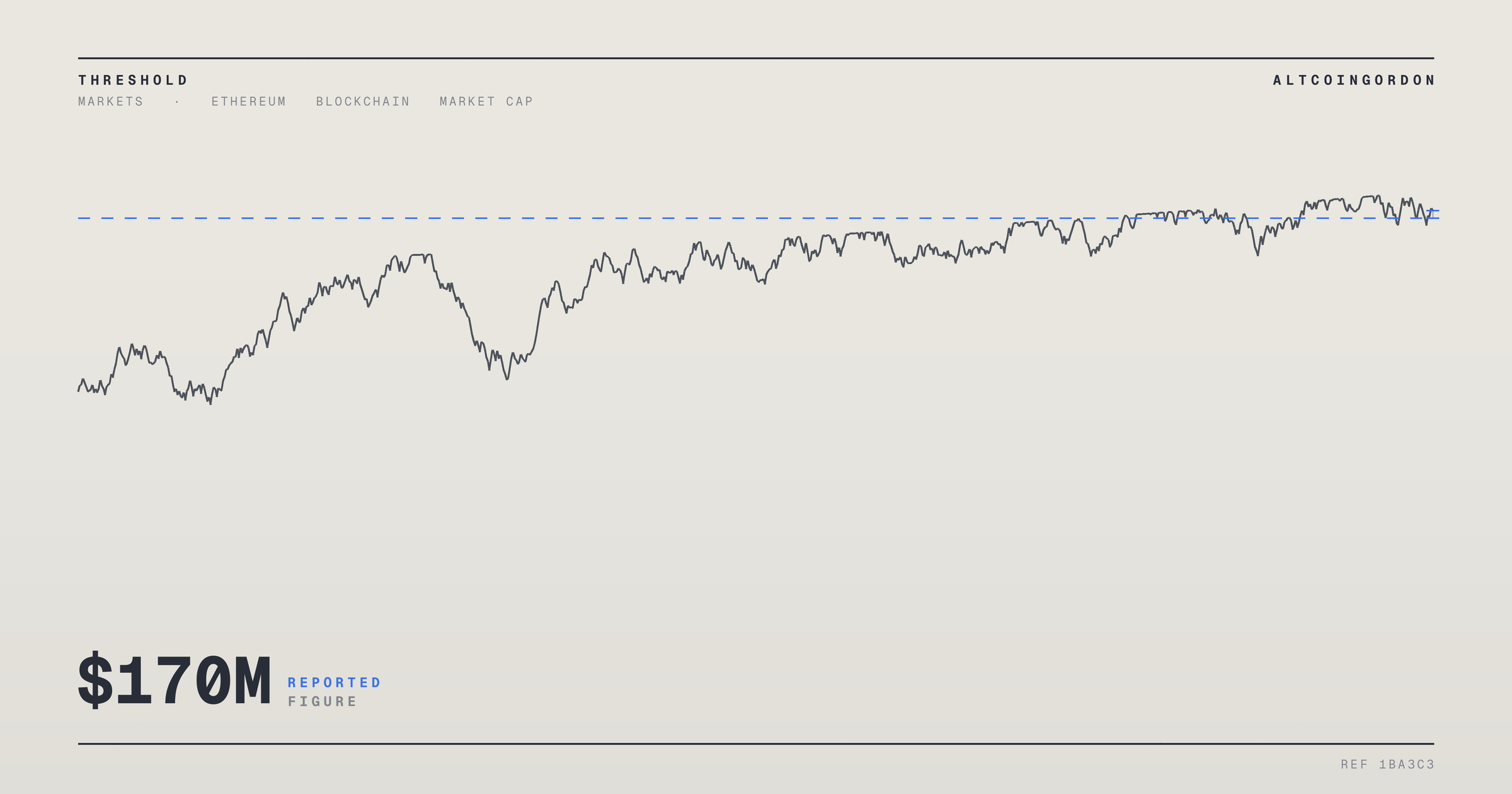
Tokenized stocks built on Arbitrum have reached a combined market capitalization of $170 million, Coinfomania reported. The figure reflects the total value of equity-linked tokens issued and tracked on the network, one of the largest Ethereum Layer-2 scaling platforms by activity and total value locked.
The growth on Arbitrum coincides with a broader shift in the real-world asset (RWA) tokenization market. CryptoBriefing reported that tokenized stocks now represent more than 15% of the total RWA market cap, a category that also includes tokenized treasuries, private credit, real estate, and commodities. That share suggests equities have become one of the faster-growing segments within the tokenization space, rather than a niche experiment.
Tokenized stocks are blockchain-based tokens designed to track the price of publicly traded shares. Issuers typically back these tokens with underlying equity holdings, custodial arrangements, or synthetic exposure mechanisms, depending on the platform. The model allows investors to gain price exposure to companies listed on traditional exchanges without directly holding brokerage accounts, and in some cases allows for trading outside standard market hours.
Arbitrum has positioned itself as an infrastructure layer for this kind of asset issuance, benefiting from lower transaction costs and faster settlement compared to Ethereum's base layer. As decentralized finance protocols and asset issuers look for scalable environments to deploy tokenized products, Layer-2 networks like Arbitrum have attracted a growing share of this activity.
The RWA tokenization sector overall has expanded significantly over the past two years, driven largely by tokenized U.S. Treasury products and private credit funds. Tokenized stocks entered the conversation later, but their rising share of the total RWA market indicates increasing institutional and retail interest in on-chain equity exposure. This trend has unfolded alongside broader efforts by traditional finance firms to explore blockchain rails for settlement and custody.
Regulatory clarity remains a central factor shaping how far tokenized equities can grow. Securities laws in major jurisdictions, including the United States, generally treat tokenized stock products as regulated securities, requiring issuers to navigate licensing, disclosure, and custody requirements. How platforms structure these products, and where they are made available to investors, continues to depend heavily on jurisdiction-specific rules.
The $170 million figure attributed to Arbitrum represents a fraction of the overall RWA market, which includes tokenized Treasuries valued in the billions of dollars. Still, the pace of growth in tokenized equities, and their rising proportional share of the RWA category, signals expanding appetite for blockchain-based access to traditional financial instruments. Market participants are likely to watch whether other Layer-2 networks and issuers follow with similar product launches in the coming months.
Market Impact
The rising market cap of tokenized stocks on Arbitrum suggests growing investor appetite for blockchain-based equity exposure, particularly on cost-efficient Layer-2 networks. If tokenized equities continue gaining share within the broader RWA market, it could encourage additional issuers and DeFi protocols to build similar products, increasing competition among Layer-2 platforms for this type of activity.
However, the sector's growth remains tied to regulatory developments in major markets. Any shifts in how securities regulators treat tokenized stock products could affect issuance, availability, or investor access, shaping how much further this segment of the RWA market can expand.
As tokenized equities gain a larger footprint within the real-world asset market, Arbitrum's growth illustrates how Layer-2 networks are becoming a preferred venue for this emerging asset class, even as regulatory frameworks continue to take shape.
Frequently Asked Questions
What are tokenized stocks?
Tokenized stocks are blockchain-based tokens designed to reflect the price of publicly traded shares, often backed by underlying equity holdings or custodial arrangements.
Why is Arbitrum relevant to tokenized stock issuance?
Arbitrum is an Ethereum Layer-2 network offering lower transaction costs and faster settlement, making it attractive for issuers deploying tokenized asset products.
What does the RWA market include besides tokenized stocks?
The real-world asset (RWA) tokenization market also includes tokenized U.S. Treasuries, private credit, real estate, and commodities.
Are tokenized stocks regulated?
In most major jurisdictions, including the United States, tokenized stock products are generally treated as securities, subject to licensing and disclosure requirements.