

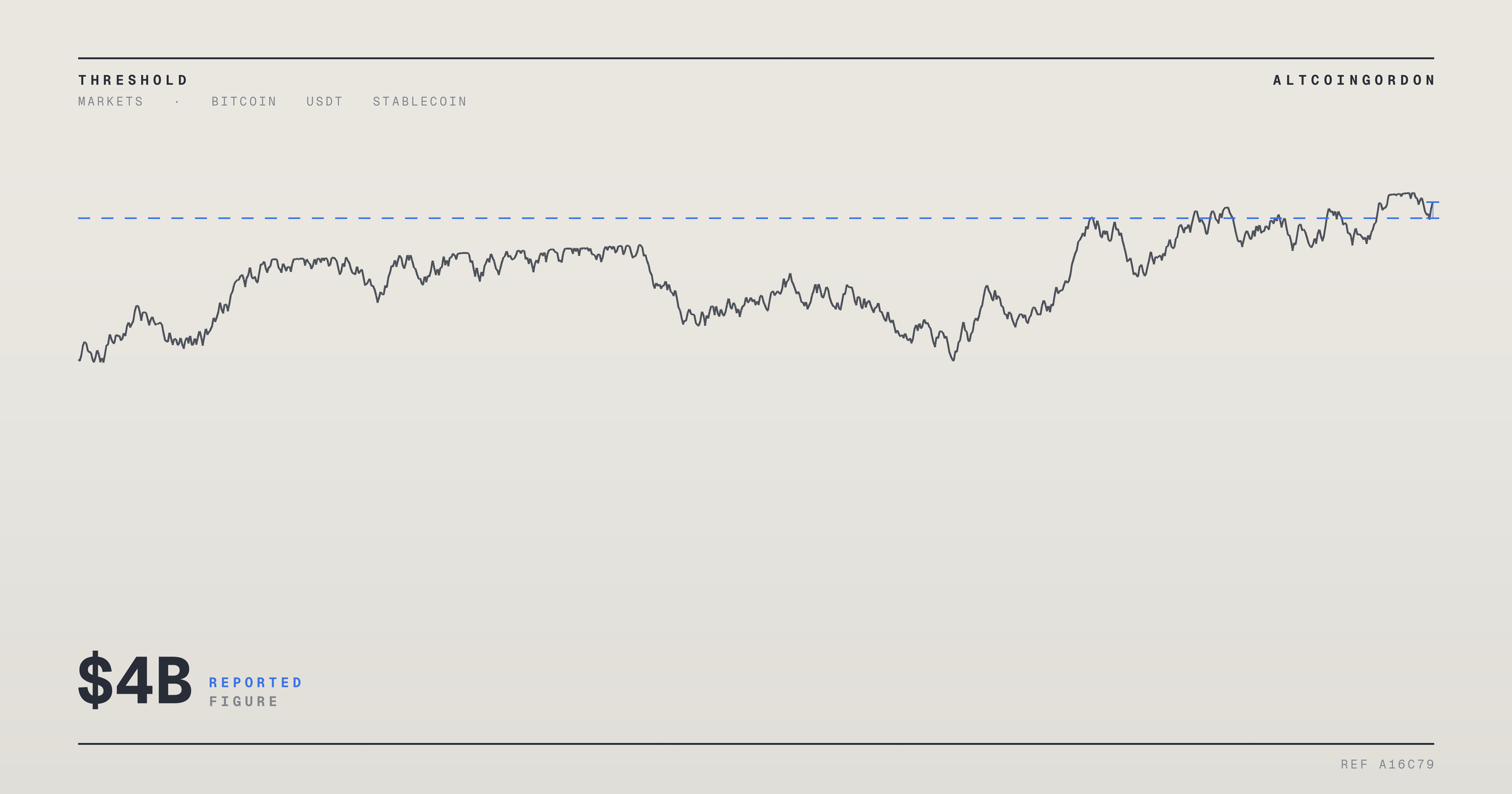
CryptoQuant, an on-chain analytics firm, said Bitcoin sell pressure appears to be nearing exhaustion. The assessment follows a roughly $4 billion decline in the market capitalization of USDT, the largest stablecoin by circulating supply, according to Cointelegraph.
USDT market capitalization is often used by analysts as a proxy for available trading liquidity across crypto markets. A large drop in that figure typically signals that stablecoins are being redeemed for fiat, moved off exchanges, or converted into other assets. Each of these actions can reduce the immediate capacity of traders to buy or sell large amounts of Bitcoin quickly.
CryptoQuant's framing suggests that the outflow of USDT supply has coincided with a reduction in active selling of Bitcoin. When stablecoin liquidity tightens, sellers often have fewer counterparties ready to absorb large orders. That dynamic can slow the pace of price declines even if underlying sentiment remains cautious.
Stablecoins like USDT function as a bridge between traditional finance and crypto trading venues. Traders frequently convert fiat into USDT before buying Bitcoin or other digital assets. A shrinking USDT supply can therefore reflect either reduced demand for crypto exposure or a rotation of capital into other stablecoins and instruments.
Analysts who track stablecoin metrics generally view large swings in supply as a signal worth monitoring rather than a standalone trading trigger. CryptoQuant's data points to a specific liquidity condition, but it does not by itself establish the cause of the USDT decline. Redemptions can stem from regulatory developments, exchange-specific flows, or broader shifts in investor risk appetite.
The report arrives amid a period of heightened attention to stablecoin market structure. Regulators in multiple jurisdictions have increased scrutiny of reserve backing and redemption mechanics for large stablecoin issuers. Any material change in USDT's circulating supply tends to draw notice given its central role in crypto trading volume.
Bitcoin's price action has drawn close attention from traders looking for signs that a recent selling phase is fading. CryptoQuant's language describing sell pressure as ‘closer to exhaustion’ indicates a directional read on market dynamics rather than a definitive turning point. The firm's analysis is based on observed on-chain and stablecoin supply data rather than predictive modeling.
Market participants often treat such liquidity-based signals as one input among several, alongside derivatives positioning, exchange reserve data, and spot volume trends. No single metric is typically considered decisive on its own within on-chain analysis frameworks.
Market Impact
A decline in USDT market capitalization can tighten the liquidity pool traders rely on to execute large Bitcoin orders. If CryptoQuant's read holds, reduced selling capacity could translate into calmer price swings in the near term, though the firm's commentary does not forecast a specific price outcome. Traders watching stablecoin supply data may treat this as a signal to reassess short-term positioning rather than a basis for directional bets.
The broader stablecoin sector remains a focal point for exchanges and institutional desks that depend on USDT for settlement and cross-venue arbitrage. Continued fluctuations in USDT supply could affect trading volumes across multiple crypto pairs, not just Bitcoin, given the stablecoin's role as a primary quote currency on many platforms.
CryptoQuant's observation adds another data point to ongoing debate over Bitcoin's near-term direction, tied specifically to stablecoin liquidity trends rather than price forecasting. Readers should treat the analysis as one indicator among several used by on-chain researchers.
Frequently Asked Questions
What did CryptoQuant report about Bitcoin sell pressure?
CryptoQuant said Bitcoin sell pressure looks closer to exhaustion, linking the assessment to a roughly $4 billion drop in USDT's market capitalization.
Why does USDT market cap matter for Bitcoin trading?
USDT is widely used to fund crypto purchases and provide trading liquidity, so changes in its supply can affect how easily large Bitcoin orders are executed.
Does a drop in USDT supply guarantee Bitcoin's price will rise?
No. The data points to reduced selling capacity in the market, but it does not predict or guarantee any specific price movement.
What caused the $4 billion decline in USDT market cap?
The exact cause was not specified in the reporting. Such declines can result from redemptions, capital rotation, or shifts in exchange-level flows.