

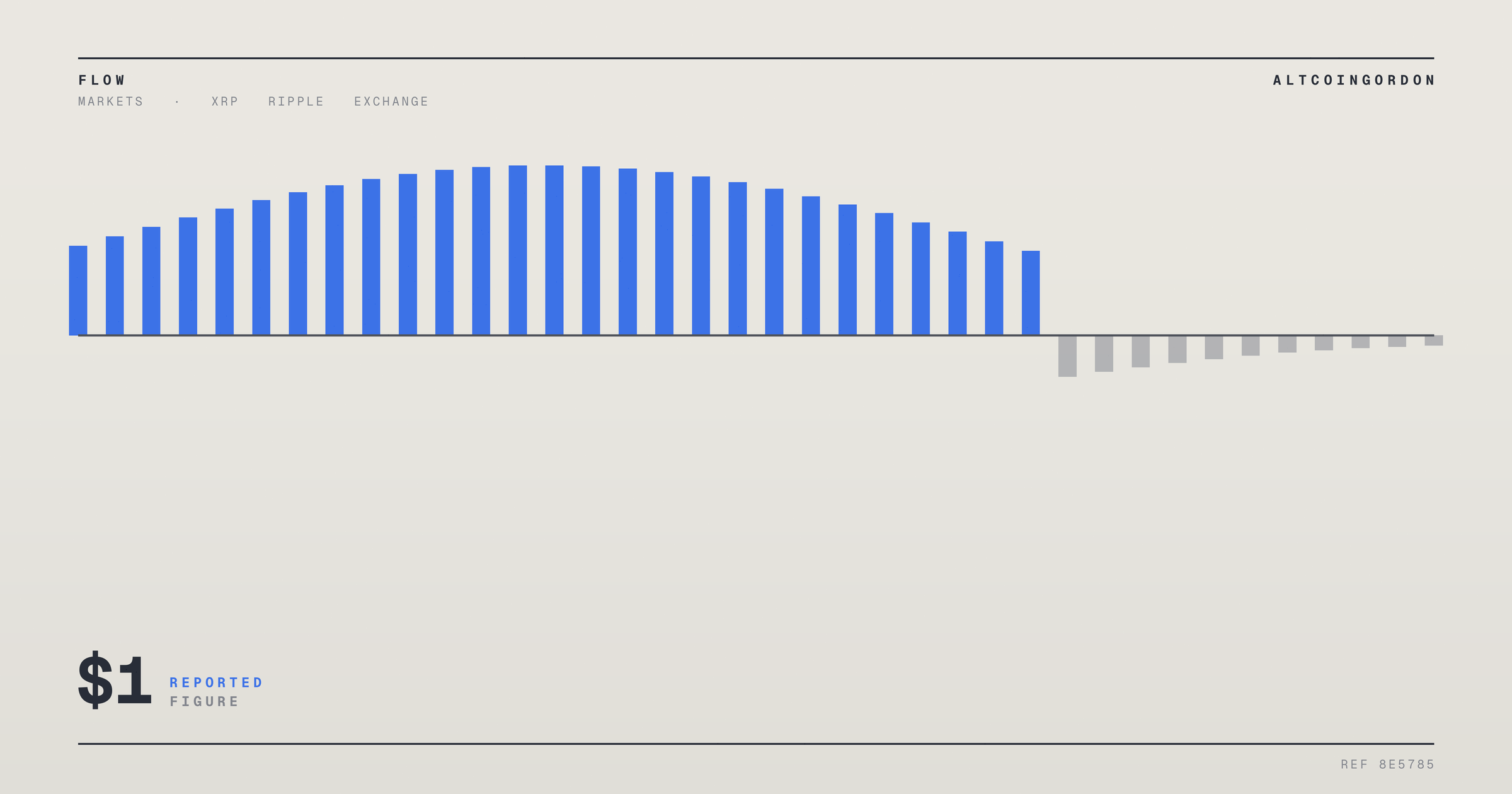
XRP exchange-traded funds have recorded a sharp pullback in investor demand over the past several months. Inflows into these products have fallen 79% since May, based on figures reported by Cryptonews.com. The decline comes at a sensitive moment for the broader crypto market structure debate in Washington.
The CLARITY Act, a bill intended to establish clearer regulatory boundaries between digital asset securities and commodities, has stalled in the legislative process. Its progress had been closely watched by crypto investors, including those holding XRP. Ripple, the company closely associated with XRP, has long argued for regulatory clarity around the token's classification.
Delays to the bill appear to have coincided with softer appetite for XRP-linked investment products. ETF inflows are often viewed as a proxy for institutional interest in a given asset. A steep drop in that metric can signal caution among larger investors waiting for regulatory certainty before committing further capital.
The pullback has also renewed attention on XRP's price level near $1. Cryptonews.com's reporting framed the question of whether that threshold could break as a live concern for traders. CryptoPotato took a different angle, publishing a piece that used ChatGPT to explore whether XRP was at risk of falling below $1 following the CLARITY Act delay.
The use of AI tools to analyze token price risk reflects a broader trend in crypto media and retail research. Such tools synthesize public information and market sentiment rather than offering guaranteed outcomes. Readers should treat AI-generated commentary as one input among many, not as financial advice.
XRP has historically been sensitive to regulatory headlines given its multi-year legal history with the US Securities and Exchange Commission. Its price and trading volumes have often moved in tandem with developments in that case and, more recently, with legislative efforts like the CLARITY Act. The current slowdown in ETF inflows suggests investors may be pricing in continued uncertainty rather than an imminent resolution.
Market participants will likely watch upcoming legislative sessions for signs of renewed movement on the CLARITY Act. Any progress, or further delay, could have an outsized effect on sentiment toward XRP-linked financial products. The coming weeks may prove pivotal for whether ETF demand stabilizes or continues its retreat.
Market Impact
A 79% drop in ETF inflows since May points to a meaningful cooling in institutional appetite for XRP exposure through regulated fund products. Because ETF flows are often used as a gauge of broader investor confidence, the decline could weigh on sentiment across XRP-related trading pairs, even absent direct price commitments in this reporting.
Continued delay of the CLARITY Act removes a potential near-term catalyst that some investors had hoped would boost regulatory certainty for XRP and similar tokens. Until legislative movement resumes, ETF issuers and asset managers may see subdued demand for XRP products, with market attention likely to stay fixed on whether the $1 level holds.
The combination of falling ETF inflows and a stalled regulatory bill has placed XRP under renewed scrutiny. Whether the $1 level holds may depend heavily on how quickly the CLARITY Act moves forward.
Frequently Asked Questions
What is the CLARITY Act?
The CLARITY Act is a proposed US bill aimed at defining regulatory boundaries between digital asset securities and commodities. Its stalled progress has been cited as a factor affecting XRP-related investment demand.
How much have XRP ETF inflows dropped?
According to Cryptonews.com, XRP ETF inflows have fallen 79% since May, marking a sharp slowdown in institutional demand for these products.
Is XRP definitely going to fall below $1?
No confirmed outcome has been reported. CryptoPotato explored the question using ChatGPT-generated analysis, but this reflects speculative commentary rather than a verified price outcome.
Why do ETF inflows matter for XRP's price?
ETF inflows are often treated as an indicator of institutional interest. A sustained drop can signal reduced confidence or caution among larger investors, which may influence overall market sentiment.