

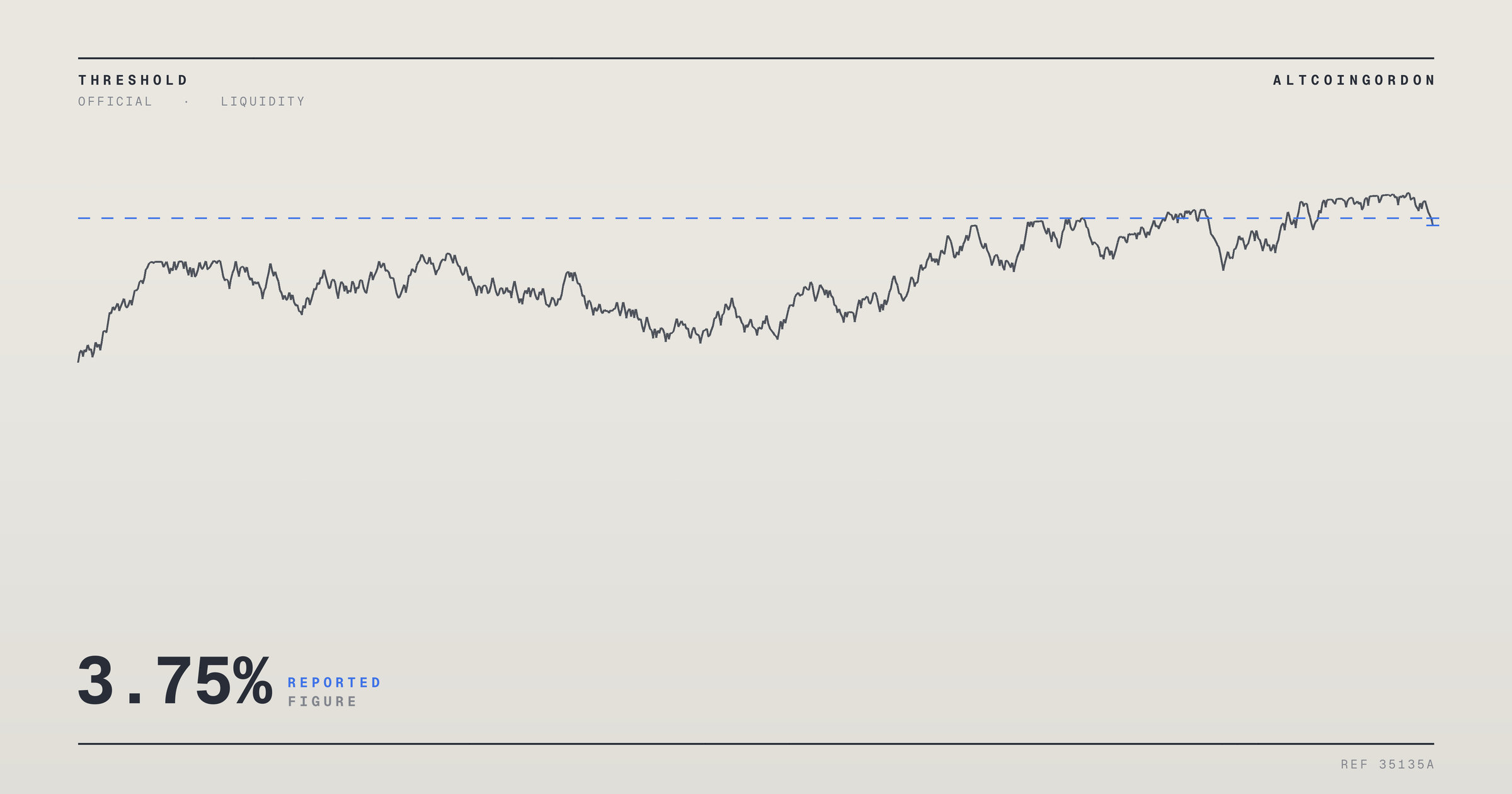
The Bank of England's Monetary Policy Committee (MPC) confirmed on July 30, 2026, that it would maintain the Bank Rate at 3.75%, continuing a run of unchanged decisions that stretches back through the June and April 2026 meetings. The announcement was delivered alongside the customary Monetary Policy Summary and Minutes, the formal documents through which the central bank communicates the reasoning behind its interest rate decisions to markets, businesses, and the public.
The Bank Rate serves as the anchor for borrowing costs across the UK economy, influencing everything from mortgage pricing and business loans to the yields demanded on government debt. When the MPC opts to hold rates steady across multiple consecutive meetings, it typically signals that policymakers view the current balance of inflation risks, growth momentum, and labor market conditions as consistent with the existing policy stance, rather than requiring further tightening or an early pivot toward cuts.
The repetition of a 3.75% rate across the April, June, and July 2026 meetings suggests the committee has settled into a period of watchful stability. Central banks generally prefer to move cautiously once they believe policy is roughly calibrated to the economic cycle, avoiding abrupt swings that could unsettle financial markets or send confusing signals about the future path of monetary policy. A sustained hold also gives the Bank time to observe how previous rate decisions are filtering through to spending, investment, and price pressures before committing to further changes.
Monetary Policy Summary and Minutes releases are closely scrutinized by economists, currency traders, and fixed-income investors because they often contain forward-looking language about the committee's expectations for inflation and growth, as well as the voting breakdown among MPC members. Even when the headline rate decision is unchanged, shifts in tone or vote splits can move sterling and gilt markets, as they offer clues about whether future decisions are likely to lean toward tightening, easing, or continued stability.
For a global audience, including participants in digital asset markets, decisions by major central banks such as the Bank of England remain relevant context. Interest rate policy in large, developed economies shapes the broader liquidity environment and risk appetite that can influence flows into higher-risk assets, including cryptocurrencies. While the Bank of England's mandate is focused squarely on UK price stability and economic conditions, its decisions are one of several inputs that global investors weigh when assessing the overall monetary backdrop.
The consistency across three consecutive Monetary Policy Summary and Minutes releases in 2026 indicates that, as of this writing, the Bank of England has not identified a compelling case to deviate from its current rate setting. Future meetings will be watched to see whether this holding pattern persists or whether new economic data prompts the committee to revisit its stance.
Market Impact
A third consecutive hold at 3.75% is unlikely to generate significant shocks in UK financial markets, since the decision aligns with the pattern already established in April and June 2026. Sterling, gilt yields, and UK equity indices may see modest movement depending on the specific language in the Minutes regarding future guidance, rather than the headline rate itself, which had already been broadly anticipated given the preceding decisions.
For broader global markets, including cryptocurrency and other risk assets, a stable UK interest rate environment removes one source of uncertainty from the international monetary policy landscape. Investors typically pay closer attention to major central banks such as the Federal Reserve or European Central Bank for cues on global liquidity conditions, but continued policy stability at the Bank of England contributes to an overall sense of predictability that can support steady risk sentiment across asset classes.
With the Bank Rate held at 3.75% for a third straight reported meeting, the Bank of England continues to signal a preference for policy stability heading into the second half of 2026, leaving market participants to watch upcoming data and future Monetary Policy Summaries for any signs of a shift.
Frequently Asked Questions
What did the Bank of England decide in July 2026?
The Bank of England's Monetary Policy Committee decided to keep the Bank Rate unchanged at 3.75%, as detailed in its July 2026 Monetary Policy Summary and Minutes.
How does this compare to previous meetings?
This is the third consecutive reported meeting at which the Bank Rate was held at 3.75%, following the same decision in both June 2026 and April 2026.
Why does the Bank Rate matter to everyday consumers and businesses?
The Bank Rate influences the cost of borrowing across the UK economy, including mortgages, business loans, and savings returns, making it a key factor in household and corporate financial planning.
Does the Bank of England's rate decision affect cryptocurrency markets?
While the Bank of England's mandate focuses on UK inflation and economic stability, its decisions contribute to the broader global monetary policy environment, which can indirectly influence investor risk appetite, including in digital asset markets.
What is included in the Monetary Policy Summary and Minutes?
The document outlines the Monetary Policy Committee's assessment of economic conditions, the reasoning behind its rate decision, and typically includes details on how individual committee members voted.