

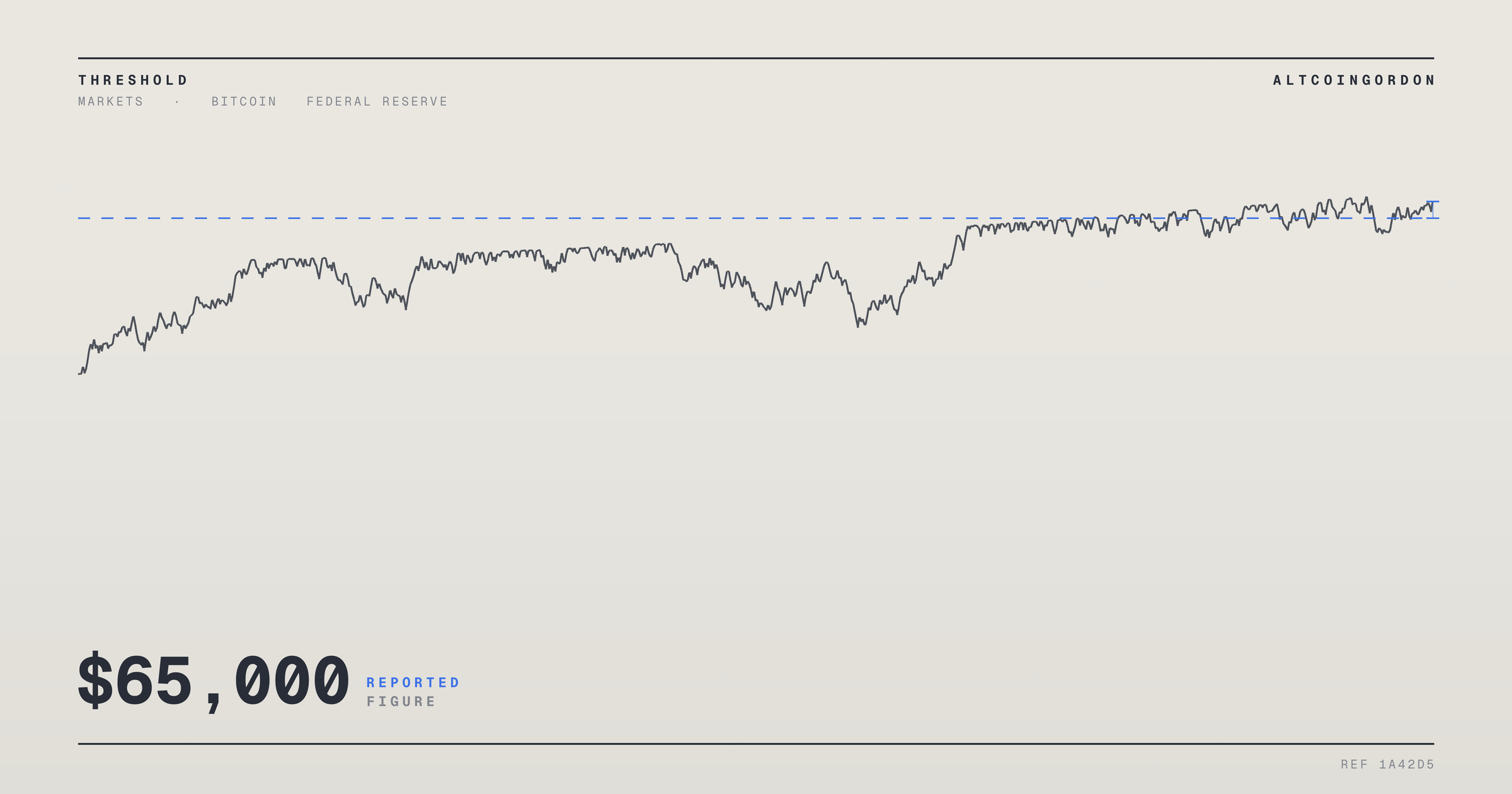
Bitcoin's price broke above $65,000 shortly after the release of a US jobs report that came in well below expectations, according to reporting from The Block. The outlet characterized the miss as a 'massive surprise,' suggesting the data diverged sharply from consensus forecasts among economists and market watchers.
Jobs reports have long served as a key input for traders across both traditional and digital asset markets, since they offer one of the clearest windows into the underlying strength of the US economy. A weaker-than-anticipated reading can shift expectations around the Federal Reserve's interest rate path, often prompting investors to reassess their positioning across risk assets, including cryptocurrencies.
Bitcoin's move past the $65,000 threshold in the wake of the data underscores the extent to which the asset has become intertwined with broader macroeconomic narratives. Where Bitcoin was once viewed largely as an asset that traded independently of traditional economic indicators, it has increasingly responded to shifts in monetary policy expectations, much like equities and other risk assets.
The logic connecting weak labor data to a crypto rally typically runs through interest rate expectations: softer employment figures can increase the likelihood that a central bank will ease monetary policy or hold off on tightening, which in turn can make non-yielding or growth-oriented assets like Bitcoin more attractive relative to cash or fixed income. Lower rate expectations can also weaken the US dollar, another factor historically associated with strength in Bitcoin's price.
While the specific figures behind the jobs miss were not detailed beyond The Block's characterization of it as a significant surprise, the framing suggests the deviation from forecasts was substantial enough to trigger a notable market reaction. Traders often react quickly to labor market surprises, given their weight in shaping views on the broader economic cycle and the central bank's next moves.
The timing of Bitcoin's advance past $65,000 alongside this data point places the move squarely within a pattern seen throughout 2023 and 2024, in which crypto markets have shown heightened sensitivity to US macroeconomic releases, particularly those tied to employment, inflation, and Federal Reserve commentary.
Market Impact
A jobs miss of the magnitude described could reinforce expectations that the Federal Reserve may take a more accommodative stance on interest rates, a scenario that has historically supported risk asset prices, including Bitcoin and other cryptocurrencies. Traders watching for signs of policy easing may view weaker labor data as one factor supporting continued upward momentum in crypto markets, though the durability of any rally would likely depend on subsequent economic data and central bank communications.
Beyond Bitcoin itself, a sustained move above $65,000 could have knock-on effects across the broader digital asset market, potentially lifting sentiment toward altcoins and crypto-related equities that tend to correlate with Bitcoin's price direction. However, macro-driven rallies of this kind can also prove volatile, as markets frequently recalibrate expectations once additional data or Fed commentary emerges.
As with previous instances of macroeconomic data moving crypto prices, the durability of Bitcoin's climb past $65,000 will likely hinge on how subsequent economic indicators and central bank signals shape broader risk appetite in the weeks ahead.
Frequently Asked Questions
Why did Bitcoin's price rise after a weak US jobs report?
Weaker-than-expected employment data can increase expectations that the Federal Reserve will ease or hold off on tightening monetary policy, a scenario that has historically been supportive of risk assets like Bitcoin.
What does 'massive surprise' mean in this context?
According to The Block's reporting, the jobs figures diverged significantly from what economists and market participants had expected, which appears to have been a key driver behind the market reaction.
Does this mean Bitcoin's price will keep rising?
The article does not make price predictions. Bitcoin's price movements following macroeconomic data can be volatile and are subject to change based on subsequent data releases and central bank actions.
How closely tied is Bitcoin's price to US economic data?
Bitcoin has increasingly shown sensitivity to US macroeconomic indicators, particularly those related to employment, inflation, and Federal Reserve policy, reflecting its growing integration with broader financial markets.