

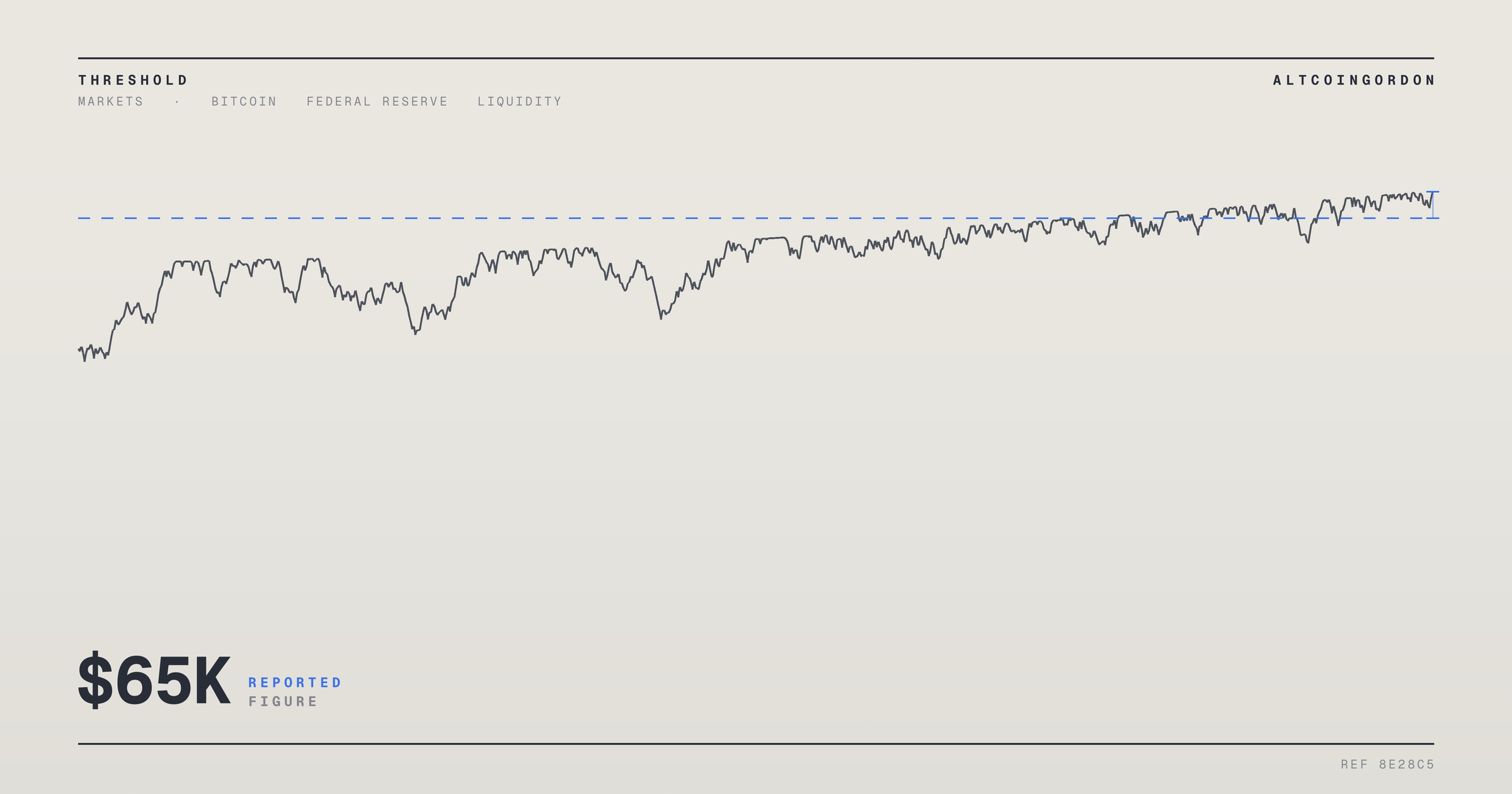
Bitcoin's price action has flattened into a narrow band under the $65,000 level, according to reporting from Cointelegraph, as traders digest newly released US Purchasing Managers' Index figures. The PMI report, a closely watched gauge of activity across manufacturing and services sectors, reportedly signaled a combination of weakening output growth and elevated cost pressures — the classic ingredients of what economists label 'stagflation.'
Stagflation, a term coined during the economic turmoil of the 1970s, describes a scenario in which an economy experiences stagnant growth, rising unemployment, and persistent inflation simultaneously. It is considered one of the more difficult conditions for policymakers to address, since measures to fight inflation (such as raising interest rates) can further slow growth, while measures to stimulate growth can worsen inflation. When such fears resurface, they tend to inject volatility into financial markets broadly, as investors struggle to price the appropriate policy response from central banks.
For Bitcoin and the broader cryptocurrency market, macroeconomic data releases like the PMI have increasingly become relevant trading catalysts. Over the past several years, Bitcoin has at times traded in correlation with risk assets such as equities, reacting to shifts in expectations around Federal Reserve monetary policy, interest rates, and liquidity conditions. A stagflation narrative complicates this picture because it does not point clearly toward either a dovish or hawkish policy path — inflationary pressures could argue for tighter policy, while weak growth could argue for easing, leaving markets without a clear directional signal.
The consolidation under $65,000 suggests that traders are currently in a wait-and-see posture, absorbing the implications of the data before committing to a directional move. Price coiling — a technical term describing tightening trading ranges — often precedes a more decisive breakout in either direction, though the timing and direction of such moves cannot be predicted with certainty.
It is worth noting that this report currently rests on a single source, and cross-verification from additional outlets has not yet been established. As with any macro-driven narrative in crypto markets, the durability of the 'stagflation' framing will likely depend on subsequent economic releases, including inflation data, labor market reports, and any accompanying commentary from Federal Reserve officials.
Historically, periods of macroeconomic ambiguity have led to increased volatility in Bitcoin's price rather than sustained directional trends, as market participants reassess risk appetite in response to incoming data. Until more clarity emerges on the trajectory of US growth and inflation, Bitcoin's price behavior beneath the $65,000 threshold may continue to reflect broader hesitancy across risk markets rather than crypto-specific developments.
Market Impact
If the stagflation narrative gains traction, it could continue to weigh on risk sentiment across both traditional and digital asset markets, as investors grapple with the dual threat of slowing growth and sticky inflation. Bitcoin's proximity to the $65,000 level may act as a psychological and technical reference point, with traders watching for a decisive break above or below the current consolidation range as a signal of near-term direction.
Broader crypto markets often take cues from Bitcoin's price behavior, meaning continued indecision at this level could translate into subdued volatility across altcoins as well, at least until fresh macroeconomic data or policy signals provide additional clarity.
With Bitcoin holding beneath $65,000 amid renewed stagflation chatter, market participants are likely to keep a close eye on upcoming economic indicators and Federal Reserve communications for cues on the cryptocurrency's next directional move.
Frequently Asked Questions
What does 'stagflation' mean in this context?
Stagflation refers to an economic condition combining slow or stagnant growth with persistently high inflation, a mix that is generally considered difficult for central banks to address with standard monetary policy tools.
Why did US PMI data affect Bitcoin's price?
PMI data offers insight into the health of the manufacturing and services sectors, and unexpected readings can shift expectations about economic growth and Federal Reserve policy, which in turn can influence sentiment across risk assets, including Bitcoin.
What does 'price coiling' mean for Bitcoin?
Price coiling describes a period in which an asset trades within an increasingly narrow range, often reflecting market indecision. Such periods can precede larger price moves, though the direction is not guaranteed.
Is this stagflation concern confirmed by multiple sources?
As of this report, the information is based on a single source, Cointelegraph, and has not yet been independently corroborated by other outlets, so the broader market narrative around stagflation should be treated as developing.