

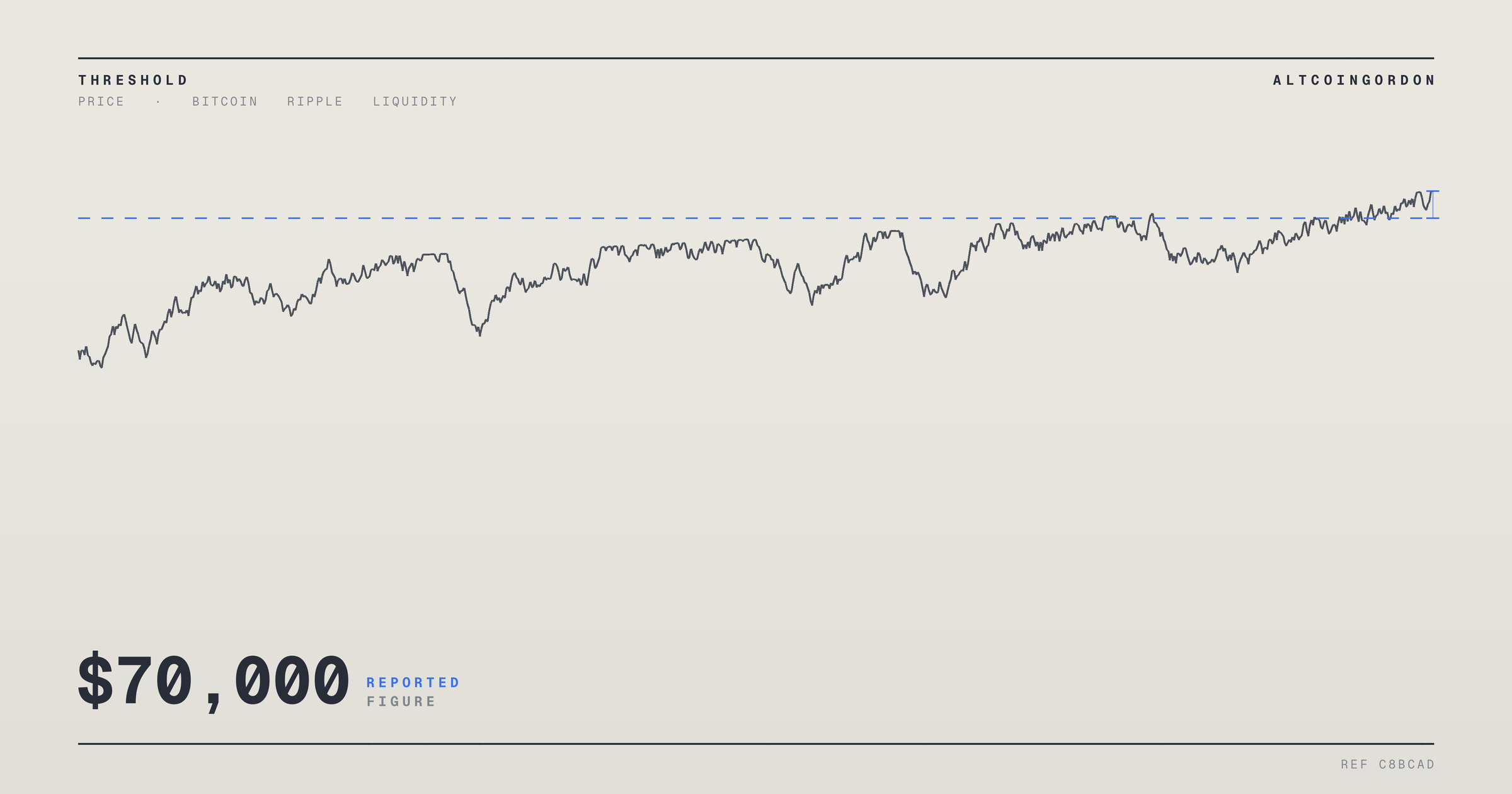
Bitcoin traders are watching two closely spaced price levels this weekend. CryptoSlate reported that the cryptocurrency could break above $70,000 or fall toward $60,000, depending on how markets digest fresh geopolitical stress.
The report ties the setup to escalating tensions around the Strait of Hormuz, a narrow waterway that carries a large share of the world's seaborne oil traffic. Any disruption there tends to ripple through global energy prices and broader risk sentiment, including digital assets.
Bitcoin has increasingly traded in step with macro and geopolitical headlines over the past several years. Investors now treat it as a liquid, always-on barometer of risk appetite, reacting quickly to news that might take longer to show up in traditional markets. Weekend trading sessions, when institutional desks are largely closed, often amplify these swings because liquidity is thinner.
The $70,000 and $60,000 levels cited in the report function as technical reference points rather than fixed thresholds guaranteed to trigger specific outcomes. Traders often use such levels to gauge momentum, watching whether price action confirms a breakout or reverses into a deeper pullback. A decisive move through either level, particularly on above-average volume, is typically viewed as more meaningful than a brief touch.
The backdrop of Hormuz-related tension adds a layer of uncertainty that goes beyond typical crypto-specific catalysts. Oil markets, currency markets, and equities can all be sensitive to shipping disruptions or military posturing near the strait. When such events unfold, capital sometimes rotates toward perceived safe havens, while at other times it flows into assets seen as inflation hedges or alternatives to traditional finance. Bitcoin has been described both ways by different market participants, which helps explain why its reaction to geopolitical stress is not always predictable in one direction.
Market watchers will likely monitor both the price of Bitcoin and broader indicators, including oil futures and safe-haven assets like gold, for signs of how seriously markets are pricing in disruption risk. The interplay between these markets could offer clues about whether the reported tension is expected to be short-lived or more prolonged.
Market Impact
If geopolitical tension near the Strait of Hormuz intensifies, energy markets could see higher volatility, which historically has spilled over into broader risk assets, including cryptocurrencies. A break above $70,000 for Bitcoin would likely be read by traders as a sign of renewed risk appetite, while a slide toward $60,000 could signal risk-off positioning tied to the geopolitical backdrop.
Thin weekend liquidity could exaggerate price swings in either direction, making the moves described in the report more pronounced than they might be during weekday trading. Traders and institutions with exposure to both energy and digital asset markets may adjust hedges depending on how the situation develops over the coming days.
The coming days will show whether Bitcoin breaks decisively toward $70,000 or slips back to $60,000, with geopolitical developments near the Strait of Hormuz likely to remain a key factor shaping trader sentiment.
Frequently Asked Questions
Why does the Strait of Hormuz matter for Bitcoin's price?
The Strait of Hormuz is a major route for global oil shipments, and tension there can affect energy prices and overall market risk sentiment, which sometimes influences Bitcoin trading.
What do the $70,000 and $60,000 levels represent?
According to the report, these are technical price levels traders are watching as potential breakout or breakdown points for Bitcoin, not guaranteed outcomes.
Why might weekend trading amplify Bitcoin's price swings?
Weekend sessions typically see lower trading volume and thinner liquidity, which can make price moves more volatile than during weekday sessions.
Does rising geopolitical tension always push Bitcoin down?
Not necessarily. Bitcoin has reacted differently to geopolitical stress in the past, sometimes acting as a risk asset and other times drawing interest as an alternative store of value.