

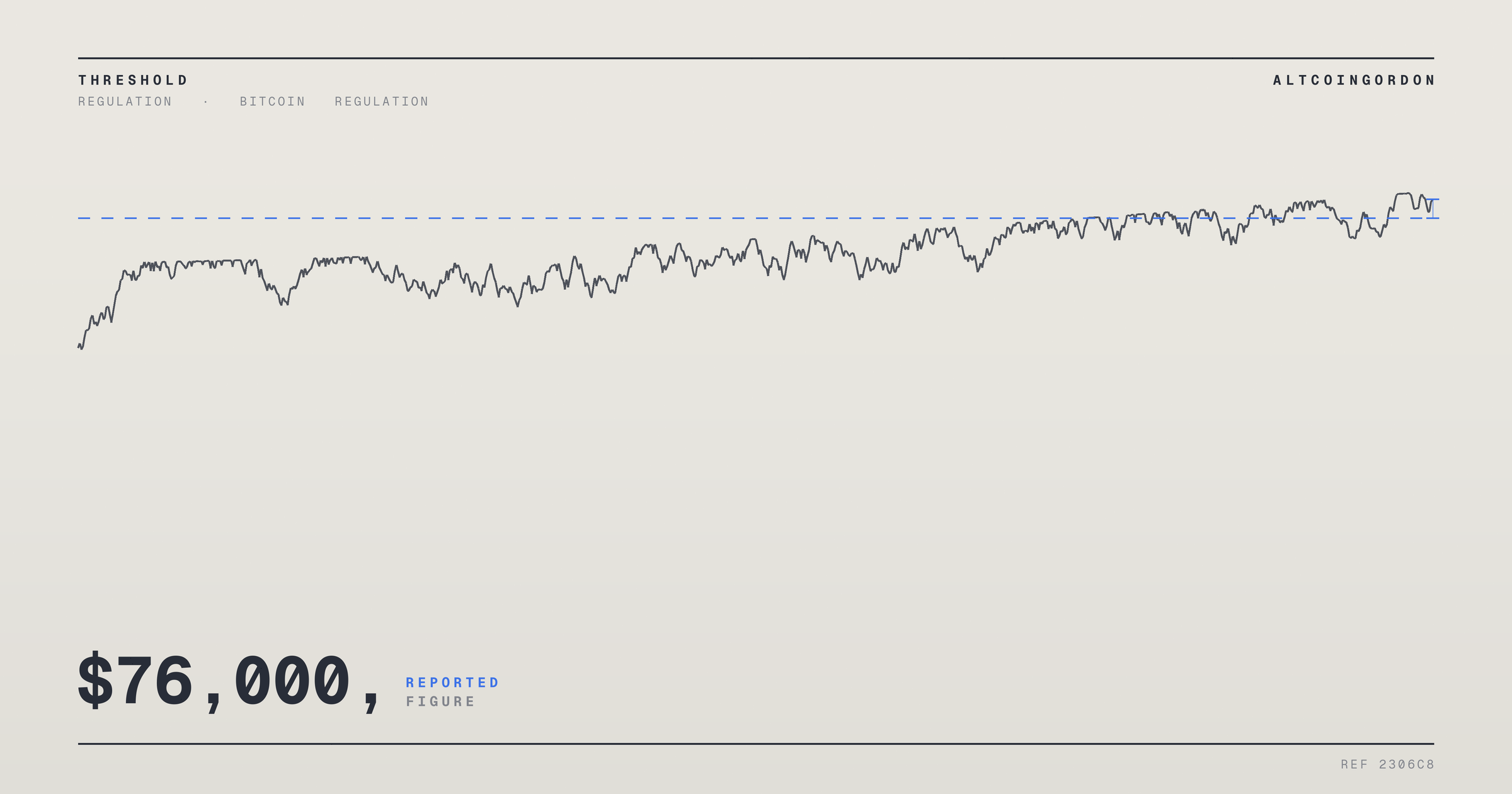
Bitcoin’s price dropped below the $76,000 mark early Tuesday as political news from Washington rattled markets. The decline coincided with U.S. midterm election results pointing to significant Democratic gains, a shift commonly referred to as a Blue Wave.
The dip did not last long. Within hours, bitcoin recovered most or all of its losses, forming what traders describe as a V-shaped pattern. Such patterns involve a steep decline followed by an equally rapid rebound, often signaling that buyers stepped in to absorb the selling pressure.
Election cycles tend to introduce short-term volatility across financial markets. Investors frequently react to shifting political control in Washington by adjusting expectations around fiscal policy, regulation, and government spending. Cryptocurrency markets, which trade around the clock, often register these reactions faster than traditional equity markets, which are closed outside business hours.
Bitcoin’s sensitivity to political developments has grown over recent years as the asset has become more intertwined with macroeconomic and policy narratives. Shifts in congressional control can affect expectations for future legislation touching taxation, financial oversight, and digital asset regulation. Traders sometimes treat election outcomes as a proxy for broader risk sentiment, even when the direct policy implications remain unclear.
The quick recovery below $76,000 suggests that the initial drop may have reflected short-term reactionary trading rather than a fundamental reassessment of bitcoin’s value. V-shaped recoveries are often associated with dip-buying behavior, where investors view sudden price declines as buying opportunities rather than signals of a longer downturn.
Both Bitcoin.com News and CryptoBriefing reported the sequence of events, noting the timing alignment between the midterm election results and the price movement. Neither outlet detailed a specific cause-and-effect mechanism tying the Blue Wave outcome directly to bitcoin’s price action, leaving open questions about how much of the dip was driven by election news versus other market factors active at the same time.
Sources disagree on this story
This article was published before the reports below were compared. The reporting above stands; what follows is where the published accounts do not agree.
Bitcoin.com News and Cointelegraph give conflicting accounts of whether Democrats had actually won the Senate at the time of the midterm-related price dip.
What all sources agree on
- Bitcoin fell to roughly $75,600-$75,700 overnight before rebounding as U.S. midterm election results came in.
- Democrats were reported to have won control of the House of Representatives.
- The price dip and rebound occurred alongside falling U.S. stock futures.
Where the reports disagree
1Whether the Senate race had been formally decided
The Senate had not been formally called, but traders were not waiting. Prediction market Kalshi put the odds of Democrats controlling the chamber at 99% overnight.
Bitcoin fell to $75,618 as Democrats won control of both the House and Senate in the US midterm elections.
What would settle it: Official Senate election results certified by state election authorities or a formal race call from a major election desk (e.g., AP, NBC News).
What to make of it
Treat the broad narrative — a bitcoin dip to the mid-$75,000s followed by a recovery amid midterm election news — as established, but do not treat the Senate outcome as settled until an official race call or certified result is available.
Market Impact
Short-term volatility around major political events is not unusual for bitcoin, given its 24/7 trading and global investor base reacting to real-time news. A rapid recovery after a dip can indicate resilient demand at lower price levels, though it does not guarantee sustained upward momentum.
Market participants will likely watch for further policy signals from Washington following the midterm results, particularly any statements touching financial regulation or digital assets. Continued political uncertainty could keep short-term volatility elevated in the days following the election.
The episode highlights how closely bitcoin's price action can track major political events, even when the underlying connection remains uncertain. Markets will likely continue monitoring developments out of Washington in the weeks ahead.
Frequently Asked Questions
What caused bitcoin's price to dip below $76,000?
The decline coincided with U.S. midterm election results showing Democratic gains, often called a Blue Wave, though a direct causal link was not specified in reporting.
What is a V-shaped recovery?
It refers to a price pattern where an asset falls sharply and then rebounds quickly, often within hours, rather than experiencing a prolonged decline.
Did the price fully recover to pre-dip levels?
Reports indicate bitcoin recovered most or all of the loss in a rapid rebound, though exact recovery levels were not specified.
Why do political events like midterm elections affect bitcoin's price?
Shifts in political control can change expectations around regulation, fiscal policy, and government spending, which traders may factor into risk asset pricing, including cryptocurrencies.