

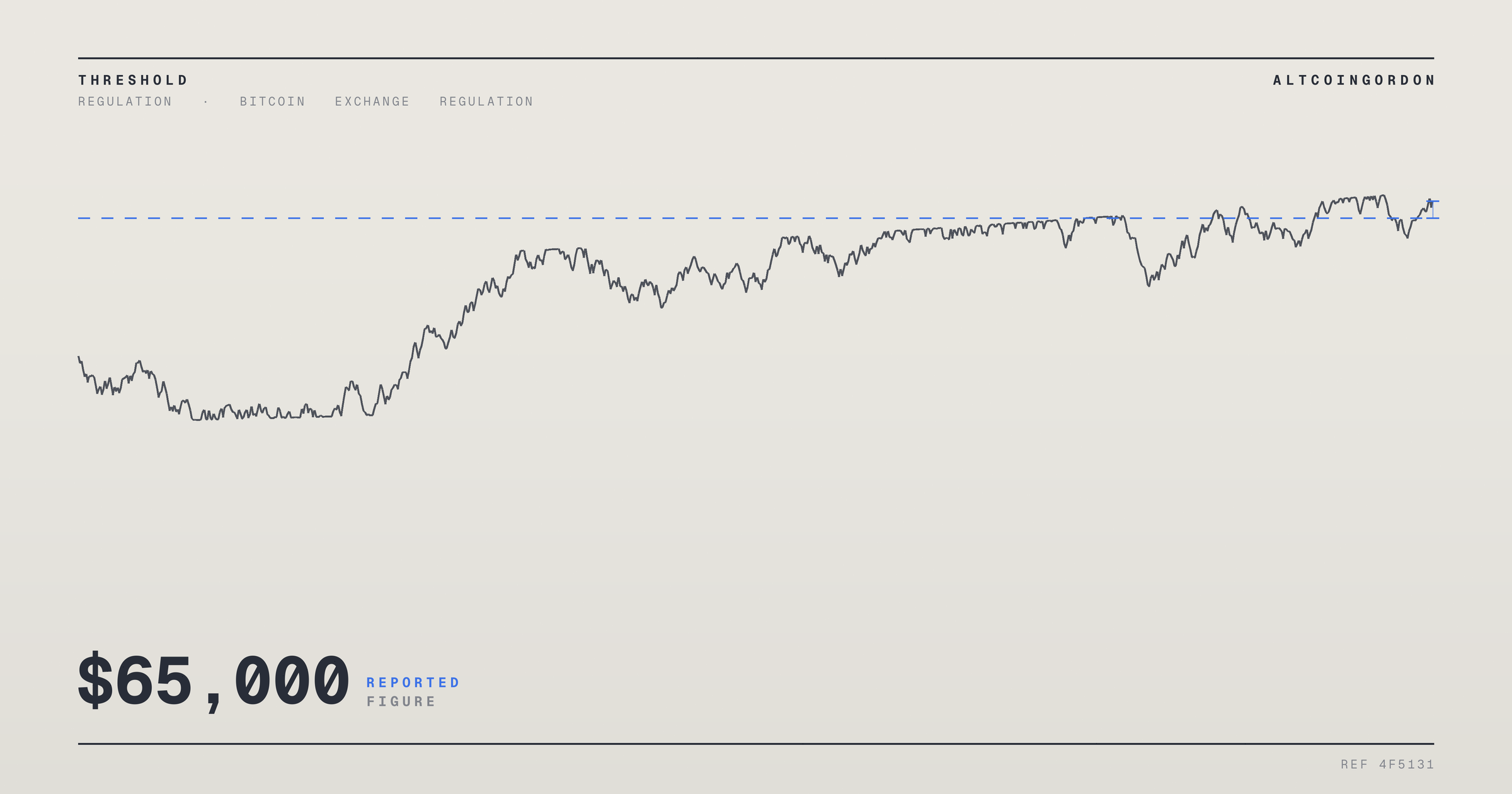
Bitcoin traded above $65,000 on Sunday, holding steady despite news that the U.S. Senate has pushed a vote on the CLARITY Act into the fall. CoinDesk reported the development as part of its live market coverage.
The CLARITY Act is a piece of proposed legislation intended to establish clearer rules for how digital assets are classified and regulated in the United States. Lawmakers have debated for years how to divide oversight of crypto markets between the Securities and Exchange Commission and the Commodity Futures Trading Commission. Supporters argue the bill would reduce uncertainty for exchanges, issuers, and investors.
The Senate’s decision to delay a vote means that uncertainty continues for now. Market structure legislation has been a recurring theme in Washington, with prior bills stalling amid disagreements over jurisdiction and investor protection standards. The fall timeline suggests lawmakers want more time to negotiate details before bringing the bill to a floor vote.
Despite the legislative pause, bitcoin’s price action showed little immediate reaction. The asset remained above the $65,000 level, according to CoinDesk’s live tracking. That price level has served as a psychological marker for traders watching whether bitcoin can sustain gains through periods of regulatory ambiguity.
Crypto markets have historically shown mixed responses to legislative news. Sometimes delays trigger short-term selling as traders price in continued uncertainty. Other times, as appears to be the case here, prices hold steady because markets had already priced in the possibility of a postponement. Analysts have long noted that legislative timelines in Washington tend to run longer than initial expectations set by industry advocates.
The CLARITY Act’s fate matters beyond bitcoin’s price chart. A clear regulatory framework could open the door to broader institutional participation in digital asset markets. It could also affect how exchanges structure products such as spot and derivatives offerings. Conversely, continued delay may keep some large institutional players on the sidelines, wary of operating without settled rules.
For now, the industry appears to be treating the fall timeline as the next checkpoint. Trade groups and lobbyists have pushed for swift passage, citing competitive pressure from other jurisdictions that have already implemented crypto-specific frameworks. The European Union’s Markets in Crypto-Assets regulation, for example, has already taken effect, giving European regulators a head start on setting clear rules.
Bitcoin’s ability to hold above $65,000 amid the delay suggests traders are not treating the legislative slippage as an urgent negative catalyst. Whether that sentiment holds through the fall session, when the CLARITY Act is expected to resurface, remains to be seen.
Sources disagree on this story
This article was published before the reports below were compared. The reporting above stands; what follows is where the published accounts do not agree.
CoinDesk and CoinGape give different dates for the next CLARITY Act Senate action and opposite directions for spot Bitcoin ETF flows on August 10.
What all sources agree on
- The Senate did not pass the CLARITY Act before its August recess.
- Michael Saylor's Strategy sold Bitcoin recently to fund buybacks/repurchases.
- Bitcoin traded in the mid-$60,000s range around this period.
Where the reports disagree
1Date of next CLARITY Act Senate action
pushing any action to September 14 at the earliest.
The United States Senate could consider a procedural motion involving the CLARITY Act on September 15.
What would settle it: The Senate's official floor schedule or cloture motion filing from Majority Leader John Thune's office.
What to make of it
Treat the Senate delay and Strategy's Bitcoin sales as established, but do not rely on either the specific September vote date or the ETF flow direction until confirmed by the Senate's official schedule and ETF flow-tracking data respectively.
Market Impact
The immediate market reaction to the Senate's delay appears muted, with bitcoin holding above $65,000 according to CoinDesk's reporting. This suggests traders had already factored in the possibility that the CLARITY Act would not pass before the fall.
Longer term, continued regulatory uncertainty could influence institutional participation in U.S. digital asset markets. Firms weighing custody arrangements, exchange listings, or new product launches may wait for clearer rules before committing further capital. A resolved framework, once passed, could remove a key overhang that has periodically weighed on sentiment across the broader crypto sector.
The Senate's decision to delay the CLARITY Act leaves U.S. crypto market structure rules unsettled for now, even as bitcoin trades steadily above $65,000. Attention now shifts to the fall session, when lawmakers are expected to revisit the bill.
Frequently Asked Questions
What is the CLARITY Act?
It is proposed U.S. legislation aimed at clarifying how digital assets are classified and regulated, including which federal agency oversees different types of crypto markets.
Why did the Senate delay the vote?
CoinDesk reported the vote was pushed to the fall session, though specific reasons for the delay were not detailed in the available reporting.
How did bitcoin's price react to the delay?
Bitcoin remained above $65,000 despite the news, according to CoinDesk's live coverage, showing no significant immediate drop tied to the legislative postponement.
What happens next with the bill?
Lawmakers are expected to revisit the CLARITY Act during the fall legislative session, though an exact timeline has not been confirmed.