

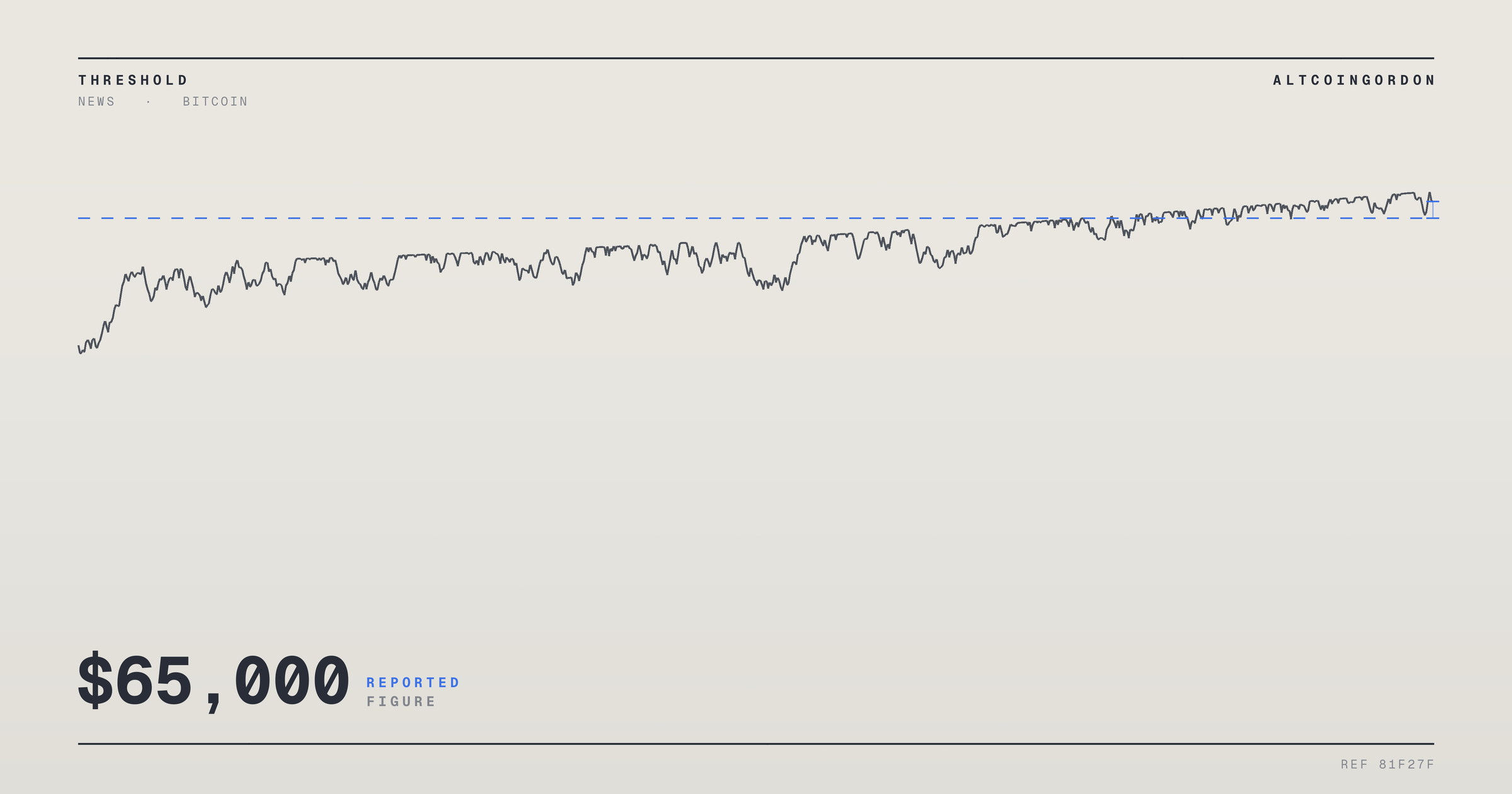
Bitcoin has been trading below the $65,000 threshold as escalating tensions in the Middle East contribute to a more cautious tone across global markets. According to a report from CoinDesk, the world's largest cryptocurrency by market capitalization has struggled to reclaim higher levels amid the uncertain geopolitical backdrop.
The price movement reflects a broader pattern seen throughout 2024 and into subsequent periods, in which Bitcoin's short-term trajectory has often mirrored shifts in risk appetite tied to macroeconomic and geopolitical events. When tensions rise in regions with strategic importance to global energy supplies and financial stability, investors across asset classes—including crypto—tend to reassess their exposure to riskier holdings.
Bitcoin has increasingly been described by some market participants as a risk asset that behaves similarly to equities during periods of stress, rather than purely as a safe-haven hedge. This dynamic has been visible in past instances of geopolitical conflict, where initial price dips in Bitcoin coincided with sell-offs in stock markets, only for prices to stabilize or recover once immediate uncertainty eased.
It should be noted that this report is currently from CoinDesk. As such, readers should treat the reported price level and the characterization of the tensions' impact on Bitcoin as preliminary until further corroboration emerges from additional outlets.
The $65,000 level has represented a psychologically significant marker for Bitcoin in recent trading history, often cited by analysts and traders as a reference point for gauging near-term momentum. Price action hovering just below such a threshold can reflect a market in a holding pattern, awaiting clearer signals from either the geopolitical situation or other market-moving catalysts such as macroeconomic data releases or regulatory developments.
Broader crypto market sentiment has historically been sensitive to conflict escalation in the Middle East given the region's significance to global oil markets and its potential to influence inflation expectations, interest rate policy, and overall investor risk tolerance. These interconnections mean that Bitcoin's price behavior cannot be viewed in isolation from wider financial and geopolitical currents.
Market Impact
Should tensions in the Middle East continue to escalate, market participants may see increased volatility not only in Bitcoin but across the broader cryptocurrency sector, as risk-off sentiment can prompt reallocation away from higher-volatility assets. Traders often watch such geopolitical developments for potential ripple effects on oil prices, equity markets, and safe-haven assets like gold, all of which can indirectly influence crypto market behavior through shifts in overall liquidity and investor confidence.
Given the limited corroboration of this specific report, market watchers should exercise caution before drawing firm conclusions about the direct causal link between the geopolitical situation and Bitcoin's current price level. Continued monitoring of additional reporting and price data will be necessary to determine whether this represents a sustained trend or a short-term fluctuation.
As the situation in the Middle East continues to develop, Bitcoin's price action below $65,000 serves as a reminder of the cryptocurrency market's sensitivity to global geopolitical events, though further verification of the specific details reported will be important for a fuller picture.
Frequently Asked Questions
Why is Bitcoin trading below $65,000?
According to the report, escalating tensions in the Middle East are contributing to cautious investor sentiment, which appears to be weighing on Bitcoin's price alongside broader market risk factors.
Is Bitcoin considered a safe-haven asset during geopolitical crises?
Market behavior has been mixed; at times Bitcoin has moved similarly to riskier assets like equities during geopolitical stress, rather than acting purely as a hedge, though this can vary by event and market conditions.
How reliable is this report given the sourcing?
The report currently comes from a single source, CoinDesk, with limited cross-source corroboration, so the specific price level and its connection to geopolitical events should be treated as preliminary pending further confirmation.
What should investors watch going forward?
Investors may want to monitor further developments in the Middle East, along with corroborating reports from additional financial news outlets, as well as broader market indicators like oil prices and equity market performance, which can offer context for Bitcoin's price movements.