

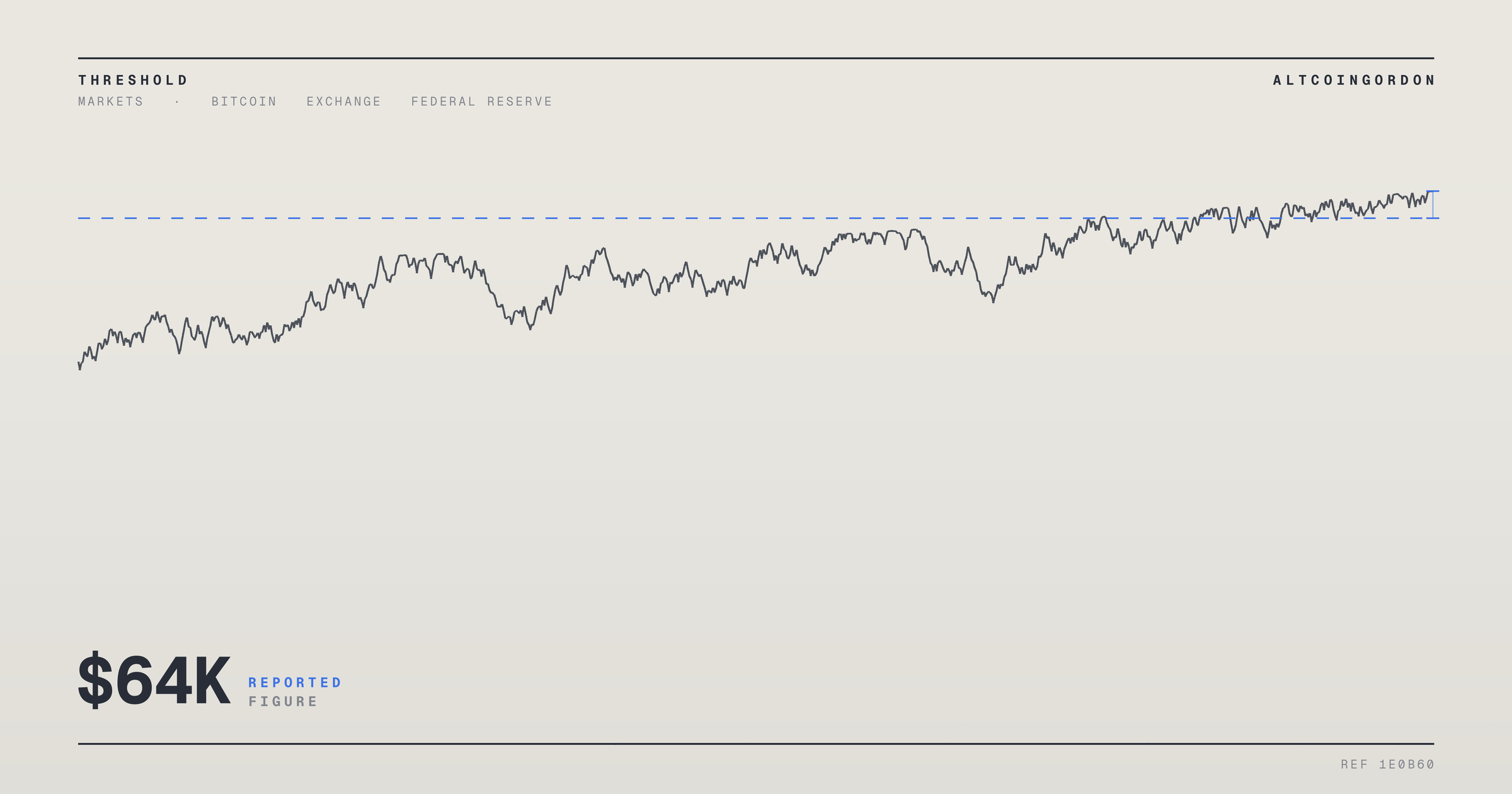
Bitcoin traded close to $64,000 on August 13, leaving traders uncertain about the next move for the largest cryptocurrency by market value. The price action came as US stock indexes advanced, buoyed by a cooler-than-expected Producer Price Index reading released earlier in the day.
The PPI data, which tracks wholesale price changes across the economy, came in softer than forecasts. That outcome renewed hopes among investors that inflationary pressure in the United States may be easing. Softer inflation data often supports the view that the Federal Reserve could ease its monetary policy stance sooner than expected.
Equity markets responded with gains, as lower inflation readings are typically seen as reducing the odds of further interest rate increases. Lower rates tend to support riskier assets by making borrowing cheaper and increasing the appeal of growth-oriented investments over cash and bonds.
Bitcoin, though often compared to risk assets like tech stocks, did not follow the same trajectory. The asset remained range-bound near $64,000, according to Cointelegraph, suggesting that crypto traders were not yet convinced the macroeconomic backdrop justified a fresh push higher.
This divergence between equities and Bitcoin highlights an ongoing question for market participants: how closely digital assets should be expected to track traditional risk sentiment. In some periods, Bitcoin has moved in tandem with stocks, particularly during moments of macro uncertainty. At other times, the asset has decoupled, driven instead by crypto-specific factors such as exchange flows, leverage in derivatives markets, or shifts in institutional demand.
The lack of a clear breakout in either direction for Bitcoin may reflect caution among traders following a period of volatility across crypto markets. Without additional catalysts, such as fresh regulatory developments or major institutional announcements, Bitcoin's price could continue to trade within a narrow band. Market watchers are likely to keep a close eye on upcoming economic data releases, including employment figures and further inflation reports, for clues about the Federal Reserve's next policy steps.
Market Impact
A cooler PPI reading generally supports risk assets by lowering expectations for further rate hikes, which explains the gains seen in equities. Bitcoin's failure to rally alongside stocks suggests crypto traders may be waiting for confirmation from other data points, such as the Consumer Price Index, before committing to a directional bet.
If Bitcoin continues to trade sideways near $64,000, it could indicate a period of consolidation rather than a clear trend. Traders and analysts will likely watch trading volumes and derivatives positioning for signs of where sentiment is heading next, particularly as macroeconomic data continues to shape expectations for Federal Reserve policy.
For now, Bitcoin remains in a holding pattern near $64,000, decoupled from the optimism driving stock markets higher. Further clarity may depend on upcoming inflation and employment data that could shift expectations for US monetary policy.
Frequently Asked Questions
Why did US stocks rise while Bitcoin stayed flat?
Stocks gained after a cooler-than-expected Producer Price Index reading raised hopes for easier Federal Reserve policy. Bitcoin did not mirror this move, trading near $64,000 without a clear directional trend, according to Cointelegraph.
What is the Producer Price Index and why does it matter for markets?
The Producer Price Index measures the average change in prices that producers receive for goods and services. A cooler reading can suggest easing inflation, which often shifts expectations about future interest rate decisions.
Does Bitcoin typically move in line with stock markets?
Bitcoin's correlation with equities varies over time. At times it tracks broader risk sentiment, while at other times it moves independently based on crypto-specific factors like liquidity and derivatives activity.
What could push Bitcoin out of its current range near $64,000?
Additional economic data, such as consumer inflation figures or employment reports, could influence trader sentiment. Crypto-specific catalysts, including regulatory news or institutional flows, could also affect Bitcoin's price direction.