

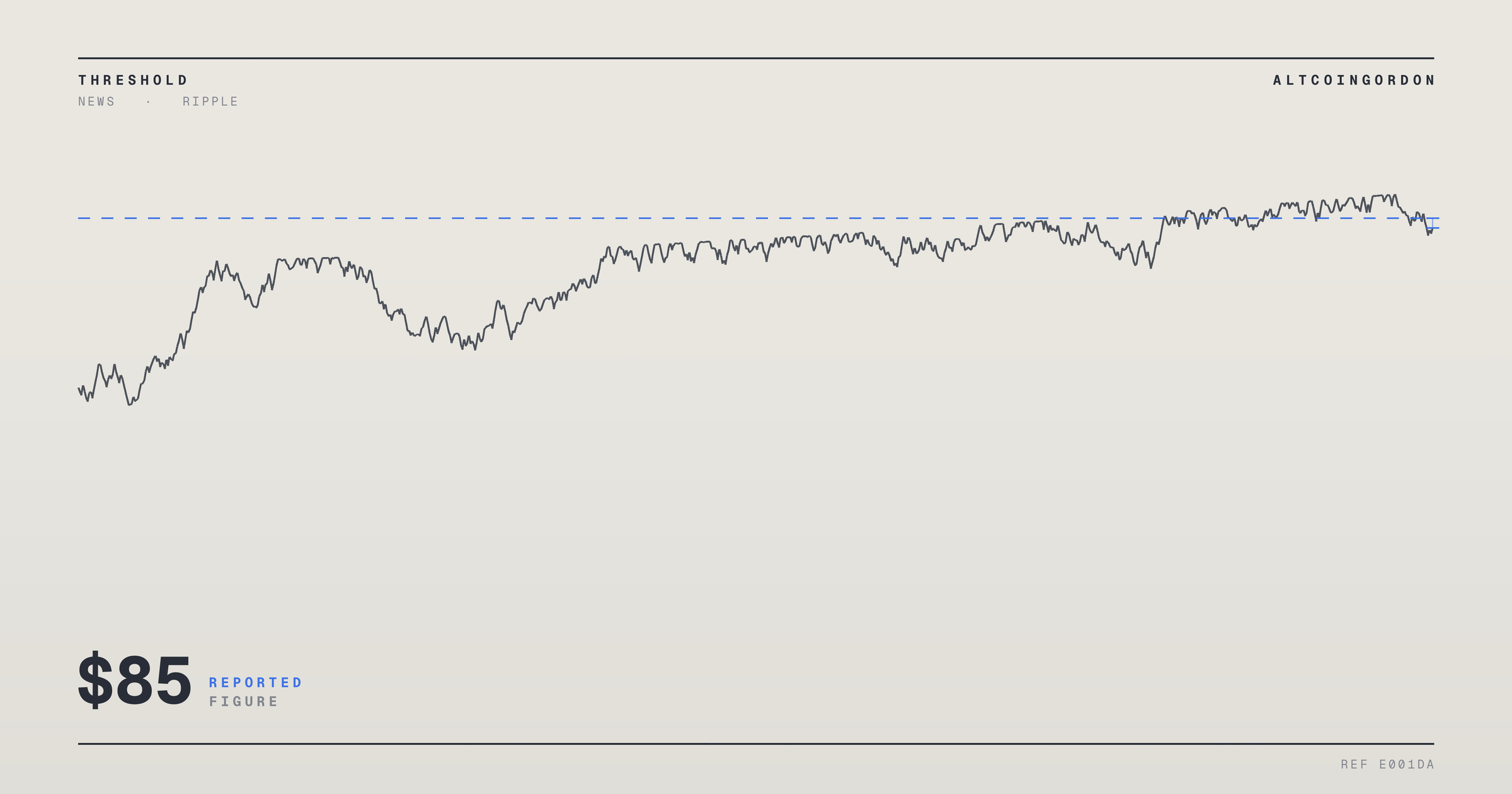
Brent crude oil has climbed back to $85 per barrel, according to reports from The National Business and CryptoBriefing. The move reflects renewed concern over the Strait of Hormuz, a narrow but critical waterway for global oil shipments. Reports indicate that a deal addressing tensions around the strait remains elusive, leaving traders uncertain about the near-term outlook.
The Strait of Hormuz sits between Iran and Oman. It serves as the passage for a significant share of the world's seaborne oil exports. Any disruption there tends to ripple quickly through global energy markets. Prices often react sharply even to the possibility of interference, rather than to confirmed supply losses.
The latest price move suggests markets are treating the absence of a resolution as a signal of ongoing risk. Without a formal agreement in place, shipping companies and energy traders are left to weigh the odds of further escalation. That uncertainty alone can be enough to push prices higher, even before any physical supply is affected.
Oil price swings of this kind carry weight far beyond energy trading desks. Rising crude costs feed into transportation, manufacturing, and consumer prices. Central banks watch these moves closely when assessing inflation trends and setting monetary policy. A sustained rise toward and past $85 per barrel could complicate efforts to keep inflation expectations anchored.
For broader financial markets, including digital assets, macro risk factors like energy price shocks matter. Higher oil prices can tighten financial conditions by pushing up costs across the economy. That, in turn, can influence investor appetite for riskier assets, a category that has historically included cryptocurrencies. Periods of geopolitical stress in energy markets have at times coincided with volatility across risk assets generally.
The absence of a Hormuz agreement also underscores how geopolitical friction can quickly reassert itself as a market driver. Energy markets had seen periods of relative calm before this renewed tension emerged. The return to $85 per barrel signals that traders are no longer treating the strait's stability as guaranteed.
Both The National Business and CryptoBriefing reported the price move and the stalled negotiations around the same time on August 10. Details on the specific parties involved in the talks, or the exact terms under discussion, were not included in the available reporting. It remains unclear what conditions would need to be met for a resolution to be reached.
Market Impact
A sustained climb in Brent crude toward $85 per barrel and beyond could pressure inflation readings in major economies, particularly those reliant on imported energy. That dynamic often feeds into expectations for central bank policy, which in turn shapes appetite for risk assets across equities and crypto markets alike.
For crypto markets specifically, energy-driven macro stress has historically been a factor investors track closely, given the sector's correlation with broader risk sentiment during periods of geopolitical uncertainty. Continued ambiguity over the Strait of Hormuz situation may keep volatility elevated across asset classes until clearer signs of resolution or escalation emerge.
With no Hormuz agreement in sight, oil markets are likely to stay sensitive to further developments, and that sensitivity may extend into how broader risk assets, including cryptocurrencies, trade in the days ahead.
Frequently Asked Questions
Why does the Strait of Hormuz matter for oil prices?
The strait is a narrow shipping route between Iran and Oman used to transport a large share of the world's seaborne oil exports, making any disruption there a major market concern.
What caused Brent crude to rise back to $85 per barrel?
Reports from The National Business and CryptoBriefing attribute the rise to unresolved tensions around the Strait of Hormuz and the lack of a negotiated deal addressing them.
How could rising oil prices affect crypto markets?
Higher energy prices can tighten financial conditions and influence inflation expectations, which may in turn affect investor appetite for riskier assets, including cryptocurrencies.
Has a resolution to the Hormuz tensions been reached?
No. According to the available reporting, a deal addressing the underlying tensions remains elusive as of the reports dated August 10.