

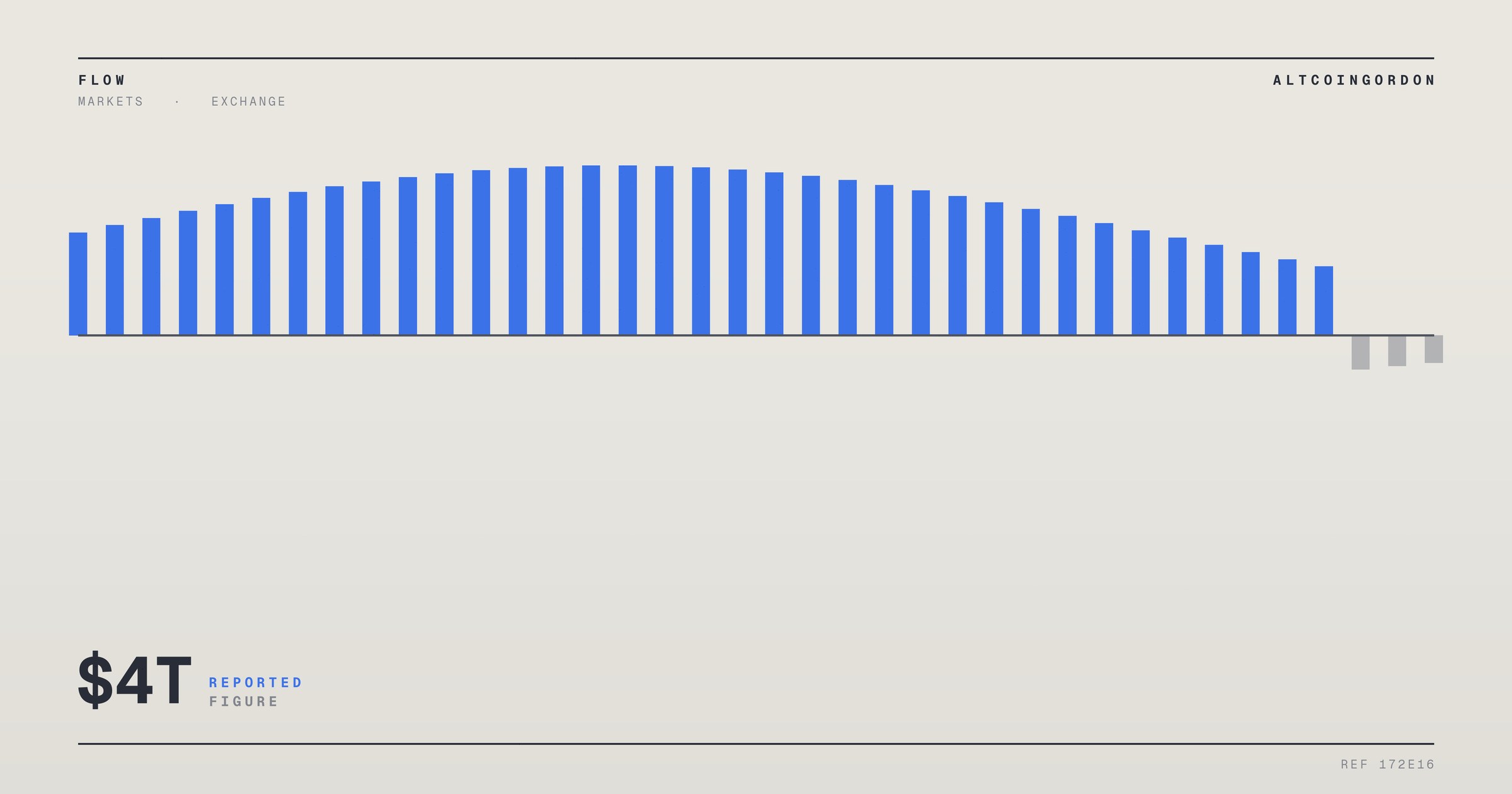
Centralized exchange futures volume slid to approximately $4 trillion in July, according to a report from CryptoBriefing, representing the weakest monthly total since December 2023. The figure covers perpetual and dated futures contracts traded across major centralized platforms, a segment of the market that has historically served as a barometer for speculative appetite and leverage usage among traders.
Futures volume on centralized exchanges tends to swing sharply with market sentiment. Periods of heightened volatility, major price breakouts, or macro catalysts typically drive traders toward leveraged positions, pushing monthly totals higher. Conversely, a drop of this magnitude often signals reduced conviction among traders, lower volatility, or a rotation of activity toward other venues, including decentralized derivatives platforms or spot markets.
The reported decline arrives amid a period in which crypto markets have seen fluctuating levels of engagement following the sharp rallies and corrections of the past two years. Since late 2023, futures volumes have generally trended upward alongside broader market cycles, making a return to those earlier, lower levels notable if confirmed by additional data sources.
Readers should treat the $4 trillion figure as an initial data point pending further verification from additional analytics providers such as CoinGlass, Kaiko, or individual exchange disclosures.
Derivatives volume is also sensitive to methodology. Different data aggregators may include or exclude certain exchanges, use different definitions for what counts as “futures” versus “perpetual swaps,” or adjust for wash trading and other reporting anomalies. This can lead to meaningful discrepancies between reported totals even when describing the same underlying market activity.
Still, a pullback in centralized futures volume, if accurate, would align with a period some market participants have described as consolidative, where price action has lacked the sharp directional moves that typically drive leveraged trading demand.
Market Impact
A decline in centralized exchange futures volume, if verified across additional sources, could suggest that traders are reducing leveraged exposure amid uncertain or range-bound price conditions. Lower futures activity often correlates with reduced funding rate volatility and fewer large liquidation events, which can in turn contribute to calmer, lower-volatility trading conditions in the short term.
For exchanges themselves, sustained declines in futures volume can directly affect trading fee revenue, a key income source for centralized platforms. If the trend persists into subsequent months, it may prompt exchanges to adjust incentive programs, fee structures, or product offerings to attract renewed trading activity. However, given the limited corroboration of this specific figure, market participants should await confirmation from additional analytics sources before drawing firm conclusions about the broader health of the derivatives market.
While the reported drop to $4 trillion in centralized exchange futures volume for July would mark a notable pullback from recent activity levels, the figure currently rests on a single source with no independent cross-verification. Confirmation from additional data providers will be necessary to determine whether this represents a broader, sustained shift in trader behavior or a one-off monthly fluctuation.
Frequently Asked Questions
What does the reported $4 trillion figure represent?
It refers to the total futures trading volume recorded across major centralized cryptocurrency exchanges during July, according to a single reported source.
Why is December 2023 used as the comparison point?
The report indicates that July's volume is the lowest monthly total since December 2023, suggesting futures activity had generally trended higher over the intervening period.
How reliable is this data point?
The figure has been reported by only one outlet so far, with no independent corroboration from other data aggregators at this time, so it should be treated as preliminary pending further verification.
What could cause centralized exchange futures volume to decline?
Reduced volatility, lower speculative interest, a shift of trading activity to other venues, or changes in market sentiment can all contribute to lower futures volumes, though no specific cause was confirmed in the available report.
Does lower futures volume affect crypto prices directly?
Futures volume reflects trading activity and leverage usage rather than price direction itself, though changes in derivatives activity can influence volatility and liquidation dynamics in the broader market.