

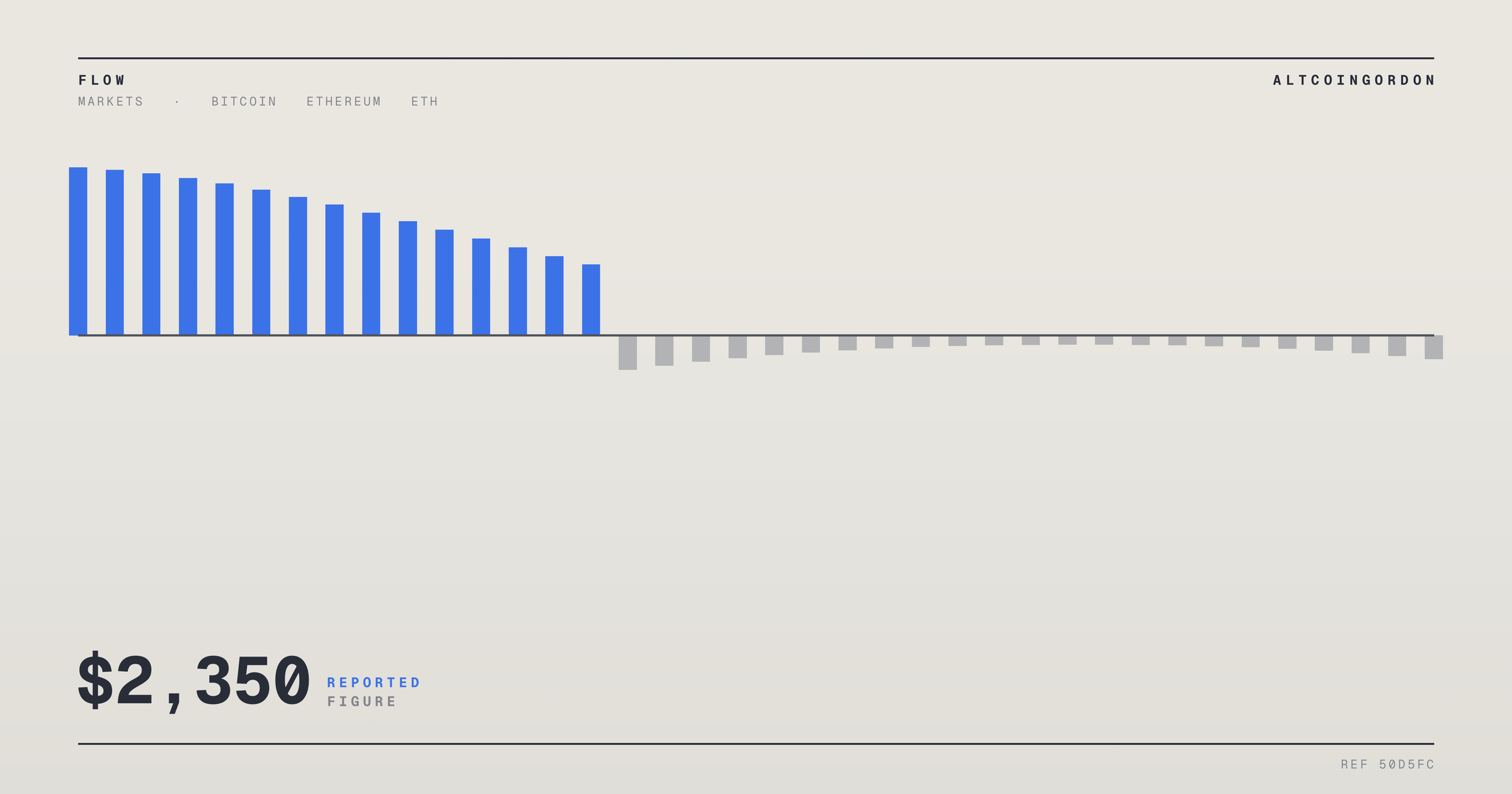
Ethereum's price action has drawn renewed attention as it hovers near a closely watched band between $2,300 and $2,350. Two separate reports on October 27 highlighted different but related pressures facing the asset. One noted that large wallet holders, often referred to as whales, have been adding to short positions. The other pointed to ongoing outflows from spot Ethereum exchange-traded funds.
Whale positioning is often used by traders as a sentiment gauge. When large holders increase short bets, it can signal expectations of further downside or simply a hedge against existing holdings. Neither report specified the exact size of the new short positions, but the trend itself has become a talking point among market watchers assessing Ethereum's near-term direction.
Spot ETH ETFs have become an important channel for institutional exposure to Ethereum since their introduction. Net outflows from these products can reduce buying pressure in the spot market. Sustained outflows also sometimes reflect broader caution among institutional allocators, particularly during periods of macroeconomic uncertainty or shifting risk appetite across digital assets.
The $2,300 to $2,350 zone appears to be functioning as a psychological and technical reference point for traders. A failure to hold above this range could invite further selling, according to the framing in both reports. Conversely, a defense of this level could help stabilize sentiment, at least temporarily, if ETF flows and whale behavior shift.
Ethereum's price moves do not occur in isolation. They are often influenced by broader crypto market trends, including Bitcoin's performance, macroeconomic data releases, and regulatory developments affecting digital asset products. The interplay between derivatives positioning, such as whale shorts, and spot market flows from ETFs offers a more complete picture of supply and demand dynamics than either factor alone.
Market participants tracking these signals typically watch for confirmation across multiple data points before drawing firm conclusions. A single day of ETF outflows or a modest increase in short interest does not necessarily indicate a sustained trend. However, when both occur simultaneously, as reported here, it tends to draw additional scrutiny from traders positioning around key support levels.
Market Impact
If whale short positions continue to build alongside ETF outflows, Ethereum could face additional near-term selling pressure, particularly if the $2,300 level fails to hold as support. Traders may watch derivatives data and ETF flow reports closely in the coming sessions for signs of stabilization or further deterioration.
A reversal in either trend, such as a pickup in ETF inflows or a reduction in short interest, could ease some of the current pressure. However, outcomes will likely depend on broader market conditions, including Bitcoin's trajectory and overall risk sentiment across crypto assets.
Ethereum's ability to hold above the $2,300 to $2,350 range remains uncertain amid conflicting signals from derivatives markets and ETF flows. Continued monitoring of whale positioning and institutional fund activity will likely shape near-term sentiment around the asset.
Frequently Asked Questions
Why does whale short positioning matter for Ethereum's price?
Whale short positions can reflect large holders' expectations of further price declines or act as hedges. Increases in such positioning are often watched as a sentiment indicator by other market participants.
How do ETF outflows affect Ethereum's spot price?
Outflows from spot Ethereum ETFs can reduce institutional buying pressure in the underlying market. Sustained outflows may contribute to weaker demand dynamics alongside other market factors.
What is the significance of the $2,300 to $2,350 level?
This range has been identified in recent reports as a key support zone for Ethereum. Traders are watching whether the price can hold above it or whether a breakdown could trigger further selling.
Does this report predict where Ethereum's price will go next?
No. The reports describe current market conditions, including whale positioning and ETF flows, without asserting a specific future price outcome.