

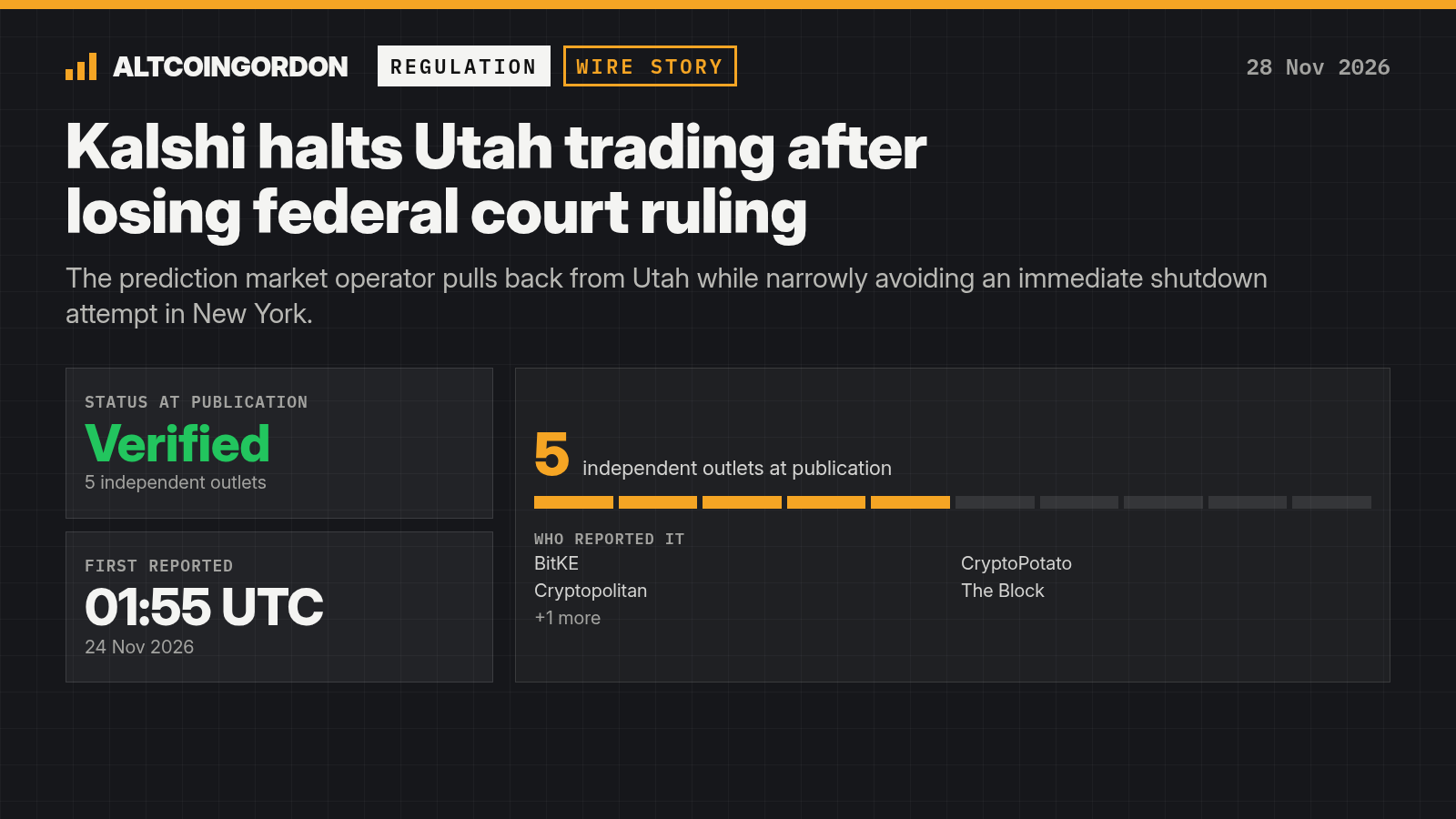
Kalshi has suspended its prediction market operations in Utah after a federal court ruled against the company in a legal dispute over its right to offer trading there. The halt marks one of the clearest setbacks yet for the exchange as it tries to expand its footprint across state lines.
Kalshi operates as a federally registered exchange overseen by the Commodity Futures Trading Commission. It lists contracts tied to real-world events, including elections, economic data and sports outcomes. The company has argued that its federal registration gives it the right to operate nationwide, without needing separate approval from individual states.
State regulators in several jurisdictions have pushed back against that position. Many argue that event contracts resembling sports betting or election wagering fall under state gambling laws, which they say take precedence over federal commodities oversight. Utah's case appears to be the latest instance where a court sided with that state-level argument, prompting Kalshi to pull its product from the market rather than continue operating under an unfavorable ruling.
- February 2026Kalshi sued Utah officials over the state's gambling law
- August 4, 2026Judge Shelby granted summary judgment in favour of Utah
- September 8, 2026Tenth Circuit declined to block Utah's enforcement in an emergency appeal
- November 23, 2026Kalshi told the Salt Lake Tribune it had decided to suspend Utah operations
The Utah development did not occur in isolation. According to The Block, Kalshi is simultaneously navigating a separate legal fight in New York, where regulators have sought to force the company to stop offering contracts to residents. Unlike in Utah, Kalshi appears to have avoided an immediate ban in New York, at least for now, leaving that dispute unresolved.
Taken together, the two cases illustrate the patchwork nature of prediction market regulation in the United States. Kalshi has built its business model around the idea that CFTC oversight preempts conflicting state rules. Courts in different states appear to be reaching different conclusions on that question, creating an uneven regulatory map for the company and its users.
The outcome of these disputes carries weight beyond Kalshi itself. Prediction markets have drawn growing interest from traders and institutions looking to speculate on everything from political outcomes to macroeconomic releases. How courts resolve the tension between federal and state authority could shape whether similar platforms can operate on a consistent, nationwide basis or must instead seek state-by-state approval.
- 21 OctKalshi and Susquehanna-Linked Firms Accused of Illegal Betting in Utah Lawsuit
- 28 OctCFTC Expands Prediction Market Legal Fight to Utah, Now Covering Ten States
- 29 OctKalshi and Its Founders Hit With Criminal Gambling Charges in Utah
- 24 Nov 01:55Cryptopolitan · first report
- 24 Nov 04:28The Block
- 24 Nov 07:58crypto.news
- 24 Nov 20:55CryptoPotato
- 25 Nov 06:00BitKE
Market Impact
The immediate market impact is confined to Kalshi's Utah user base, which can no longer access the platform's contracts following the halt. The broader implication is less certain and depends on how courts in other states rule on similar preemption arguments going forward.
Investors and industry participants watching the prediction market sector will likely treat the Utah and New York cases as early indicators of regulatory direction. A pattern of state-level wins against Kalshi could pressure the company's growth plans and prompt rivals to reassess their own state-by-state exposure. Conversely, a favorable outcome in New York or future appeals could reinforce Kalshi's federal-preemption argument and ease expansion elsewhere.
The Utah suspension and the ongoing New York dispute underscore how unresolved the legal footing of prediction markets remains in the United States. Further court decisions in other states are likely to shape whether platforms like Kalshi can operate under a single federal framework or face a fragmented, state-by-state patchwork.
Frequently Asked Questions
Why did Kalshi stop operating in Utah?
Kalshi halted its Utah operations after losing a federal court case over its right to offer prediction market contracts in the state.
Is Kalshi facing similar issues in other states?
Kalshi is also contesting an attempt by New York regulators to ban its operations there, though it has so far avoided an immediate shutdown in that state.
What is the core legal disagreement involved?
The dispute centers on whether Kalshi's federal registration with the CFTC allows it to operate nationwide, or whether individual states can regulate its contracts under their own gambling laws.
Does this affect Kalshi's operations in the rest of the country?
The halt applies specifically to Utah. Kalshi's status in other states, including New York, remains subject to ongoing legal proceedings.