

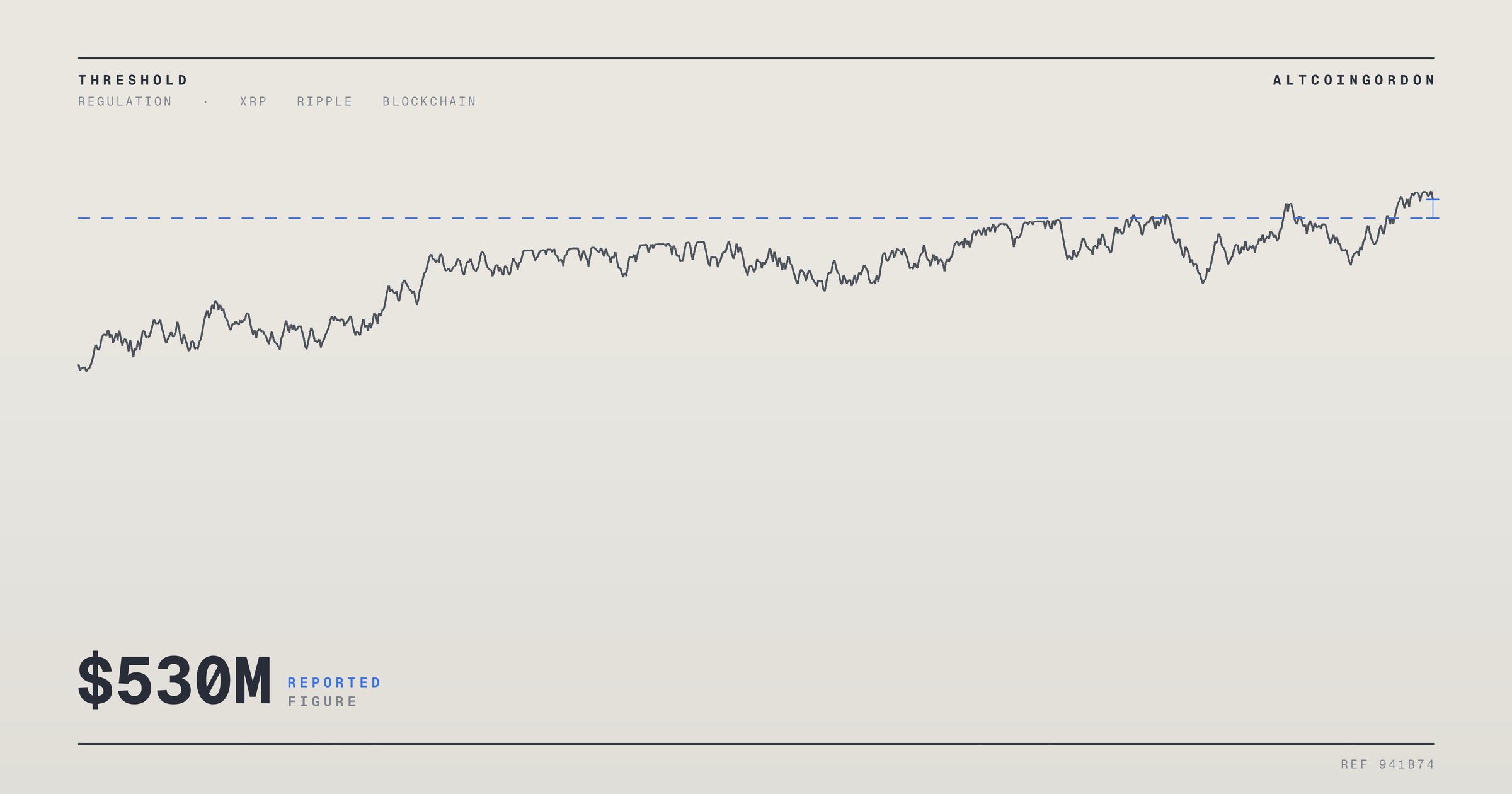
Developers behind the XRP Ledger have put forward new amendments designed to support the growing base of tokenized real-world assets on the network. According to reporting from CoinDesk and Coincu, the changes target roughly $530 million worth of tokenized Wall Street assets currently issued or planned on the ledger.
The XRP Ledger operates through a formal amendment process. Changes to its core rules require approval from a supermajority of validators before they take effect. This structure is meant to keep the network stable while still allowing it to evolve for new use cases, including tokenization of traditional financial instruments.
Tokenization refers to representing ownership of an asset, such as a bond, fund share, or money market instrument, as a digital token on a blockchain. Proponents argue this can speed up settlement, reduce administrative overhead, and widen access to instruments that have historically been limited to institutional investors. The XRP Ledger has positioned itself as an infrastructure option for this kind of activity, alongside other blockchains courting asset managers and banks.
The reported $530 million figure suggests tokenization on the XRP Ledger has reached a scale where technical adjustments are seen as necessary to support further growth. Amendments of this kind typically address issues such as transaction handling, compliance-related features, or the mechanics of how tokenized assets are issued and transferred on-chain. Neither CoinDesk nor Coincu detailed the specific technical content of the amendments in the material reviewed for this report.
Institutional interest in tokenized assets has expanded across the broader crypto industry in recent years. Traditional finance firms have explored blockchain rails for money market funds, bonds, and other instruments, seeking efficiency gains without abandoning regulatory oversight. The XRP Ledger's ecosystem, including its issuer Ripple, has emphasized partnerships with financial institutions as part of its broader strategy.
The amendment process itself does not guarantee change. Validators must reach the required threshold of support before any proposal is activated on the mainnet. Until that happens, the amendments remain proposals rather than binding rules governing the network's operation.
Market Impact
If adopted, the amendments could reinforce the XRP Ledger's positioning as infrastructure for institutional tokenization, potentially attracting additional issuers of real-world assets. A growing base of tokenized instruments on the network may also increase demand for XRP as the ledger's native asset used to settle transactions, though the reports reviewed did not specify any direct price or trading volume effects.
For the broader tokenization sector, the development illustrates how blockchain networks are adapting their technical foundations to meet institutional requirements. Other platforms competing for the same tokenization business will likely be watched for similar upgrades as the market for on-chain traditional assets continues to expand.
The proposed amendments highlight the XRP Ledger's ongoing effort to accommodate institutional-grade tokenized assets, though their adoption still depends on validator approval before any changes take effect.
Frequently Asked Questions
What are XRP Ledger amendments?
Amendments are proposed changes to the XRP Ledger's core rules that require approval from a supermajority of network validators before taking effect.
What does the $530 million figure represent?
It refers to the reported value of tokenized Wall Street assets currently associated with activity on the XRP Ledger, according to CoinDesk and Coincu.
Have the amendments been officially adopted yet?
No. The reports describe these as proposed amendments, which still require validator approval before becoming part of the network's operating rules.
Why does tokenization on the XRP Ledger matter for traditional finance?
Tokenization allows traditional instruments like bonds or fund shares to be represented digitally, potentially improving settlement speed and access for institutional investors.