

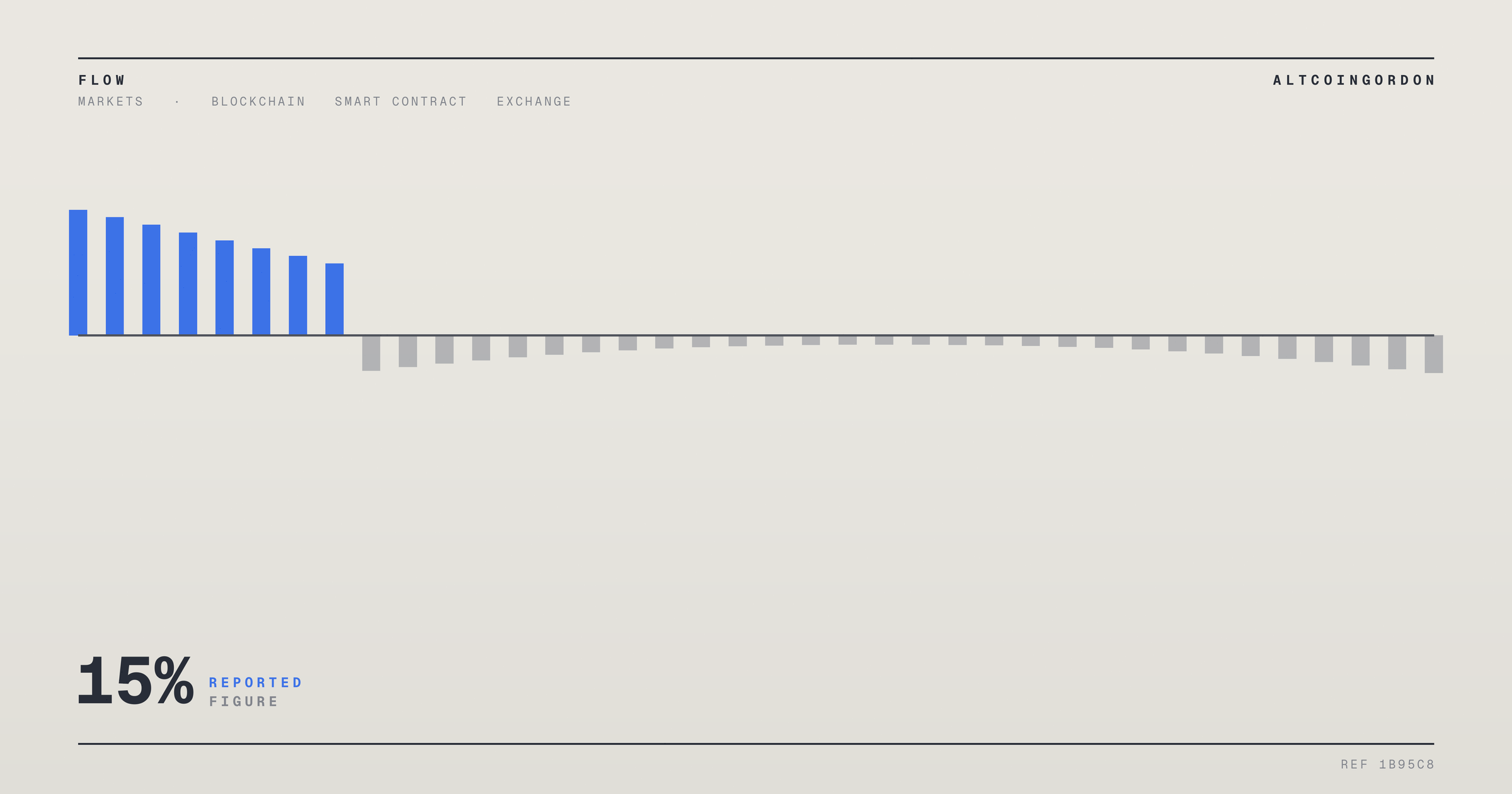
Onchain perpetual futures platforms now represent about 15% of total futures trading volume across the crypto market, according to a report from CryptoBriefing. The finding points to a meaningful shift in where traders are choosing to place leveraged bets on digital assets. It also comes alongside a reported decline in trading activity on centralized exchanges.
Perpetual futures, or perps, are derivative contracts without an expiration date. They let traders speculate on price movements using leverage, without ever settling into the underlying asset. These products have long been dominated by centralized exchanges, which offer deep liquidity, familiar interfaces, and fast execution.
Onchain perps operate differently. They run through smart contracts on a blockchain, with trades settled and margined transparently onchain rather than through an exchange's internal ledger. Proponents argue this removes reliance on a central operator to hold funds or manage order books honestly. Critics have historically pointed to slower execution and shallower liquidity as tradeoffs.
The reported 15% share suggests those tradeoffs are narrowing, at least in relative terms. It does not necessarily mean onchain volume rose sharply. It may instead reflect that centralized trading volume fell, shifting the balance of the total market. The report does not specify which factor, or what combination of the two, drove the change.
A decline in centralized futures volume would fit into a broader conversation about exchange trust and custody risk that has followed the industry for years. Traders who prefer to avoid holding funds on a centralized platform have increasingly looked to decentralized alternatives for both spot and derivatives trading. Onchain perpetual platforms have marketed themselves directly to that audience.
The growth of onchain derivatives also intersects with ongoing debates over market structure in crypto. Regulators in multiple jurisdictions have scrutinized how centralized exchanges handle leverage, liquidation, and customer funds. Decentralized platforms operate under a different model, with rules encoded in smart contracts rather than enforced by a company. That distinction has appealed to some traders, even as it raises separate questions about smart contract risk and the resilience of decentralized liquidity during periods of high volatility.
CryptoBriefing's report frames the 15% figure as a milestone rather than a final destination. Onchain perpetual trading remains a minority of the total futures market. Centralized exchanges still process the bulk of leveraged crypto trading, and their liquidity depth remains difficult for most onchain venues to match during periods of extreme volatility. Whether the trend continues will depend on factors including liquidity conditions, fee structures, and how centralized platforms respond to competitive pressure.
Market Impact
A rising onchain share of futures volume could pressure centralized exchanges to compete more aggressively on fees, liquidity incentives, or product design. It may also accelerate development of onchain derivatives infrastructure, including liquidity pools and automated market-making systems built specifically for perpetual contracts.
For traders, the shift signals a broader menu of venues for leveraged exposure, each with different tradeoffs around custody, transparency, and execution speed. If centralized trading volume continues to soften while onchain activity grows, it could reshape how liquidity is distributed across the derivatives market over time.
The reported 15% figure marks a step change in how futures trading is distributed across the crypto market. Whether it represents a lasting shift or a temporary swing will likely depend on future data from both centralized and onchain venues.
Frequently Asked Questions
What are onchain perpetual futures?
They are derivative contracts without an expiration date, settled and margined through smart contracts on a blockchain rather than through a centralized exchange's internal systems.
Does a 15% onchain share mean decentralized trading volume surged?
Not necessarily. The share could reflect growth in onchain volume, a decline in centralized volume, or a combination of both, according to the report.
Why are traders using onchain perpetual platforms?
Some traders prefer avoiding custody of funds with a centralized exchange operator and value the transparency of trades settled directly on a blockchain.
Are centralized exchanges still dominant in futures trading?
Yes, they continue to handle the large majority of futures volume, and typically offer deeper liquidity than most onchain platforms.