

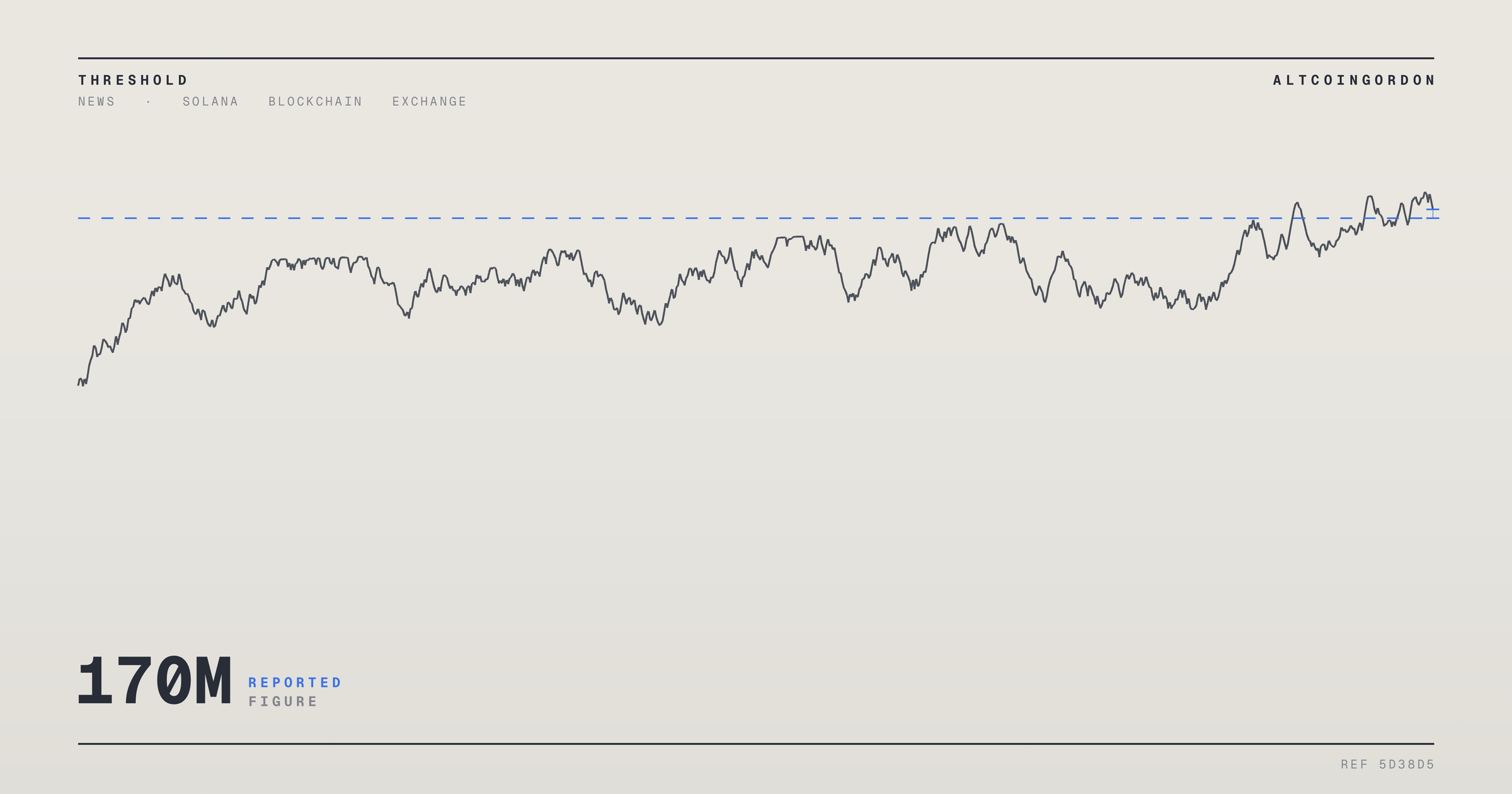
Solana recorded its highest single-day transaction count on August 10, according to reports from Coinfomania and CryptoBriefing. The two outlets cited slightly different totals, with Coinfomania reporting 171 million transactions and CryptoBriefing reporting 172 million. Both figures represent a new record for the network, surpassing prior daily highs.
Solana has built its reputation on high throughput and low transaction costs, positioning itself as an alternative to slower, more expensive blockchains. Daily transaction counts are a commonly cited metric for gauging network usage, though they can be influenced by a mix of factors, including bot activity, arbitrage, and automated trading strategies alongside organic user demand.
The network's transaction volume has climbed steadily over the past several quarters, driven in part by decentralized exchange activity, memecoin trading, and applications built using Solana's parallel processing architecture. A record daily count suggests sustained or growing demand for block space on the chain.
The discrepancy between the two reported figures, 171 million versus 172 million, is minor in relative terms but illustrates a common challenge in blockchain data reporting. Transaction counts can vary slightly depending on the data source, the specific block explorer used, and how transactions are categorized or filtered.
High transaction throughput has long been central to Solana's value proposition among layer-1 blockchains. The network's design prioritizes speed and low fees, distinguishing it from blockchains that rely more heavily on off-chain scaling solutions or layer-2 networks. Sustained increases in on-chain activity are often viewed by developers and investors as a signal of network health.
Neither report detailed the specific applications or transaction types driving the August 10 surge. Without a breakdown of activity by category, it remains unclear how much of the volume stemmed from trading bots, decentralized finance protocols, or retail-driven activity such as token swaps and memecoin trading.
Solana's infrastructure has faced scrutiny in the past over network stability during periods of high demand. A new transaction record, if sustained without service disruptions, would suggest the network's more recent upgrades have improved its capacity to handle heavy load.
Market Impact
A new daily transaction record can reinforce perceptions of Solana as one of the more active blockchains by raw throughput, a metric often referenced by traders and developers evaluating network adoption. High transaction counts do not directly translate into price movements, but sustained activity is sometimes cited as a fundamental indicator supporting demand for the network's native token, SOL.
Investors and developers will likely watch whether the elevated activity persists in the days following August 10, or whether it represents a temporary spike tied to specific trading conditions. Continued high throughput without network degradation could bolster confidence in Solana's technical performance under load, a factor relevant to projects considering the chain for future deployment.
Solana's record-setting transaction day underscores the network's ongoing role as a high-throughput blockchain, even as reported figures vary slightly between sources.
Frequently Asked Questions
What was Solana's new daily transaction record?
Reports differ slightly, with Coinfomania citing 171 million transactions and CryptoBriefing citing 172 million, both for August 10.
Why do the two reported figures differ?
Transaction counts can vary between data sources and block explorers, depending on how transactions are measured and categorized.
What drove the surge in Solana's transaction volume?
Neither report specified the exact cause, though high activity on Solana has historically been linked to decentralized trading, memecoin activity, and automated transactions.
Does a transaction record affect SOL's price?
Transaction counts are an activity metric, not a price indicator. Any market impact would depend on broader investor interpretation of network demand.