

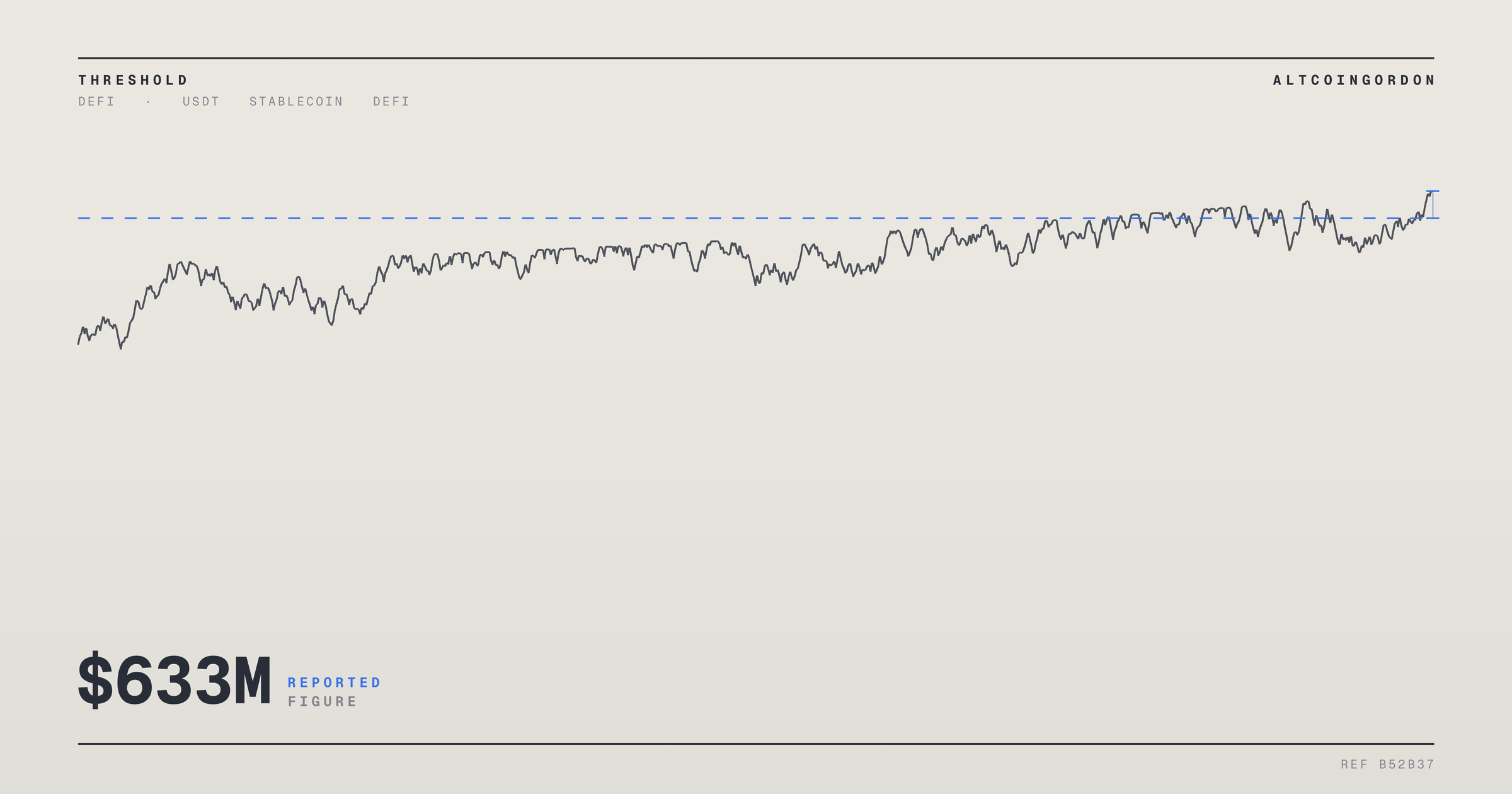
Spark Finance has reported that its spUSDT product came through a $633 million stress window with its yield and liquidity mechanisms functioning as intended. The disclosure was reported by CryptoBriefing on August 11, 2026.
SpUSDT is a yield-bearing token built on the Spark platform, designed to let holders earn returns on stablecoin deposits pegged to USDT. Products of this kind rely on underlying liquidity pools and lending markets to generate yield while allowing users to redeem their positions on demand.
A stress window in decentralized finance typically refers to a period when withdrawal requests, market volatility, or shifting demand put pressure on a protocol's reserves. During such periods, the ability of a token to maintain its peg, continue paying yield, and process redemptions without delay is viewed as a key test of its design.
According to the report, spUSDT's $633 million in exposure moved through this period without disruption to either yield accrual or liquidity availability. That outcome suggests the protocol's reserve and redemption mechanisms performed under load, though the specific triggers behind the stress period were not detailed in the available reporting.
Stablecoin-adjacent yield products have faced scrutiny across the DeFi sector following past instances where liquidity mismatches led to redemption freezes or peg slippage. Investors and protocol designers have increasingly focused on stress-testing as a way to demonstrate operational soundness before problems escalate into broader liquidity crises.
Spark's ecosystem has positioned itself within the broader decentralized lending and stablecoin infrastructure space, an area that has drawn continued attention as more capital flows into yield-generating tokenized products. Maintaining liquidity through a stress event, without pausing withdrawals or altering yield terms, is often cited by protocols as evidence that their risk models are working as designed.
The report did not specify what caused the stress window, nor did it disclose the duration of the event or how the $633 million figure was measured, whether as total value locked, redemption volume, or another metric. Readers should treat the scale and nature of the event as described by the source pending further detail.
Market Impact
If accurate, the episode could reinforce confidence among users of Spark's yield products, particularly those weighing counterparty and liquidity risk in DeFi lending markets. A protocol demonstrating it can absorb sizable redemption or volatility pressure without freezing withdrawals or cutting yield is often viewed favorably by depositors evaluating where to park stablecoin capital.
More broadly, the event may feed into ongoing industry discussion about how yield-bearing stablecoin products manage liquidity risk, especially as regulators and market participants scrutinize the mechanics behind such tokens. Any additional reporting on the causes or metrics behind the $633 million figure would help clarify the broader significance of this stress window for the sector.
Spark Finance's report of an intact yield and liquidity position through a significant stress window offers an early data point on the protocol's resilience. Further details on the event's cause and scope would help clarify its broader implications for DeFi liquidity management.
Frequently Asked Questions
What is spUSDT?
SpUSDT is a yield-bearing token issued through Spark Finance, allowing holders to earn returns on stablecoin deposits tied to USDT.
What does a 'stress window' mean in this context?
It refers to a period of elevated withdrawal activity or market pressure that tests a protocol's ability to maintain liquidity and yield without disruption.
Did spUSDT lose its peg or pause withdrawals during the event?
According to the report, liquidity and yield remained intact, with no indication of paused withdrawals, though full details of the event were not disclosed.
Why does this matter for DeFi yield products generally?
Protocols demonstrating stability during stress events help build confidence in liquidity management practices, an area of ongoing concern following past incidents in the sector.