

Four pairs of reports this period describe the same event with incompatible numbers, and none of the four conflicts has a primary source to settle it.
Strive's own holding figure splits three ways
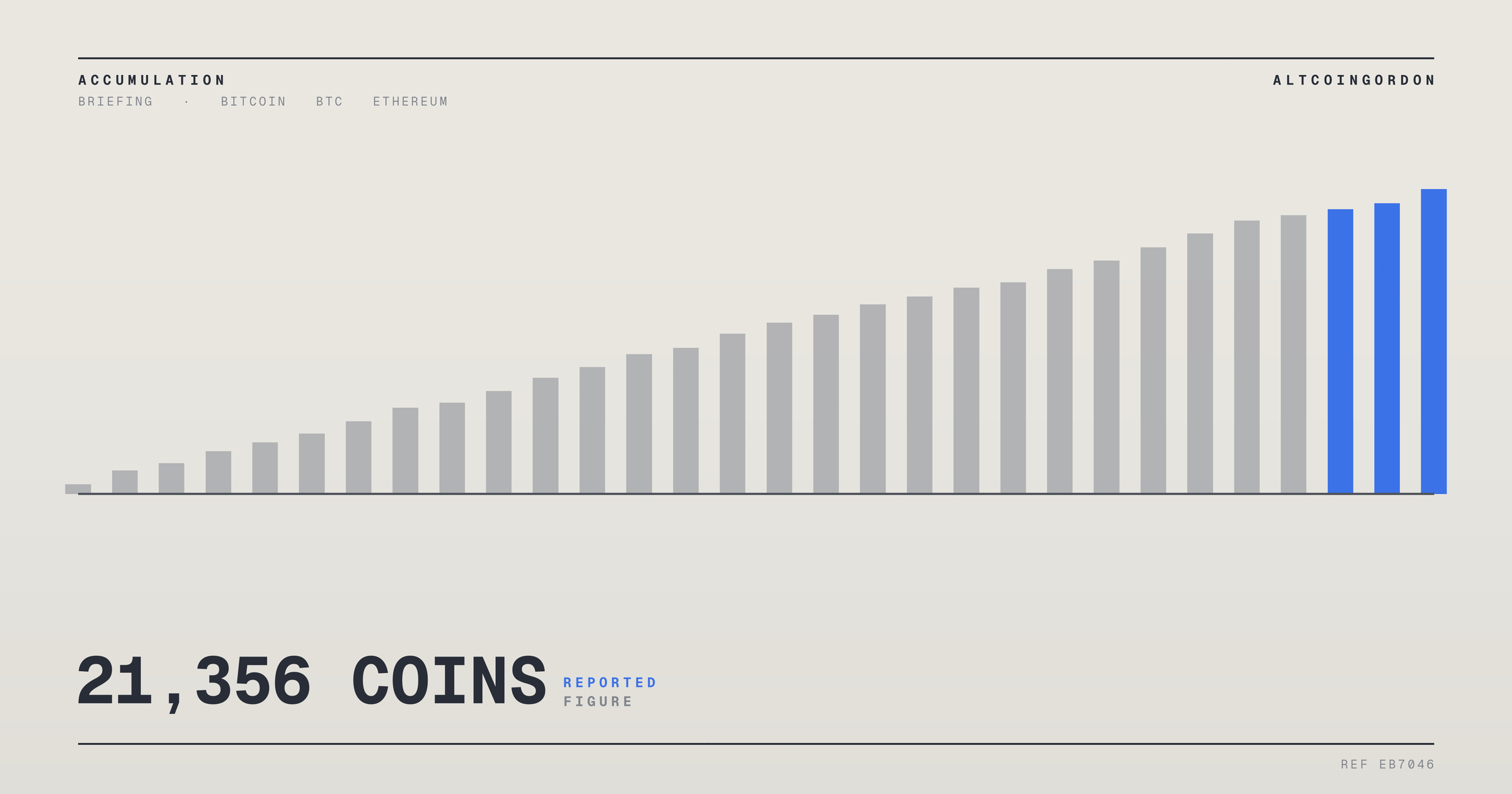
Coinfomania and one TronWeekly article report that Strive's cumulative Bitcoin holdings stood at 11,417 BTC after a 3,311 BTC purchase. CoinTurk News EN and a second TronWeekly article describe the same purchase landing the company at 32,773 BTC, rising further to 35,595 BTC after an additional 2,822 BTC buy. The gap between the two totals is 21,356 BTC, which is too large to be rounding or a reporting lag. Both versions carry two independent publishers, so neither account currently outweighs the other, and this edition does not pick a side.
A single liquidation event produces two different price tags
Bitcoin's slide below $81,000 is not in dispute; what the drop cost traders is. CryptoBriefing put the liquidation figure at $485 million. BeInCrypto reported total crypto liquidations approaching $1 billion, with long positions absorbing most of the damage. That is more than double CryptoBriefing's number for what both outlets describe as the same event, and the difference likely comes down to scope, one tally may cover Bitcoin alone, the other the whole derivatives market, but neither report states its methodology clearly enough to confirm that.
Same whale, same chain, two different totals
Coinfomania and U.Today both cover the October 12 whale rotation from Bitcoin to Ethereum, and both cite Lookonchain as their source. Despite sharing an attribution, the two outlets give different totals for the same transfer. That is the sharper problem here: when two publishers cite the identical on-chain tracker and still disagree on the figure, the discrepancy sits in how each outlet read or rounded the data, not in whether the rotation happened. Lookonchain's original post would settle this in one line, but neither article reproduces it in full, so the totals stand unreconciled.
Does the BingX license cover brokerage, or not
There is no dispute that BingX EU secured an Austrian MiCA/CASP license valid across 29 EEA countries. The disagreement is narrower and arguably more consequential: whether that license extends to brokerage services. Reports carried by four feeds agree on the license's geographic scope but split on its functional scope, which matters for any customer or counterparty trying to work out what BingX is actually authorised to do. A regulatory license is a primary document in principle, but none of the reports here quotes its operative clauses directly, so the brokerage question remains open rather than resolved by this edition.
What the liquidation reports agree and disagree on
CryptoBriefing and Coinfomania both report large liquidations on October 15 but disagree on whether a macroeconomic event caused them. This is a different kind of conflict to the others, it is not a numbers dispute but a causal one, and causal disagreements are harder to adjudicate because both outlets can be reporting the liquidations accurately while reading the trigger differently. Carried by three feeds, the story is well corroborated on the fact of the liquidations; it is uncorroborated on the explanation for them, and that distinction is worth holding onto when reading either account.
None of these five conflicts resolves on the evidence available, two citing the same on-chain source still produced different totals, and a license's geographic scope is confirmed while its functional scope is not. The discipline here is to report the split, not to guess which side rounds correctly.
Stories in this edition
Publisher counts are as at publication and keep moving; each story page carries the live number.
- Strive's Bitcoin Total: 11,417 BTC or 32,773 BTC? 2 independent publishers — the sharpest numeric conflict, two pairs of publishers giving incompatible cumulative totals for the same company
- Bitcoin Drops Below $81,000, Sparking Hundreds of Millions in Liquidations 3 independent publishers — two outlets give liquidation figures for the same price drop that differ by more than double
- Whale's BTC-to-ETH Rotation Totals Disputed by Outlets 1 independent publisher — shows that shared attribution does not guarantee matching totals
- BingX MiCA License: Does It Cover Brokerage Services? 2 independent publishers — a confirmed license with a genuine dispute over what it actually covers
- Crypto Liquidation Reports Disagree on Macro Trigger 2 independent publishers — a causal rather than numeric conflict, useful contrast to the other four
None of these five conflicts resolves on the evidence available, two citing the same on-chain source still produced different totals, and a license's geographic scope is confirmed while its functional scope is not. The discipline here is to report the split, not to guess which side rounds correctly.