

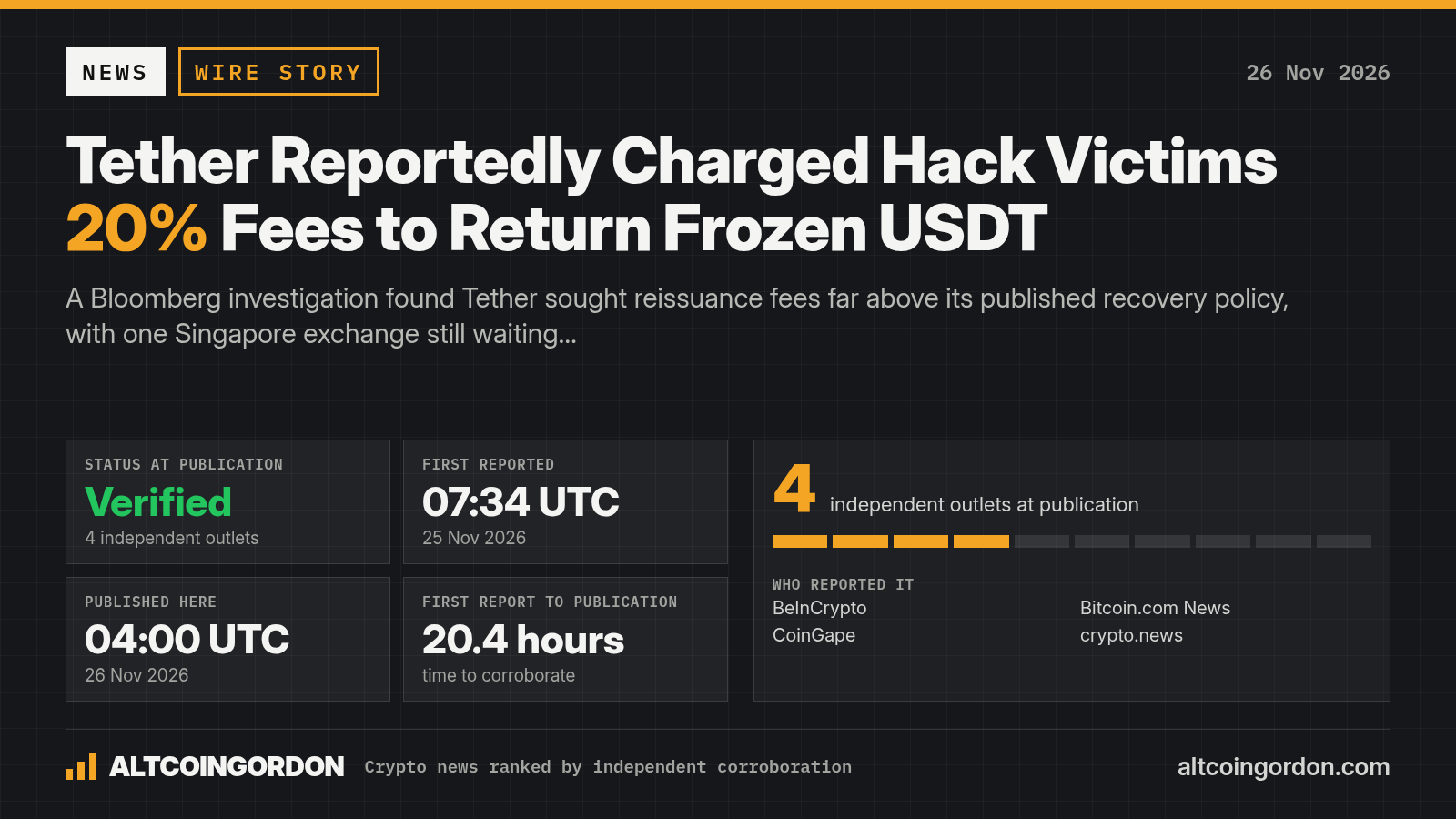
Tether has reportedly demanded fees as high as 20% from some hack victims trying to reclaim USDT the company froze on their behalf. The figure comes from a Bloomberg investigation.
The case drawing the most attention involves Bittok, a Singapore-based crypto exchange that lost $50 million in a hack in June 2020. More than five years later, the exchange has still not recovered its frozen USDT.
Emails show a lawyer representing Tether told the entity that acquired Bittok about a 20% reissuance fee on any funds eventually returned. The same investigation reportedly found similar arrangements with other victims, who received their frozen USDT in installments while facing comparable deductions.
Tether CEO Paolo Ardoino addressed the delays, saying the company returns funds in stages during civil disputes to limit its legal exposure. He attributed the cautious approach to a lack of clear legal guidance covering these recovery cases.
A Tether spokesperson told Bloomberg that the company has reissued $1.2 billion in USDT to date. The spokesperson said the fees charged help cover reissuance and legal costs tied to the recovery process. Tether is also building direct emergency communication channels with major crypto exchanges, the spokesperson added, to improve coordination when breaches occur.
The reported 20% figure appears inconsistent with Tether's own published recovery policy. CoinGape noted that the company's official guidelines cap recovery fees at 10% of the recovered amount, or $1,000, whichever is greater. That published policy, however, applies to a different scenario: USDT mistakenly sent to unsupported addresses or incompatible smart contracts, rather than funds stolen in a hack. Tether's guidelines direct theft and scam complaints to a separate Information Requests team, which CoinGape said raises questions over whether the 20% charge stems from a distinct reissuance process rather than the standard mistaken-transfer fee schedule.
CoinGape added that no reports have confirmed whether any victims actually agreed to the 20% terms.
- 25 Nov 07:34Coinpedia · first report
- 25 Nov 08:04crypto.news
- 25 Nov 09:51CoinGape
- 25 Nov 10:23BeInCrypto
- 25 Nov 10:25Coinfomania
- 25 Nov 12:30Bitcoin.com News
- 25 Nov 20:00TronWeekly
Bitcoin around this story
What the futures data on our own BTC terminal showed between the first report and our publication. It shows timing, not cause: prices move for many reasons at once.
Market Impact
The report adds scrutiny to Tether's role as both the issuer of the largest stablecoin and a de facto gatekeeper over frozen funds tied to crypto crime. Tether can freeze stolen USDT within minutes, but the path back to victims can take years and come with substantial deductions.
For exchanges and institutions that rely on USDT, the disclosures may prompt closer attention to recovery terms before incidents occur, particularly given the gap between Tether's published fee policy and the fees reportedly sought in practice. Coinfomania noted the episode could influence how the market perceives Tether's handling of frozen assets and its broader reliability as custodian of user funds during disputes.
The gap between Tether's stated recovery policy and the fees reportedly sought from hack victims leaves open questions about how reissuance decisions are made case by case. Bittok's unresolved five-year wait remains the clearest illustration of those stakes.
Frequently Asked Questions
What did Tether reportedly charge hack victims to recover frozen USDT?
A Bloomberg investigation found Tether sought fees of up to 20% from some hack victims seeking the return of frozen USDT, according to Coinpedia, crypto.news and other outlets.
What happened to Bittok, the exchange named in the report?
Bittok, a Singapore-based crypto exchange, lost $50 million in a hack in June 2020 and, according to Bitcoin.com News, has still not recovered its frozen USDT more than five years later.
How does the 20% fee compare to Tether's published recovery policy?
CoinGape reported that Tether's official guidelines cap recovery fees at 10% of the recovered amount or $1,000, whichever is greater, which applies to mistaken transfers rather than hack-related reissuance.
How has Tether responded to the report?
A Tether spokesperson told Bloomberg the company has reissued $1.2 billion in USDT and said fees cover reissuance and legal costs, while CEO Paolo Ardoino said funds are returned in stages in civil cases to manage legal risk, according to Coinpedia and crypto.news.