

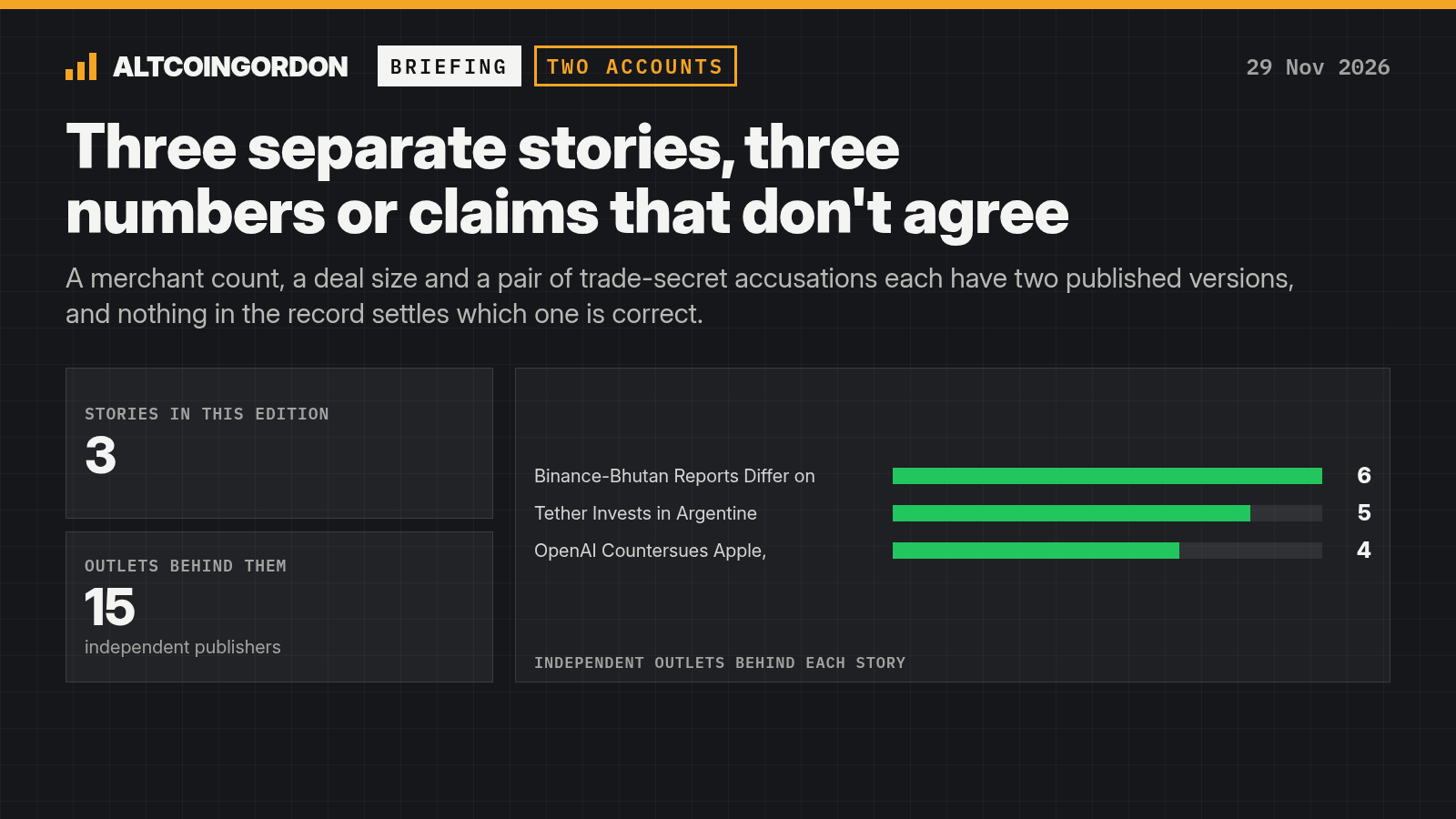
A merchant count, a deal size and a pair of trade-secret accusations each have two published versions, and nothing in the record settles which one is correct.
Of the three conflicts, only the OpenAI filing produces a primary document, and even that confirms merely that the countercharge was made, not that it is correct. The merchant count and the deal size remain exactly what the coverage shows them to be: two attributed figures each, with no regulator or company statement yet standing behind either one.
Bhutan's Merchant Count Depends on Which Report You Believe
Carried by six independent publishers including BeInCrypto, Cointelegraph and crypto.news, with eight feeds distributing it in total, the Binance-Bhutan story is among the better-circulated items of the period by sheer reach. But reach is not resolution. The coverage itself states that the two reports give different figures for how many Bhutanese merchants accept Binance Pay, and the underlying reporting does not say which outlet produced the higher number, when each count was taken, or whether the two were measuring the same population of merchants at the same point in time.
That gap matters because merchant-count figures are often used as a proxy for how far a payments rail has actually spread in a given market. Without a primary disclosure from Binance or a Bhutanese regulator stating the figure directly, both numbers remain secondhand, and a reader cannot tell which publisher is closer to the truth. The honest position is that the count is unsettled, not that one side is wrong.
Tether and Lemon Won't Say What Lemon's CEO Already Did
Five independent publishers, among them AMBCrypto, CoinGape and CryptoSlate, carried Tether's announcement of a strategic investment in the Argentine fintech Lemon, aimed at deepening USDT and gold-token adoption across Latin America. The companies themselves withheld the size of the deal. Yet Lemon's CEO told local media the package totals $14.5 million, split between equity and performance-linked incentives, which is a specific, attributed figure sitting directly alongside an official non-disclosure from the two parties who actually signed the agreement.
Those are not reconcilable positions in the ordinary sense: either the companies are declining to confirm a number that is already public via the CEO, or the CEO's figure is itself unconfirmed and the companies have simply not weighed in either way. Nothing in the coverage states that Tether or Lemon disputed the $14.5 million figure, so this is not a contradiction that has been resolved by denial. It is a case of an official source staying silent next to a named source speaking, and until one of the two parties to the deal confirms or corrects the number, the figure sits unverified rather than disproven.
Apple and OpenAI Each Accuse the Other of Stealing Secrets
Four independent publishers, including Coin Edition, CryptoBriefing and Daily Sabah Business, reported that OpenAI filed counterclaims against Apple on Friday in a California federal court, accusing the iPhone maker of stealing trade secrets and pressuring suppliers to avoid its hardware. That filing escalates a dispute that began in July, when Apple's own suit accused OpenAI of employee poaching and trade secret misappropriation. Read side by side, each party is now formally alleging that the other took its secrets, which is the kind of mutual accusation that cannot both describe the full picture.
Here there is a primary document, and it does establish something concrete: OpenAI has, in fact, filed these counterclaims in court, which settles the question of whether the countersuit happened. What it does not settle is which side's underlying factual claims are true. A countersuit is a legal filing asserting a position, not a finding of fact, and nothing in the coverage indicates a ruling or settlement on either company's original allegations. The dispute is real and now on the record twice over; the truth of either company's claims is not.
Stories in this edition
- 25 Nov 13:20Tether Invests in Argentine Fintech Lemon to Expand USDT and Gold Token Use in LatAm
- 27 Nov 19:15OpenAI Countersues Apple, Alleging Trade Secret Theft and Supplier Pressure
- 28 Nov 05:03Binance-Bhutan Reports Differ on Merchant Count
Of the three conflicts, only the OpenAI filing produces a primary document, and even that confirms merely that the countercharge was made, not that it is correct. The merchant count and the deal size remain exactly what the coverage shows them to be: two attributed figures each, with no regulator or company statement yet standing behind either one.