

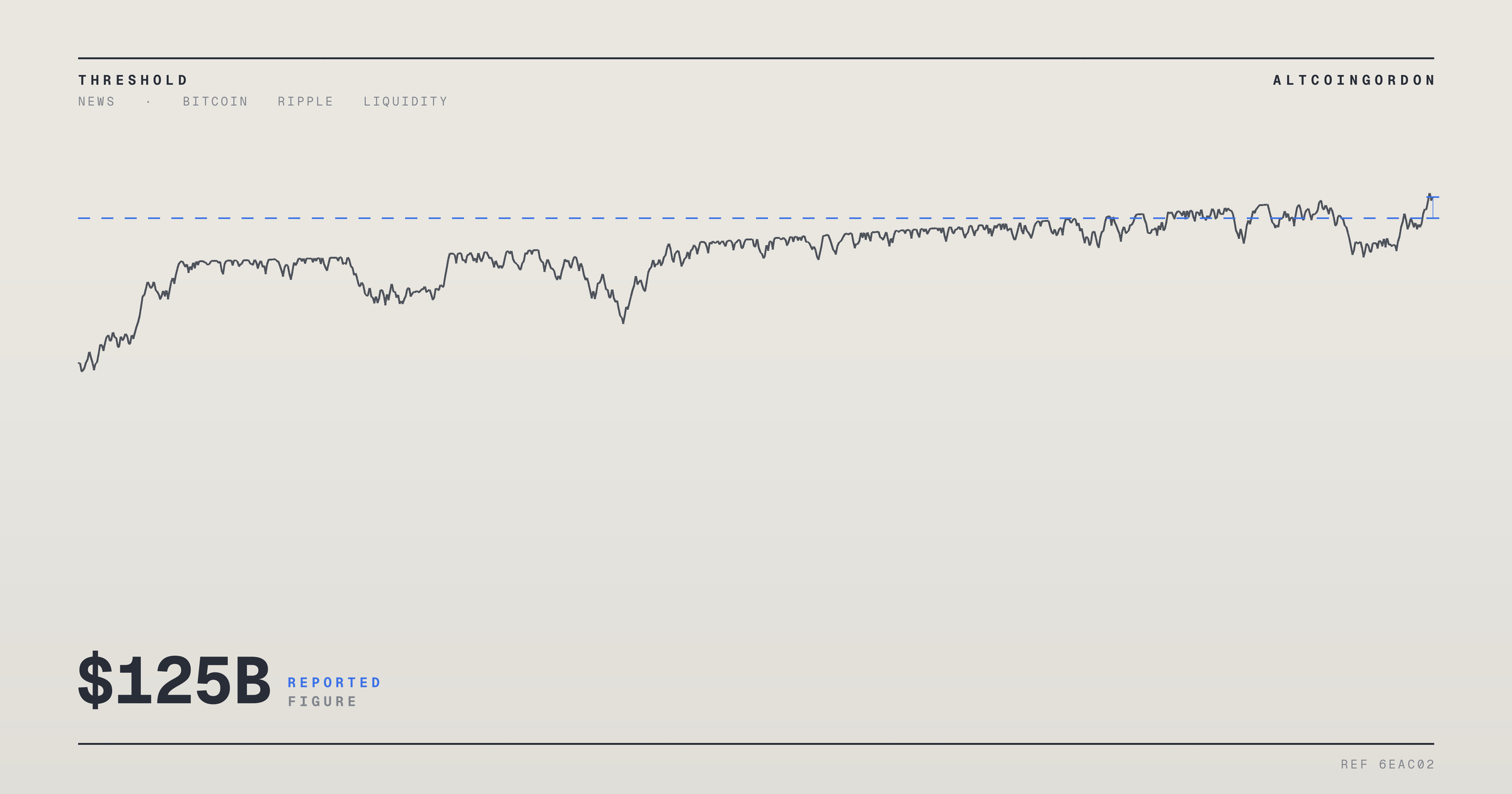
Long-term U.S. Treasury yields are pushing toward the 5.2% mark, a level that has previously rattled equity and credit markets. The move comes as the market absorbs a $125 billion wave of government debt issuance, a figure being framed as a stress test for both bond and risk-asset markets. Rising yields typically signal higher borrowing costs across the economy, and they often pressure valuations in stocks and other assets priced against a risk-free benchmark.
CryptoSlate reports that this yield spike arrives alongside heavy Treasury supply, a combination that has historically triggered volatility spillovers into other markets. When yields rise quickly, investors often reassess the relative appeal of holding cash-like instruments versus riskier assets. That reassessment has, at times, weighed on equities, corporate credit, and speculative markets including cryptocurrency.
What makes this moment notable is the apparent divergence between how bond markets are reacting and how Bitcoin has behaved in comparable episodes. According to the report, historical data suggests Bitcoin has not consistently mirrored Treasury market stress in the way traditional risk assets do. In some prior periods of yield spikes, Bitcoin's price action showed limited direct correlation to bond market turbulence.
This pattern matters because Bitcoin is often described as a macro-sensitive asset, one expected to move in tandem with broader risk sentiment. Yet its behavior during past yield shocks has, according to the cited history, sometimes broken from that expectation. That inconsistency complicates efforts to use bond market signals as a reliable predictor of crypto price direction.
The $125 billion figure tied to this stress test reflects the scale of debt the market must absorb in a compressed timeframe. Large auctions can affect yields directly, since heavier supply generally requires higher rates to attract sufficient buyer demand. When that dynamic plays out alongside already elevated yields, the combined pressure can ripple through multiple asset classes simultaneously, testing liquidity and investor appetite across markets.
Market participants watching this cycle are focused on two separate questions. The first is whether yields near 5.2% will trigger the kind of broader selloff seen in prior stress episodes. The second is whether Bitcoin, given its historical pattern of muted correlation, will again decouple from that reaction. Both outcomes remain uncertain, and the current setup offers no guarantee that past patterns will repeat.
Investors and analysts continue to debate Bitcoin's role as either a risk asset tightly linked to macro conditions or a more independent instrument. This latest yield spike, paired with a substantial debt issuance test, provides another data point in that ongoing assessment. How markets respond in the coming weeks may offer further clarity on that relationship.
Market Impact
If yields continue climbing toward or past 5.2%, equities and credit markets could face renewed pressure, particularly among rate-sensitive sectors. Heavy Treasury issuance absorbing $125 billion in demand could also strain short-term liquidity conditions, a dynamic that has previously spilled into risk assets broadly.
For crypto markets specifically, the reported historical disconnect between bond yield spikes and Bitcoin price action suggests investors should not assume automatic correlation. Traders watching this stress test may look for confirmation of whether Bitcoin again diverges from traditional risk-asset behavior, or whether this cycle proves different given current market conditions.
As Treasury yields test multi-decade highs alongside a large debt issuance cycle, markets face a familiar question about Bitcoin's macro sensitivity. History offers mixed signals, and this episode may add further evidence either way.
Frequently Asked Questions
Why are Treasury yields rising toward 5.2%?
The increase coincides with a large wave of government debt issuance, totaling roughly $125 billion, which can push yields higher as the market absorbs additional supply.
Does Bitcoin usually react to Treasury yield spikes?
According to the cited historical pattern, Bitcoin has not always shown a strong correlation with bond market stress, unlike some traditional risk assets.
What does a 'stress test' mean in this context?
It refers to the market's ability to absorb a large volume of Treasury debt issuance without significant disruption to yields or broader financial stability.
Could this yield spike still affect crypto markets?
It remains possible. While history suggests limited direct correlation, elevated yields can still influence overall risk sentiment, which may indirectly affect crypto markets.