

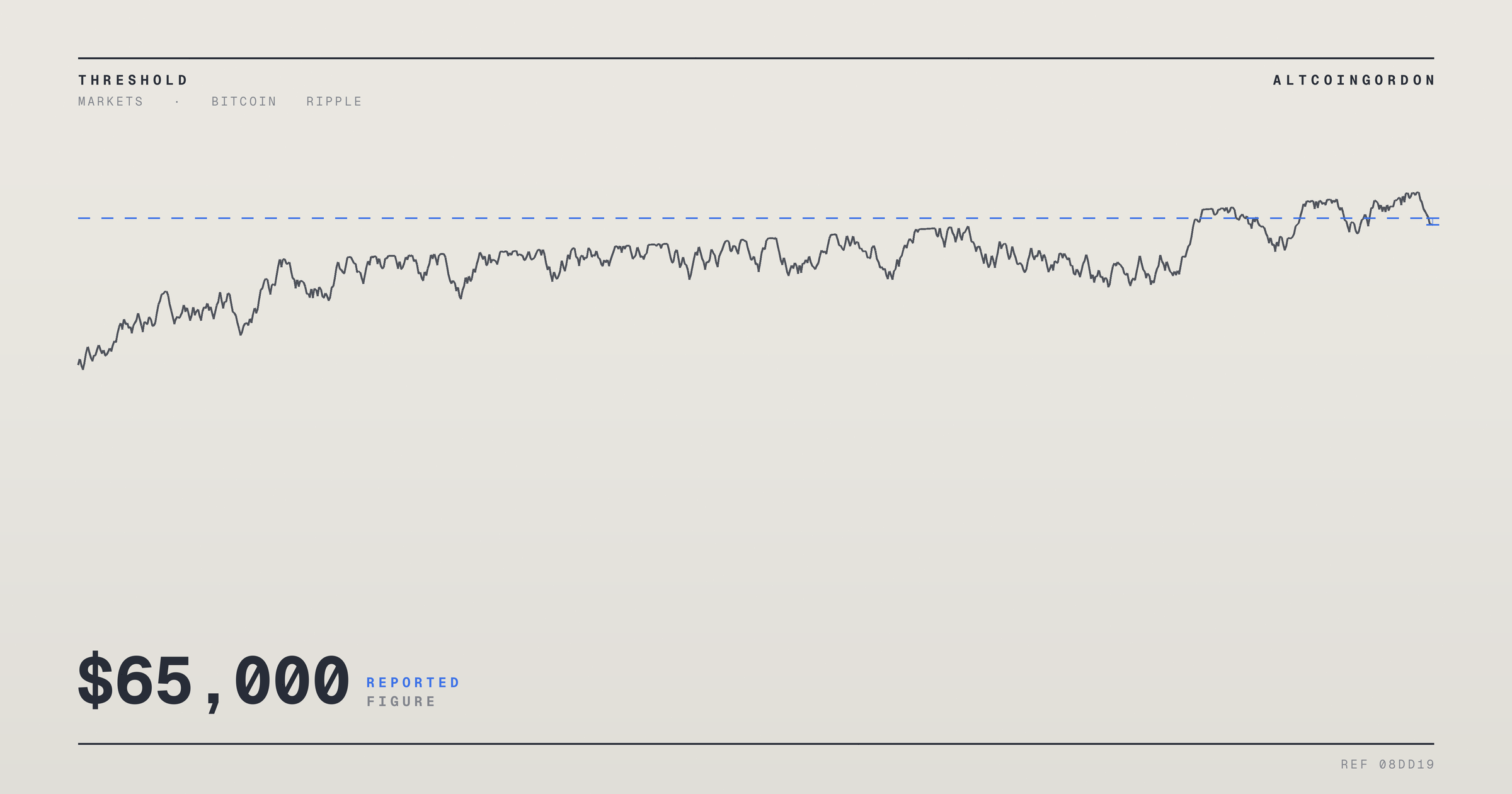
Bitcoin held steady above $65,000 on Sunday, according to CoinDesk, as reports of diplomatic talks between Iran and Oman reduced fears of disruption to the Strait of Hormuz. The strait is a critical corridor for global oil shipments. Any perceived threat to its stability tends to ripple through financial markets, including crypto.
CoinDesk reported that the easing of Hormuz-related concerns lifted risk assets broadly, with bitcoin tracking the improved sentiment. The cryptocurrency has increasingly moved in tandem with equities and other risk-sensitive assets during periods of geopolitical stress. Traders often treat bitcoin as a barometer for risk appetite rather than a pure safe haven, despite arguments to the contrary from some market participants.
Geopolitical flashpoints in the Middle East have repeatedly weighed on global markets in recent years. The Strait of Hormuz carries a significant share of the world's seaborne oil trade. Any signal of instability there tends to spook investors, pushing them toward caution and away from riskier holdings. Conversely, signs of de-escalation, such as the reported Iran-Oman dialogue, can quickly reverse that caution.
Bitcoin's price action above the $65,000 level suggests traders interpreted the diplomatic development as a meaningful reduction in near-term risk. The digital asset had been navigating a mix of macroeconomic signals in recent months, including shifting expectations around interest rates and regulatory developments across major jurisdictions. Geopolitical risk has added another layer of volatility to that backdrop.
Market participants often watch oil-linked geopolitical news closely because energy price shocks can feed into inflation expectations. Higher inflation expectations can, in turn, influence central bank policy and broader risk sentiment. A calmer outlook on Hormuz reduces one source of that inflationary pressure, at least for now.
The report did not specify further details about the substance or formal status of the Iran-Oman talks. It remains unclear how durable the diplomatic progress might be or whether it will translate into a lasting reduction in regional tensions. Markets have shown a pattern of reacting swiftly to headlines on this topic, sometimes reversing gains just as quickly if new tensions emerge.
For now, the stabilization above $65,000 offers a data point on how sensitive crypto markets remain to geopolitical headlines, even those originating far from traditional financial centers. Investors continue to weigh bitcoin's dual identity as both a speculative risk asset and, at times, a hedge against broader instability.
Market Impact
The immediate market impact centers on risk sentiment rather than any structural shift in crypto markets. Bitcoin's move above $65,000 reflects a broader relief rally across risk assets tied to easing Hormuz concerns, rather than crypto-specific catalysts.
If diplomatic progress between Iran and Oman continues, markets could see sustained reduction in the geopolitical risk premium currently priced into oil and, by extension, into risk assets like bitcoin. However, any reversal in the talks or renewed regional tension could quickly reintroduce volatility, given how closely bitcoin has tracked broader risk sentiment during this period.
The episode underscores how closely bitcoin's price action can align with global geopolitical developments, even those unrelated to crypto-specific news. Continued monitoring of the Iran-Oman situation will likely remain relevant for traders assessing near-term risk appetite.
Frequently Asked Questions
Why did bitcoin's price react to Iran-Oman talks?
Reports of eased tensions around the Strait of Hormuz reduced fears of oil supply disruption, which lifted broader risk assets, including bitcoin, according to CoinDesk.
What is the significance of the Strait of Hormuz for markets?
The strait is a major route for global oil shipments, so threats to its stability can raise inflation and risk concerns that affect financial markets broadly.
Is bitcoin considered a safe haven during geopolitical tension?
Market behavior has often shown bitcoin trading more like a risk asset than a safe haven, moving with equities during periods of geopolitical stress.
Does this development change bitcoin's longer-term price trend?
The report only describes a near-term stabilization above $65,000 tied to easing geopolitical risk, without indicating any confirmed longer-term price trend.