

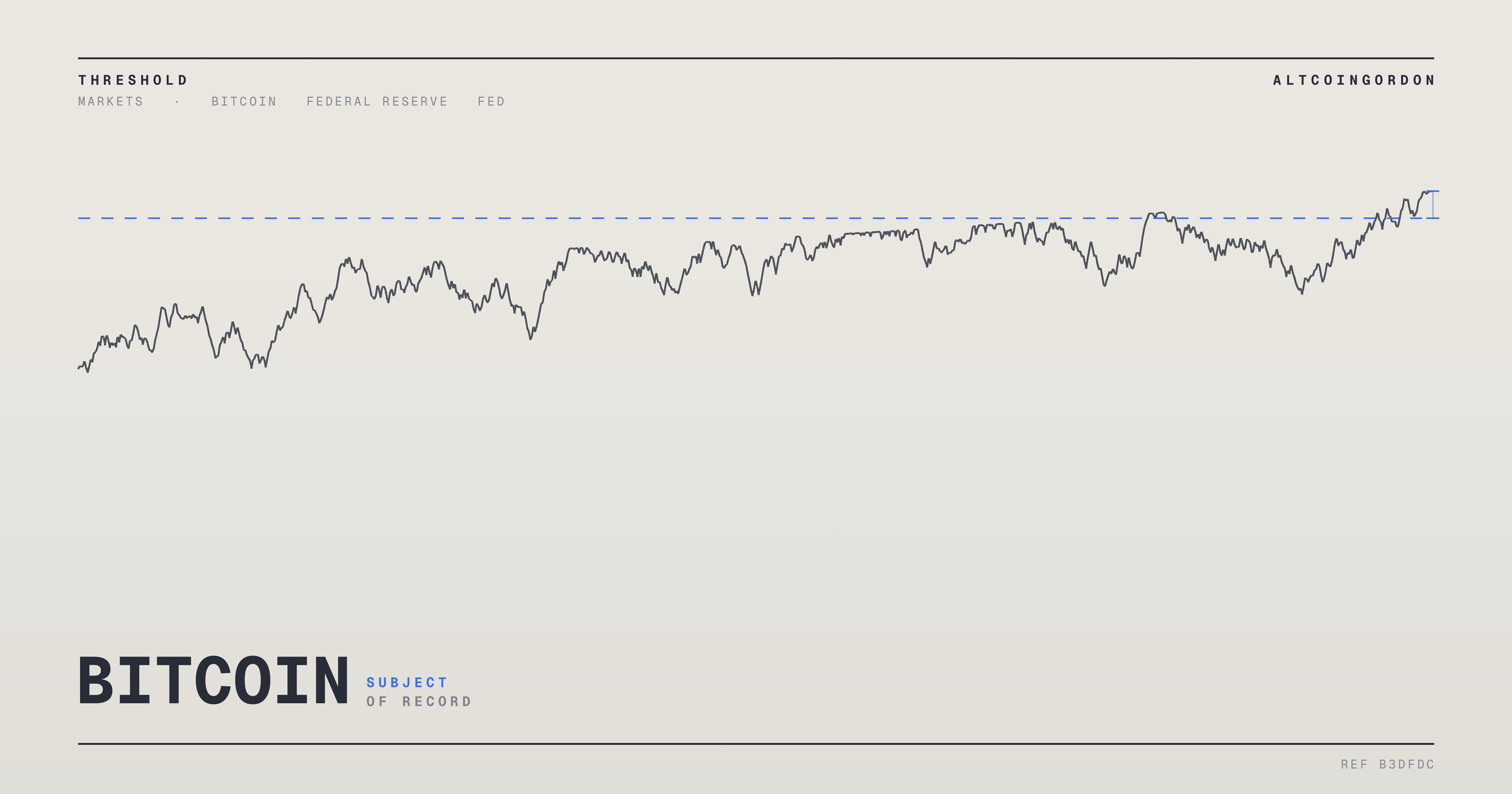
Bitcoin's price remained largely unchanged on Wednesday following the release of the latest Personal Consumption Expenditures (PCE) index, a closely watched inflation metric that the Federal Reserve uses as its primary yardstick for setting monetary policy. According to a report from Cointelegraph, the index posted its first month-over-month decline in six years, a development that would typically be interpreted as a sign of cooling price pressures in the broader economy.
The PCE index differs from the more commonly cited Consumer Price Index (CPI) in that it accounts for changes in consumer behavior, such as substituting cheaper goods when prices rise, and it carries particular weight with Fed officials when they deliberate on interest rate decisions. A sustained decline in this measure could theoretically strengthen the case for the central bank to ease its benchmark rate, a scenario that risk assets, including cryptocurrencies, have historically responded to with enthusiasm.
Despite the significance typically attached to such a milestone, Bitcoin's muted price action suggests traders may be adopting a wait-and-see approach rather than pricing in immediate policy shifts. Markets have grown accustomed to volatile swings around macroeconomic data releases in recent years, and a single data point showing disinflation does not necessarily guarantee a change in the Fed's stance, especially if officials remain cautious about declaring victory over inflation prematurely.
It is worth noting that this report currently rests on a single corroborating source, and the broader financial media landscape has not yet independently confirmed the specifics of the PCE reading or its exact figures. As with any inflation data that could influence Fed policy, investors and analysts will likely wait for additional confirmation from official government releases and subsequent commentary from Federal Reserve officials before drawing firm conclusions about the trajectory of interest rates.
Historically, cryptocurrency markets have shown sensitivity to shifts in the interest rate outlook, given that lower rates tend to reduce the opportunity cost of holding non-yielding assets like Bitcoin and can encourage capital flows into riskier corners of the market. Conversely, persistent inflation or hawkish Fed rhetoric has often weighed on crypto valuations by reinforcing expectations of tighter monetary conditions for longer.
The timing of this inflation data also arrives amid a broader environment where digital assets have increasingly been framed by some investors as a hedge against monetary debasement, while others view them as high-beta risk assets that move in tandem with equities during periods of shifting rate expectations. This duality means market reactions to macro data like the PCE index are not always straightforward or immediate.
Market Impact
If confirmed and sustained, a genuine downtrend in PCE inflation could bolster expectations that the Federal Reserve has more room to consider interest rate cuts, a dynamic that has previously coincided with increased risk appetite across equities and cryptocurrencies. However, Bitcoin's flat response so far indicates that traders may be cautious about extrapolating a single data point into a definitive policy shift, particularly given the low cross-source confirmation of this specific report.
Broader crypto market sentiment will likely hinge on subsequent commentary from Federal Reserve officials, additional inflation readings, and labor market data in the weeks ahead. Until a clearer consensus emerges on the Fed's rate path, Bitcoin and other digital assets may continue to trade within established ranges rather than making decisive directional moves purely on the back of this inflation figure.
While a monthly decline in the Fed's favored inflation gauge would mark a notable milestone after six years, Bitcoin's stable price action suggests the market is treating the news with measured caution pending further confirmation and policy signals from the central bank.
Frequently Asked Questions
What is the PCE index and why does it matter for Bitcoin?
The Personal Consumption Expenditures (PCE) price index is the Federal Reserve's preferred measure of inflation, used to help guide interest rate decisions. Because lower interest rates can make non-yielding assets like Bitcoin more attractive relative to bonds and savings accounts, shifts in this data are closely watched by crypto investors.
Why did Bitcoin's price stay stable despite the inflation drop?
Based on available reporting, Bitcoin showed little immediate price reaction, which may reflect trader caution about drawing firm conclusions from a single data release, especially with limited independent confirmation of the report at this time.
Does a drop in PCE inflation mean the Fed will cut interest rates?
Not necessarily. While cooling inflation data can support the case for rate cuts, the Federal Reserve typically weighs multiple data points, including employment figures and subsequent inflation readings, before adjusting monetary policy.
How reliable is this report on the PCE inflation decline?
This story is currently based on a single source with a fact-check confidence level of 0.43 and no cross-source corroboration, meaning readers should treat specific details as preliminary until confirmed by additional official data or reporting.