

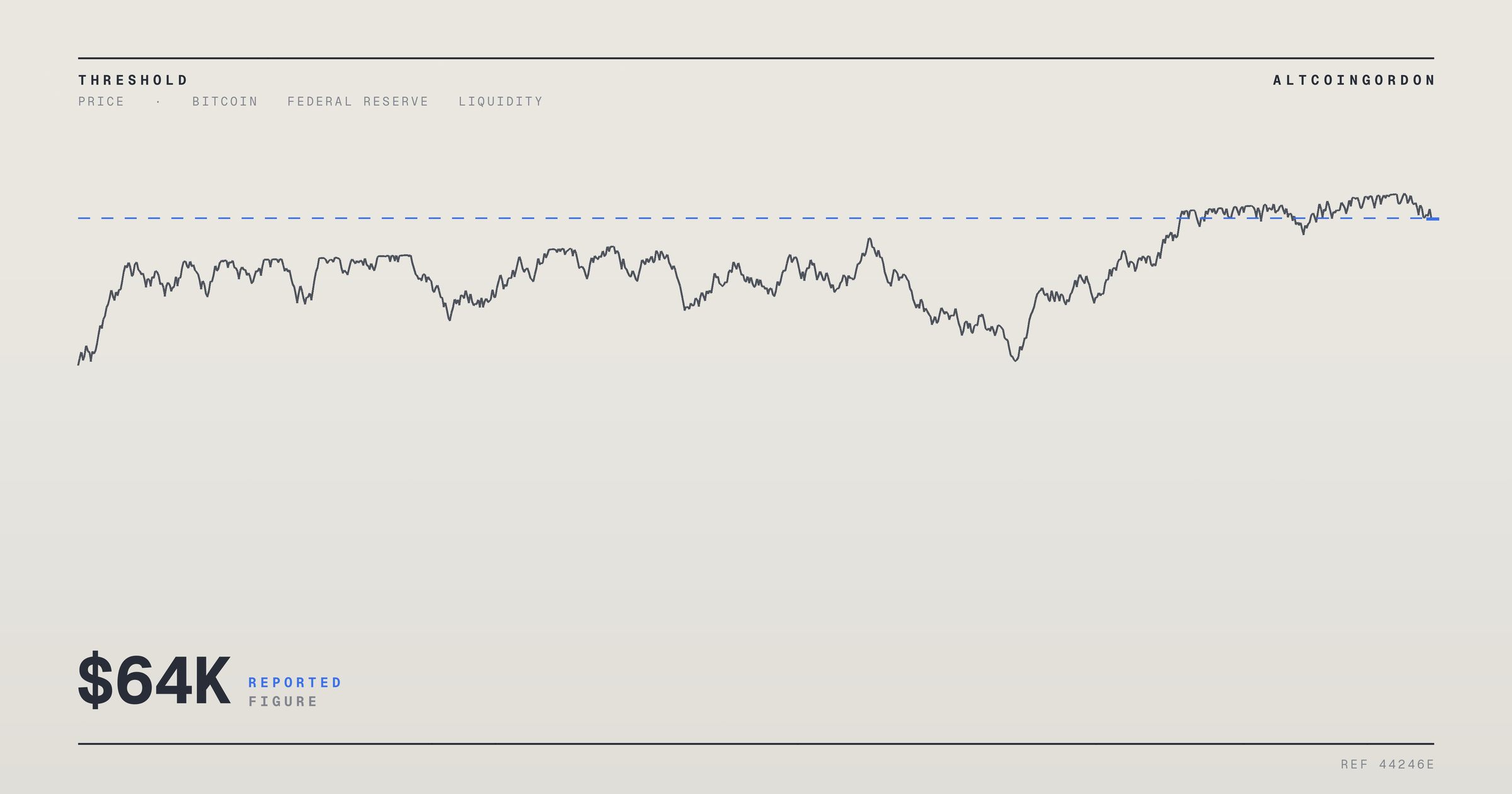
Bitcoin remained under $64,000 on August 13, following the release of U.S. inflation figures that matched market forecasts. The Consumer Price Index reading, closely watched by traders for clues on the Federal Reserve's next move, came in largely in line with expectations. That left little room for surprise, and with it, little momentum for bitcoin to break higher.
In-line CPI data typically produces muted market reactions, since it confirms rather than challenges prevailing expectations. Investors had been watching the report closely, hoping for a signal that could tilt sentiment toward looser monetary policy. Without a clear surprise in either direction, bitcoin's price action stayed subdued, unable to clear the $64,000 mark that has recently capped gains.
The $64,000 level has taken on added significance in recent trading sessions. Repeated failures to close above it suggest sellers remain active at that price point. Traders often watch such technical levels closely, since a decisive break above or below can signal a shift in short-term sentiment across the broader crypto market.
Macroeconomic data releases like the CPI report carry outsized weight for risk assets, including bitcoin. Inflation figures feed directly into expectations for Federal Reserve interest rate decisions, which in turn influence liquidity conditions across global markets. When inflation data aligns with forecasts, it often reduces volatility rather than triggering sharp moves, since it confirms rather than resets the market's baseline outlook.
Bitcoin's inability to react positively to the in-line reading points to a market lacking strong directional conviction at present. Some traders had hoped a soft inflation number might bolster the case for rate cuts, which historically has supported risk asset prices, including cryptocurrencies. An in-line print, rather than a downside surprise, gave that narrative no additional fuel.
The broader digital asset market has spent recent weeks trading within a relatively narrow band, with bitcoin acting as the bellwether for overall sentiment. Its struggle to hold above key psychological and technical levels has kept many traders cautious, waiting for either a clear macroeconomic signal or a shift in on-chain and derivatives market positioning before committing to new positions.
Market Impact
A muted reaction to in-line inflation data suggests traders are looking elsewhere for near-term catalysts, possibly toward upcoming Federal Reserve commentary or labor market data. Continued failure to break above $64,000 could reinforce short-term bearish technical sentiment, particularly among leveraged traders watching that level closely.
For the broader crypto market, bitcoin's stagnation tends to dampen volatility across altcoins as well, since many smaller tokens trade in correlation with bitcoin's price action. A prolonged period without a clear directional signal from Bitcoin could keep overall crypto trading volumes subdued until fresh macroeconomic or regulatory news emerges.
With the CPI report offering no fresh catalyst, bitcoin's price action is likely to remain range-bound until the next significant economic data release or shift in market sentiment.
Frequently Asked Questions
Why did the CPI report have little effect on bitcoin's price?
The inflation data came in largely as economists expected, giving traders no new information to react to, which limited price movement.
Why does U.S. inflation data matter for bitcoin's price?
CPI figures influence expectations for Federal Reserve interest rate policy, which affects liquidity conditions that can impact demand for risk assets like bitcoin.
What is the significance of the $64,000 level for bitcoin?
Bitcoin has struggled to close above $64,000 in recent sessions, making it a closely watched technical level that traders view as near-term resistance.
Could bitcoin still move sharply after this CPI report?
Price action remains possible if other catalysts emerge, such as Federal Reserve statements or shifts in trading positioning, even though this particular data release provided little momentum.