

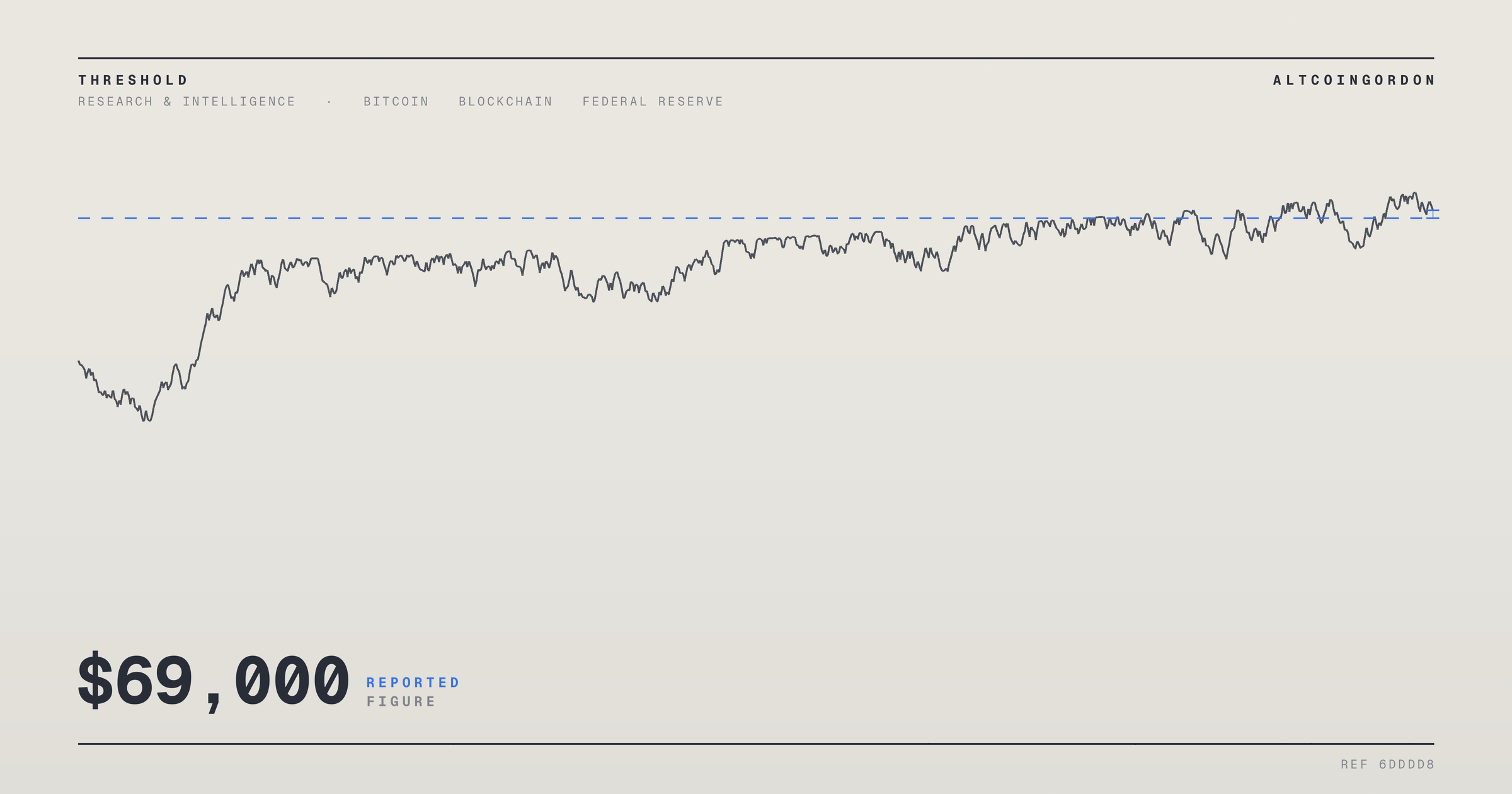
Bitcoin is holding within a defined price band as investors brace for this week's Consumer Price Index report. CryptoSlate reported that on-chain data shows a demand zone forming near $63,000, with resistance building around $69,000.
The $63,000 level reflects a concentration of buying activity visible in blockchain data. Analysts often use such zones to identify where a meaningful share of coins last changed hands. When price approaches these levels, it can act as a floor, since holders who bought there may be reluctant to sell at a loss.
The $69,000 ceiling is tied to holder resistance. This term generally describes a price level where a large volume of coins were acquired, creating a pool of investors who may sell once they return to their entry price. Breaking through such a zone typically requires strong buying pressure to absorb that supply.
CPI week carries particular weight for risk assets, including Bitcoin. The inflation report shapes expectations for Federal Reserve policy, which in turn influences liquidity conditions across financial markets. A cooler-than-expected reading has, in past cycles, coincided with rallies in Bitcoin and other cryptocurrencies. A hotter reading has often triggered selloffs, as traders price in tighter monetary policy for longer.
Bitcoin's position between these two on-chain levels suggests the market is at a decision point. Traders appear to be waiting for a catalyst, rather than committing to a clear directional bet ahead of the data release. This kind of range-bound behavior is common before major macroeconomic announcements, as participants reduce exposure to avoid volatility.
On-chain analysis has become a standard tool for traders assessing Bitcoin's near-term structure. Metrics like realized price distribution and cost-basis clustering help identify where buyers and sellers are likely to act. These levels do not guarantee price behavior, but they offer a framework for understanding where support or resistance may emerge.
The report did not specify the timing of the CPI release or provide additional detail on trading volumes within the range. It also did not include projections for how Bitcoin might react once the data is published.
Market Impact
A breakout above $69,000 following a favorable CPI print could encourage renewed buying interest, particularly if it coincides with expectations of looser monetary policy. Conversely, a breakdown below $63,000 after a hotter inflation reading could pressure short-term holders and add to selling activity.
Broader crypto markets often track Bitcoin's reaction to macroeconomic data, given its role as a liquidity benchmark for the asset class. Altcoins and crypto-linked equities may see amplified moves if Bitcoin breaks decisively out of the current range in either direction.
With CPI data on the horizon, Bitcoin's position between these on-chain levels leaves the market's next move uncertain. Traders are likely to watch the inflation report closely for signals on the path of monetary policy and its impact on risk assets.
Frequently Asked Questions
What does an on-chain demand zone mean for Bitcoin's price?
It refers to a price level where blockchain data shows significant buying activity. This can act as support, since holders who bought there may resist selling at a loss.
Why does holder resistance form near $69,000?
Resistance often develops where many coins were previously purchased. Investors who bought at that level may sell once price returns to their entry point, creating selling pressure.
Why does the CPI report matter for Bitcoin?
The Consumer Price Index influences expectations for Federal Reserve interest rate policy. Changes in those expectations affect liquidity conditions, which have historically impacted Bitcoin and broader crypto markets.
Does trading within this range guarantee a breakout in either direction?
No. On-chain levels indicate areas of potential support or resistance, but they do not predict price movement with certainty. Actual outcomes depend on broader market conditions and the CPI data itself.