

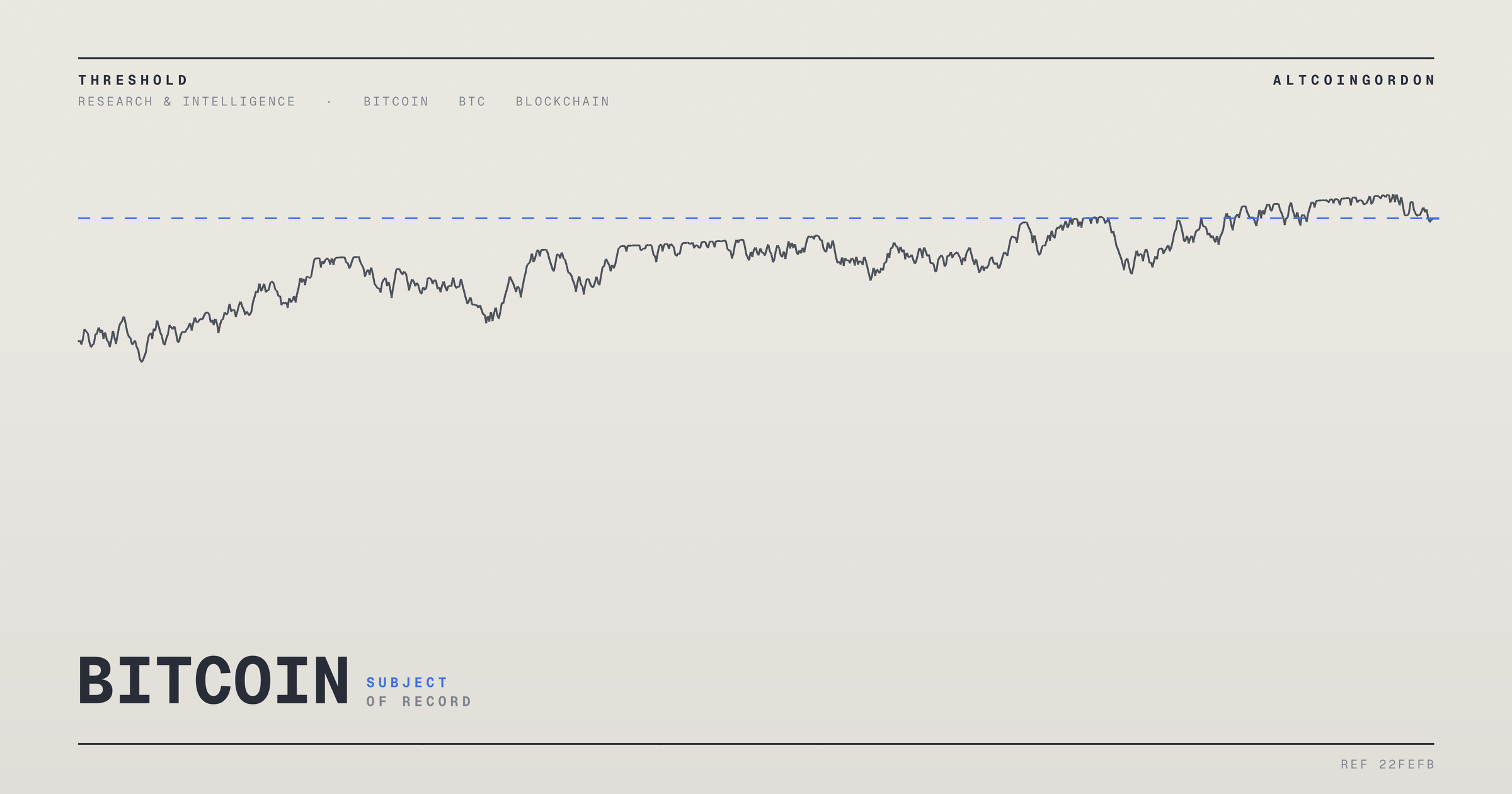
The number of Bitcoin wallets holding 10,000 BTC or more has risen to 90, marking a six-month high, according to blockchain data cited by CryptoPotato and Cryptopolitan. Each of these wallets controls a stake worth hundreds of millions of dollars at current prices. Their combined holdings represent a meaningful share of the total circulating supply.
Wallets of this size are often described as whale wallets. They belong to a small group of entities that includes early miners, long-term holders, exchanges, and large institutional investors. Because Bitcoin's total supply is capped at 21 million coins, the concentration of holdings among so few addresses draws consistent attention from analysts tracking on-chain data.
The rise to 90 wallets suggests that accumulation among the largest holders has picked up over recent months. That does not necessarily mean new capital has entered these positions. Some of the increase could come from existing large holders consolidating coins into fewer, bigger wallets, or from mid-sized holders growing their balances past the 10,000 BTC threshold.
On-chain metrics like this one are widely used across the crypto industry as a proxy for sentiment among the most capitalized market participants. When the number of ultra-large wallets grows, some traders interpret it as a signal of confidence from those with the deepest pockets. When the count shrinks, it can suggest distribution or profit-taking by the same group.
The six-month high comes at a time when Bitcoin's price has moved through periods of both strength and turbulence. Broader market conditions, including shifts in macroeconomic policy and regulatory developments, have influenced trading activity throughout the year. Large holders are often viewed as less reactive to short-term price swings than retail traders, given their longer investment horizons.
It is worth noting that on-chain wallet counts do not reveal the identity of holders behind each address. A single entity, such as an exchange or custodian, can control multiple wallets that each cross the 10,000 BTC threshold. This makes it difficult to determine whether the increase reflects a handful of new whales or the redistribution of coins among existing large holders.
Still, the metric offers one of the clearest publicly available windows into how concentrated Bitcoin ownership has become. Market participants and researchers frequently monitor changes in whale wallet counts alongside other on-chain indicators, such as exchange flows and dormant supply movements, to build a fuller picture of holder behavior.
The latest reading adds to a broader conversation about supply concentration in Bitcoin. As the asset matures and institutional participation grows, the behavior of its largest holders continues to draw scrutiny from both analysts and regulators tracking market structure.
Market Impact
A rising count of ultra-large Bitcoin wallets can influence market sentiment, particularly among traders who use on-chain data to gauge whale conviction. If the trend continues, it may reinforce a narrative of steady accumulation among the largest holders, even during periods of price uncertainty.
However, concentrated ownership also carries risk for the broader market. Large wallets have the potential to move significant volume in a short period, which can affect liquidity and price stability if any of these holders choose to sell. Traders and analysts are likely to keep monitoring this metric alongside exchange reserves and derivatives positioning for further signals.
The climb to 90 wallets holding over 10,000 BTC each highlights ongoing shifts among Bitcoin's largest holders. Whether this reflects fresh accumulation or the consolidation of existing holdings remains an open question that on-chain data alone cannot fully answer.
Frequently Asked Questions
What counts as a whale wallet in this context?
A whale wallet here refers to a single blockchain address holding 10,000 BTC or more, a threshold representing hundreds of millions of dollars at current prices.
Does this data reveal who owns these wallets?
No. On-chain data shows wallet addresses and balances but does not identify the individuals, funds, or institutions controlling them.
Why do analysts track the number of large Bitcoin wallets?
Changes in the count of ultra-large wallets are used as a proxy for sentiment among the most capitalized holders, offering clues about accumulation or distribution trends.
Could one entity control multiple wallets counted in this figure?
Yes. Exchanges, custodians, or large investors can hold coins across several wallets that each individually cross the 10,000 BTC threshold.