

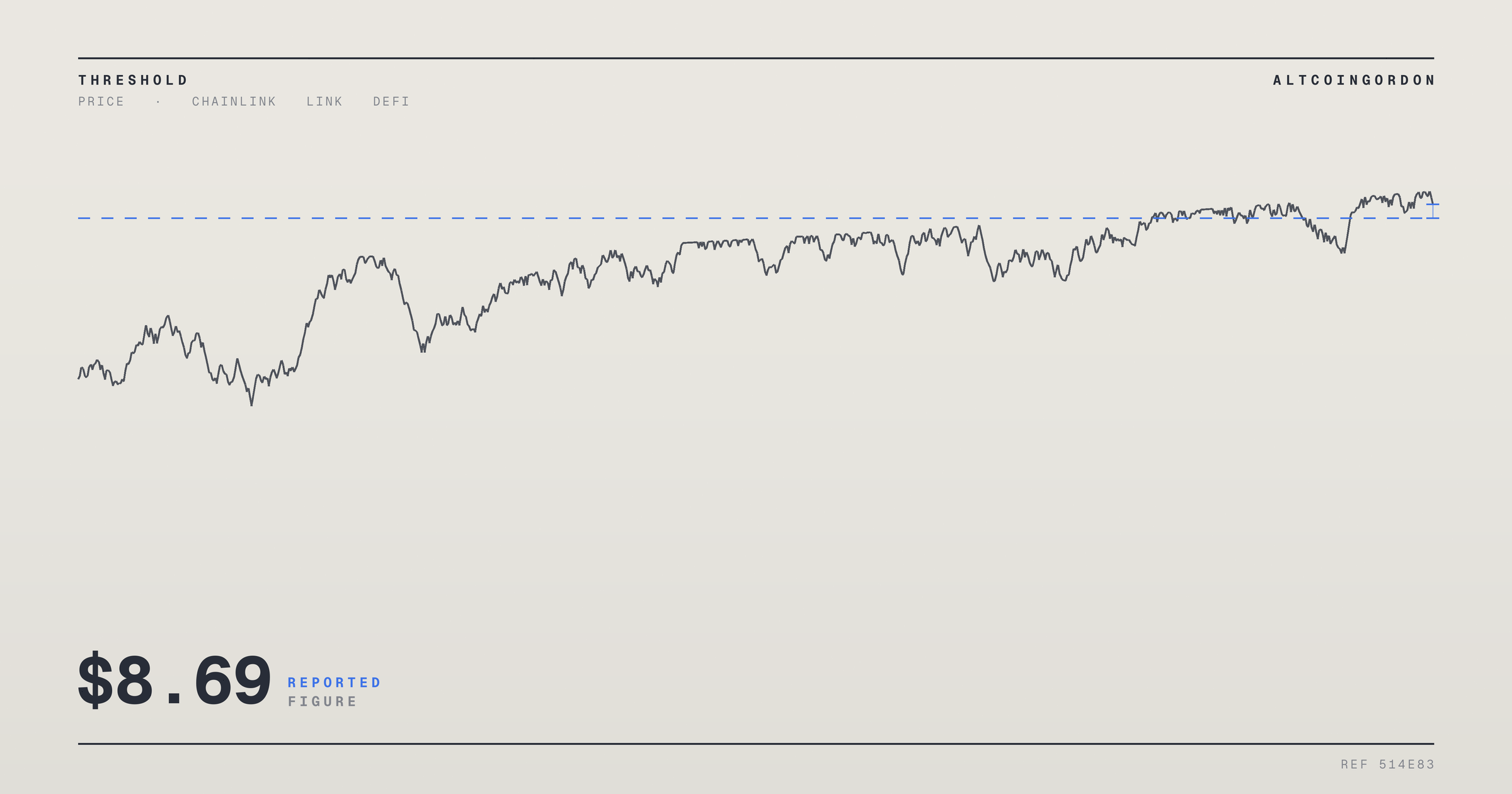
Chainlink's transaction volume has fallen 92.6%, according to a report from AMBCrypto. The decline marks one of the steeper activity drops recorded for the oracle network in recent memory. It comes as LINK, the network's native token, trades near the $8.69 level.
Chainlink operates as a decentralized oracle network. It feeds real-world data, such as asset prices, into blockchain-based smart contracts. Transaction counts on the network are often used as a proxy for how much demand exists for that data feed service across decentralized finance and other blockchain applications.
A sharp fall in transactions can signal reduced usage of Chainlink's core infrastructure. It does not necessarily mean the protocol has lost integrations or partnerships. It can instead reflect lower activity across the broader decentralized finance sector that relies on Chainlink's price feeds and other services.
The $8.69 level referenced by AMBCrypto is being treated as a support zone for LINK. Traders and analysts often watch such levels to gauge whether a token can stabilize after a period of declining fundamentals or falling market activity. A break below a defended support level can sometimes trigger further selling, while a successful defense can signal buyer interest returning.
The reported transaction decline arrives at a moment when the broader crypto market has faced its own swings in trading activity and investor sentiment. Oracle networks like Chainlink sit in a foundational position within the DeFi ecosystem. Their usage levels can move in tandem with activity on the lending, trading and derivatives platforms that depend on their data feeds.
It remains unclear from the available reporting what specifically drove the 92.6% drop in transactions. Possible explanations could include a broader slowdown in DeFi activity, a shift in how developers are integrating oracle services, or a temporary lull following a period of unusually high usage. AMBCrypto's report does not specify a root cause, and no other outlet has yet detailed the underlying dynamics behind the figure.
LINK holders and market watchers will likely look for confirmation of the transaction data through Chainlink's own network dashboards or third-party analytics platforms. Onchain data providers frequently publish transaction and usage metrics that can corroborate or contextualize figures reported in the press.
Market Impact
A steep drop in transaction activity, if sustained, could weigh on sentiment toward LINK in the near term. Lower usage metrics are sometimes interpreted by traders as a signal of reduced network demand, which can influence short-term price action around key support levels like $8.69.
However, transaction counts alone do not capture the full picture of a network's health. Chainlink's role in enterprise partnerships, cross-chain infrastructure and price feed integrations extends beyond raw transaction throughput. Market participants will likely weigh this activity data alongside broader DeFi trends and LINK's price behavior before drawing firmer conclusions.
The reported decline in Chainlink transactions puts renewed focus on LINK's ability to hold the $8.69 level. Further data will help clarify whether the drop reflects a temporary lull or a more lasting shift in network usage.
Frequently Asked Questions
What does a 92.6% drop in Chainlink transactions mean?
It indicates a sharp decline in on-chain activity recorded for the Chainlink network, according to AMBCrypto. This typically reflects lower usage of the network's oracle data services over the measured period.
Why is the $8.69 level important for LINK?
The $8.69 level is being watched as a potential support zone for LINK's price. Whether the token holds above this level is seen as a signal of near-term buyer or seller strength.
Does lower transaction activity mean Chainlink has lost partnerships or integrations?
Not necessarily. A drop in transaction counts can reflect broader slowdowns in decentralized finance activity rather than a loss of specific partnerships or technical integrations.
Where can readers verify Chainlink's transaction data?
On-chain analytics platforms and Chainlink's own network dashboards typically publish usage and transaction metrics that can be used to check figures reported in the press.