

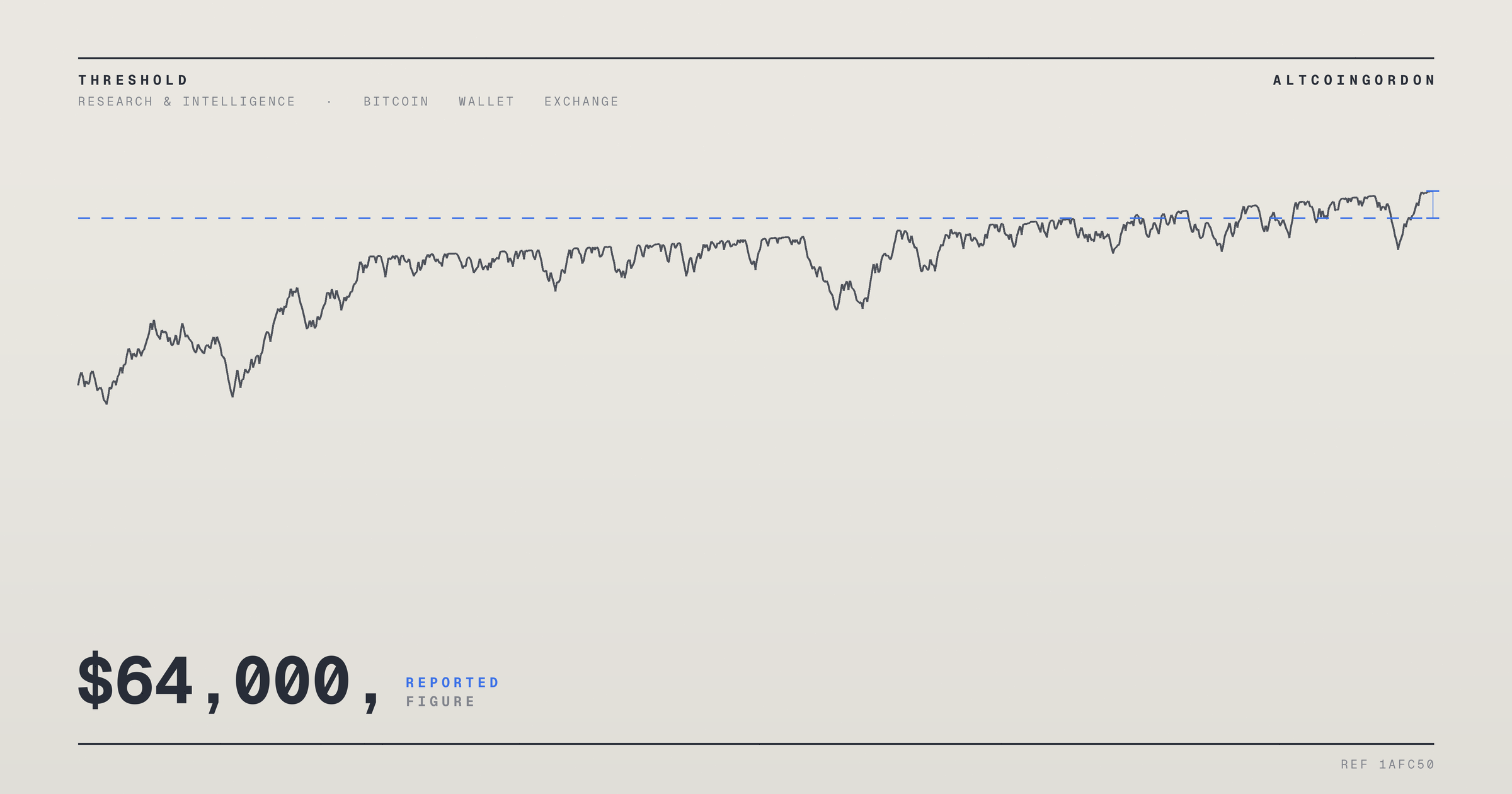
Bitcoin sellers may be running out of steam near the $64,000 mark, according to on-chain analytics firm Glassnode. The firm's latest findings, reported by Coinfomania and Bitcoin.com News, point to early signs of exhaustion among market participants who have been offloading coins.
Glassnode's assessment stops short of declaring that Bitcoin has bottomed. The firm's language, described in both reports, frames the current picture as tentative rather than conclusive. Seller exhaustion typically precedes a price floor, but it does not guarantee one.
On-chain analysis firms like Glassnode track metrics such as coin movement, holder behavior, and realized losses to gauge market sentiment. When sellers begin exhausting their supply, it can signal that downward pressure is fading. That shift does not automatically translate into a price reversal.
The $64,000 level has become a focal point for traders watching for confirmation of a durable low. Markets often test such levels multiple times before establishing a firm floor. Analysts caution that a single reading of reduced selling activity is not sufficient evidence of a turning point.
This kind of on-chain data has grown in importance as traders look beyond price charts for clues about market structure. Metrics tracking wallet activity, exchange flows, and holder cost basis offer a window into behavior that price alone cannot capture. Glassnode has built a reputation for these kinds of assessments across previous market cycles.
The distinction between exhaustion and confirmation matters for traders positioning around potential inflection points. Exhaustion suggests fewer market participants are willing to sell at current prices. Confirmation would require sustained buying pressure or a clear reversal pattern to validate that a bottom has actually formed.
Both outlets reporting on Glassnode's findings framed the update as an early-stage signal rather than a definitive call. That framing reflects the inherent uncertainty in on-chain analysis, which relies on probabilistic indicators rather than guaranteed outcomes. Traders are advised to treat such readings as one input among many.
Market Impact
If seller exhaustion near $64,000 continues, it could reduce short-term downward pressure on Bitcoin's price. Reduced selling alone does not guarantee a sustained recovery or a confirmed bottom. Traders and institutions monitoring on-chain data may adjust positioning cautiously as they wait for further confirmation.
The broader market could see increased attention on on-chain metrics as a complement to traditional price analysis. Firms like Glassnode play a growing role in shaping sentiment among traders navigating uncertain price ranges. Continued ambiguity around a confirmed bottom may keep volatility elevated in the near term.
Glassnode's findings suggest Bitcoin's selling pressure may be easing near $64,000, though the firm has not confirmed a bottom. Market participants will likely watch for further on-chain signals before drawing firmer conclusions about where the market stands.
Frequently Asked Questions
What does seller exhaustion mean in Bitcoin markets?
Seller exhaustion refers to a decline in the willingness or ability of holders to keep selling their coins. It can signal that downward price pressure is fading, though it does not guarantee a price reversal.
Has Glassnode confirmed a bottom for Bitcoin?
No. Glassnode reported signs of seller exhaustion near $64,000 but stopped short of confirming that a market bottom has formed.
Why do analysts use on-chain data instead of just price charts?
On-chain data tracks wallet activity, exchange flows, and holder behavior, offering insight into market structure that price charts alone cannot provide.
What should traders take away from this report?
Traders should treat the exhaustion signal as one data point among many, rather than a definitive indication that Bitcoin's price decline has ended.