

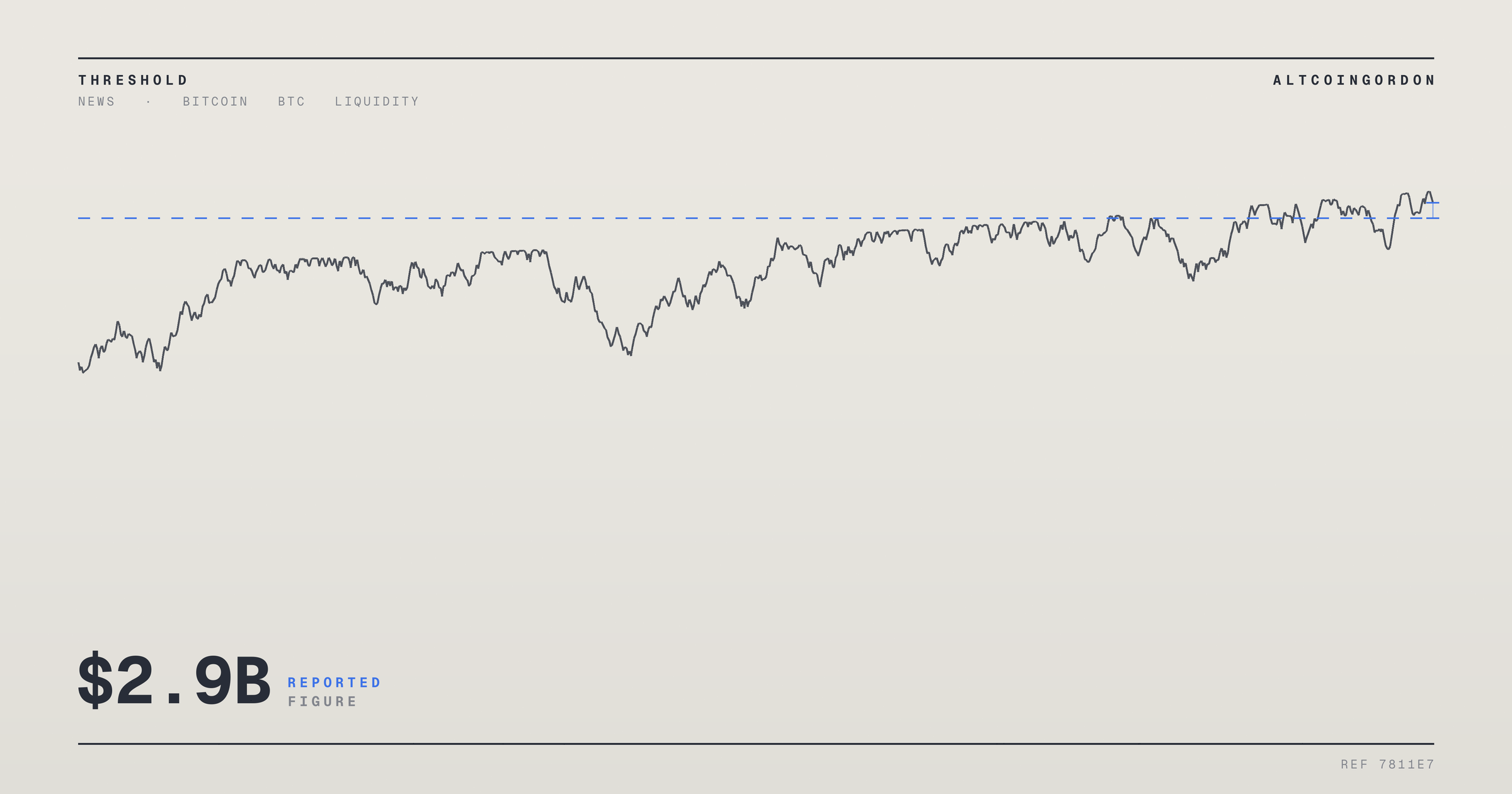
Twenty One Capital holds 43,514 Bitcoin, according to a report from CryptoBriefing published on August 11. At current market conditions, that stash carries a value of up to $2.9 billion. The report describes the holdings as remaining locked in, suggesting the coins are not immediately liquid or available for sale.
The scale of the holding places Twenty One Capital among a growing class of corporate entities that treat Bitcoin as a primary treasury asset rather than a peripheral investment. Such firms have emerged over the past several years as an alternative model for corporate balance sheet management. They aim to use Bitcoin as a store of value and, in some cases, as a mechanism for raising capital through debt or equity tied to the asset.
The term locked in typically refers to a structural or contractual constraint on an asset's availability. In the context of corporate Bitcoin treasuries, this can mean the coins are held under vesting schedules, custody arrangements, or other terms that restrict when and how they can be sold. CryptoBriefing's report did not detail the specific mechanism behind Twenty One Capital's lock-in status.
Bitcoin treasury companies have drawn significant investor attention because their equity often trades in correlation with the price of Bitcoin itself. Large, locked-in holdings can amplify that relationship, since the underlying asset cannot be readily sold to offset market swings. This dynamic makes disclosures about treasury size and liquidity status closely watched by investors and analysts tracking these firms.
The valuation range given, up to $2.9 billion, reflects the volatility inherent in Bitcoin's price. A holding of 43,514 coins can shift in value substantially depending on market conditions at the time of assessment. Companies that report treasury holdings in this way typically provide value ranges rather than fixed figures for this reason.
As of this report, the specific business rationale behind Twenty One Capital's Bitcoin accumulation strategy, and the precise terms of its lock-in arrangement, have not been fully detailed. Readers should note that the figures come from a single reported account and may be refined or expanded as further reporting emerges.
Market Impact
A treasury holding of this size, if confirmed by additional reporting, would place Twenty One Capital among the more significant corporate holders of Bitcoin. Such positions can influence how investors price the company's equity, since large, illiquid crypto holdings tend to make share performance more sensitive to Bitcoin's own price movements.
For the broader market, disclosures of this kind reinforce the ongoing trend of corporations using Bitcoin as a treasury reserve asset. Locked-in holdings, by definition, do not add to immediate sell-side supply, which some market participants view as a stabilizing factor for spot prices. However, the lack of detail on the lock-in terms leaves open questions about when, or under what conditions, these coins could eventually become liquid.
The reported figures underscore the continued expansion of corporate Bitcoin treasury strategies, though further detail on Twenty One Capital's specific arrangements is still needed to fully assess their implications.
Frequently Asked Questions
How much Bitcoin does Twenty One Capital reportedly hold?
According to CryptoBriefing, Twenty One Capital holds 43,514 Bitcoin, valued at up to $2.9 billion.
What does it mean that the treasury is 'locked in'?
It suggests the Bitcoin holdings are not currently available for sale or redeployment, though the exact mechanism behind this restriction has not been detailed.
Why do companies hold large amounts of Bitcoin in their treasury?
Some firms use Bitcoin as a treasury reserve asset, viewing it as a store of value and a way to align corporate balance sheets with crypto market performance.
Could the value of the holding change?
Yes. Because Bitcoin's price is volatile, the reported value of up to $2.9 billion could shift significantly depending on market conditions.