

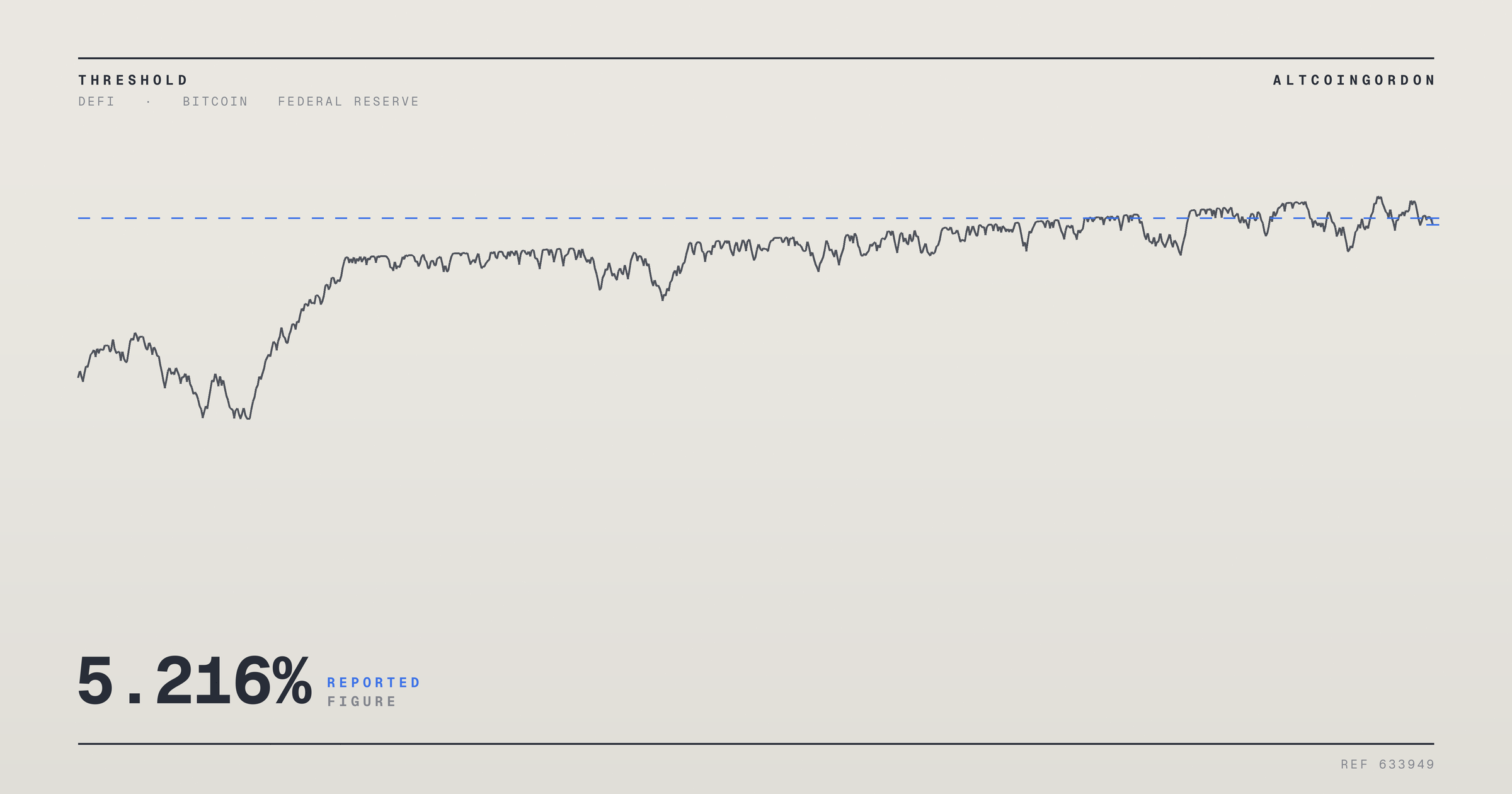
The US Treasury's latest 30-year bond auction cleared at a yield of 5.216%, according to CryptoBriefing. That level has not been seen in more than 15 years. The auction result offers a fresh data point on how investors are pricing long-term government debt in the current environment.
Treasury auctions set benchmark borrowing costs for the government. They also influence rates across the broader economy, from mortgages to corporate bonds. A yield above 5.2% on the 30-year note suggests investors are demanding higher compensation to hold long-duration government debt. That demand for higher compensation often reflects concerns about inflation, fiscal deficits, or future rate policy.
Rising long-term yields typically signal that bond buyers expect either persistent inflation or a heavier supply of government debt ahead. Both factors can weigh on demand relative to supply, pushing yields higher to attract buyers. The 30-year bond is a key barometer for long-run economic expectations, distinct from shorter-dated instruments more sensitive to near-term Federal Reserve policy moves.
For crypto markets, moves in long-term Treasury yields carry indirect but real significance. Higher yields on government debt can make fixed-income investments more attractive relative to speculative assets. That dynamic sometimes pulls capital away from riskier holdings, including digital assets, as investors rebalance portfolios toward safer, yield-bearing instruments.
At the same time, some market participants view persistently rising yields as a signal of currency debasement risk or fiscal strain. That view has historically supported allocations toward scarce assets like Bitcoin as a hedge. The relationship between bond yields and crypto prices is not fixed. It can shift depending on the broader macro narrative dominating investor sentiment at any given time.
The reported yield level marks a notable threshold. A 15-year high on the 30-year bond suggests borrowing costs for the government have climbed well beyond levels seen through much of the post-2008 financial crisis era, when central banks kept rates low for an extended period. Whether this level persists or proves temporary will depend on future auctions, inflation data, and central bank communication.
Market observers will likely watch subsequent Treasury auctions closely for confirmation of this trend. A sustained rise in long-term yields could reshape expectations across both traditional and digital asset markets in the months ahead.
Market Impact
Higher long-term Treasury yields tend to raise the opportunity cost of holding non-yielding assets, a category that includes most cryptocurrencies. If the elevated 30-year yield persists, some analysts expect it could pressure risk appetite broadly, potentially affecting flows into crypto markets alongside equities and other growth-oriented assets.
Conversely, if the yield spike is interpreted as a sign of fiscal stress or currency weakness rather than strong economic growth, it could reinforce arguments from crypto advocates who position Bitcoin and similar assets as hedges against sovereign debt concerns. The net effect on digital asset prices will likely depend on how investors interpret the broader cause behind the yield move.
The 30-year bond auction result underscores shifting dynamics in government borrowing costs, with implications that extend beyond traditional fixed-income markets. Crypto investors will likely continue monitoring Treasury yields as one input among many shaping broader market sentiment.
Frequently Asked Questions
What does a 30-year bond auction yield of 5.216% mean?
It means investors demanded a 5.216% annual return to buy the US government's 30-year debt at this auction, the highest such level reported in more than 15 years.
Why do Treasury bond yields matter for crypto markets?
Rising yields can make traditional fixed-income investments more attractive, sometimes drawing capital away from riskier assets like cryptocurrencies, though the relationship can vary depending on broader market sentiment.
Does a higher bond yield always hurt crypto prices?
Not necessarily. Some investors view rising yields as a sign of fiscal or inflation concerns, which can support demand for assets like Bitcoin as a potential hedge.
What causes long-term bond yields to rise?
Yields often rise when investors expect higher inflation, greater government borrowing, or shifts in monetary policy that reduce demand for long-duration debt relative to supply.